China’s factory-gate inflation accelerated to its fastest pace in more than four years in September, and that matters because it shows commodity costs are rising across the world’s industrial supply chain even as domestic demand in China remains too weak to pass those costs on to consumers.
China PPI Rises 5% in September
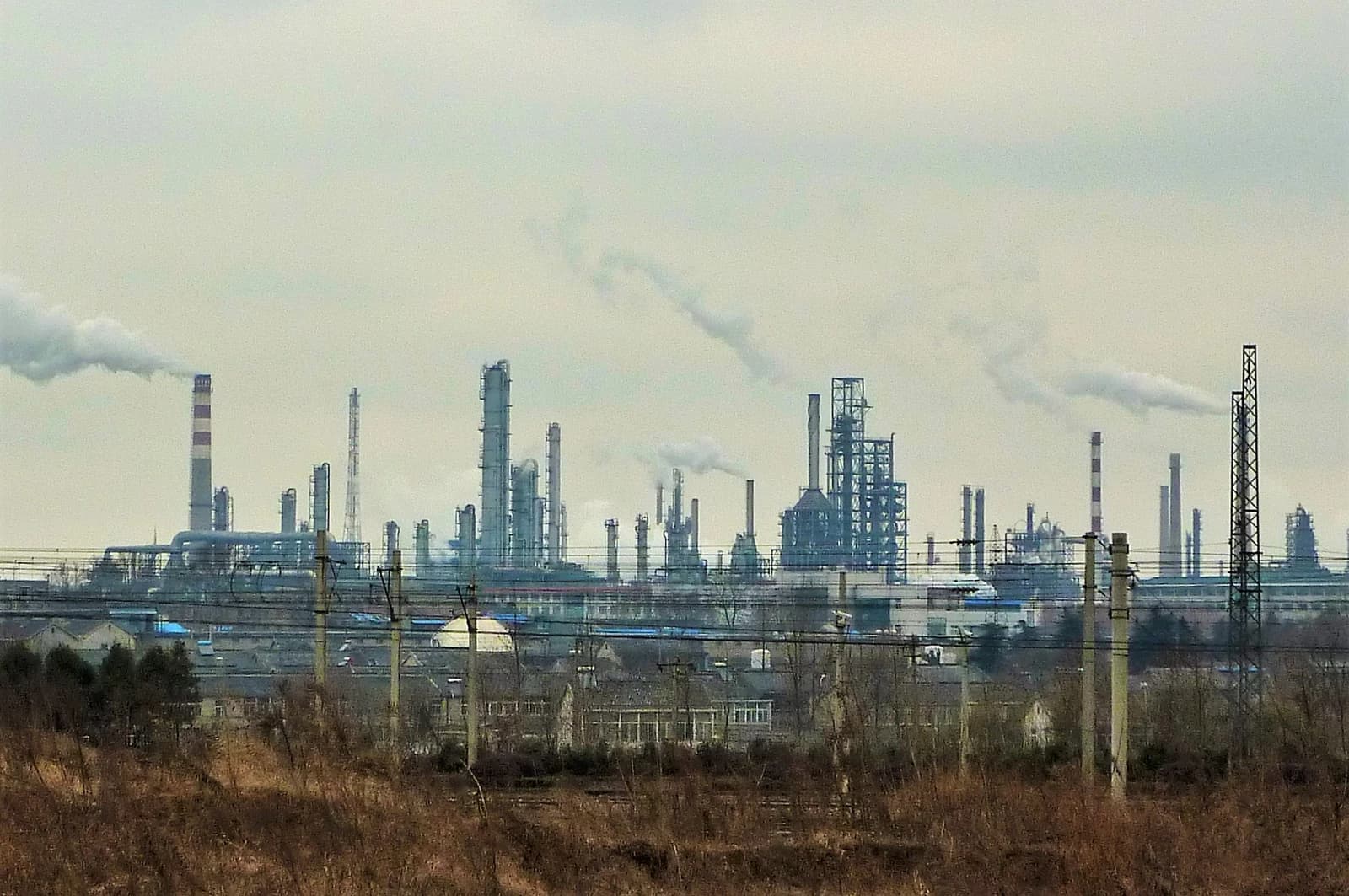
The producer price index climbed 5% from a year earlier, the sharpest increase since June 2022 and above the 4.5% expected in a Reuters poll, according to the National Bureau of Statistics. Consumer prices rose just 0.9%, undershooting forecasts and leaving China with a widening gap between what factories pay and what households spend.
Sentiment IndicatorsⓘProprietary · adalytica.com · October 15, 2026
This is a snapshot — live sentiment, awareness and momentum for 130+ markets update continuously in the dashboard.Open AlphaPulse
That divergence is the real story. It says China is still recovering on an uneven track: export activity and imported commodity inflation are gaining traction, while household spending remains cautious and private-sector confidence fragile despite repeated policy support. For Beijing, that means growth is still leaning on industry and trade rather than a durable domestic demand rebound.
The pressure is coming from the right place if you are a producer of raw materials, and the wrong place if you are counting on a broad-based Chinese reflation. Economists said disruptions in commodity supply tied to Middle East conflict helped push up costs, with especially sharp gains in fuel processing, chemicals and non-ferrous metals. Gasoline prices jumped 16.6% on the year and alone added about 0.47 percentage point to headline CPI.
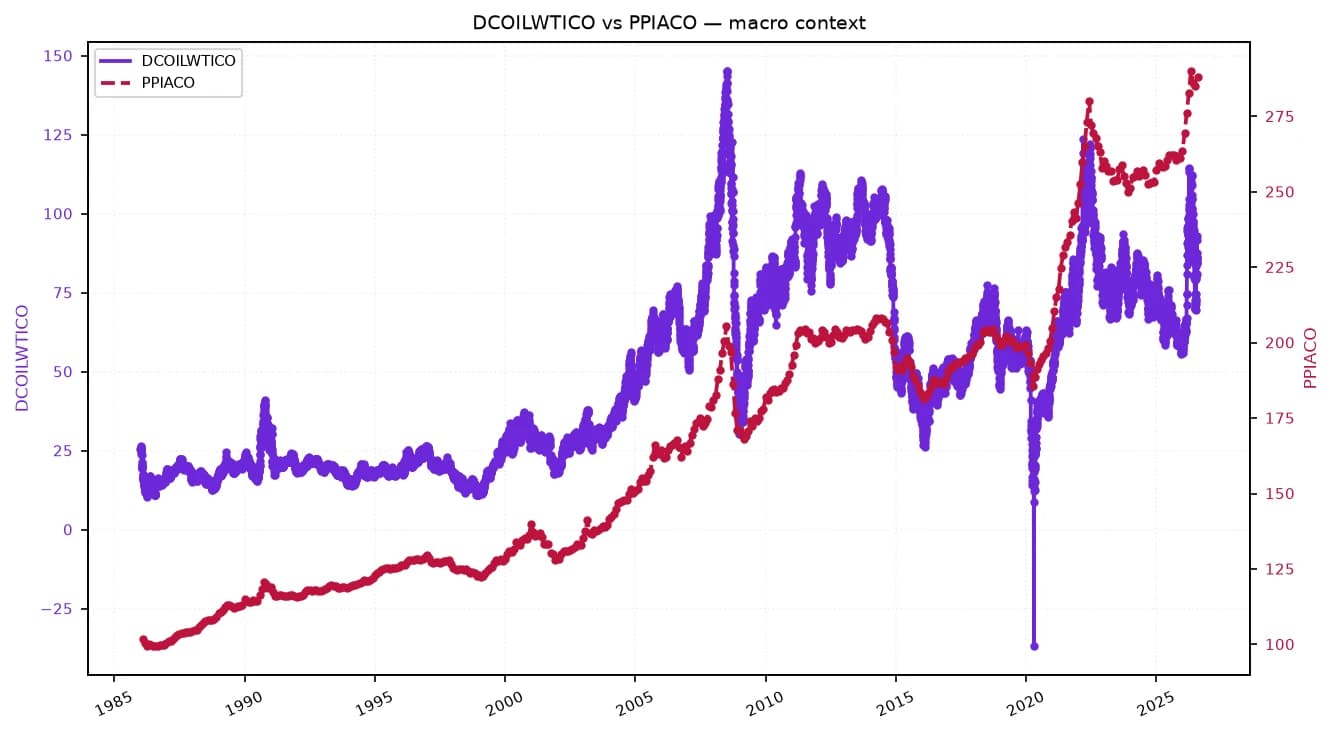
DCOILWTICO vs PPIACO — macro contextadalytica.com
Explore this data interactively — full history, time series and cross-market comparisons.Open AlphaPulse
Core inflation held at 1%, underscoring that consumers are not yet absorbing the higher input costs. That is a warning sign for anyone betting on a clean inflation cycle in China: factories are being squeezed, but the pricing power is not yet reaching the retail side of the economy.
For investors, this is a direct read-through to commodities, miners and energy-linked equities. Copper, iron ore and other industrial inputs tend to benefit when Chinese producer prices rise on the back of supply-driven commodity inflation, even if the consumer economy is still lagging. That helps explain why shares of major miners have held up relatively well despite the broader uncertainty: Freeport-McMoRan, BHP and Rio Tinto remain the cleanest listed proxies for China’s industrial cost cycle and any follow-through in metals pricing.
The market should also pay attention to what Beijing does next. Authorities have already approved another 550 billion yuan of unused local government bond quotas for infrastructure and other spending, on top of mortgage subsidies and earlier stimulus. If that support starts to stabilize hiring and income growth, producer inflation could eventually feed into a broader demand recovery. If not, China risks remaining stuck in a familiar pattern: strong exports, sticky industrial costs and weak consumer momentum.
That is why this report matters beyond one inflation print. It strengthens the case for owning the picks-and-shovels of the commodity cycle, not the cyclical promise of a fast Chinese consumption rebound. The asymmetric opportunity is still in the resource names and industrial suppliers that benefit from higher input prices and infrastructure spending, while the bigger risk remains to downstream manufacturers and any investor expecting China’s recovery to broaden out quickly.
| Entity | Gains | Losses |
|---|---|---|
| Miners and commodity producers | ▲Higher input prices | ▼Margin pressure if costs outrun demand |
| Exporters and industrial suppliers | ▲Stronger factory pricing | ▼Weak consumer pass-through |
| Chinese policymakers | ▲More room for targeted stimulus | ▼Pressure to revive household demand |
| Downstream manufacturers and consumers | ▲None | ▼Higher energy and commodity costs |