Rising fossil fuel prices are feeding directly into China’s industrial producer prices, with research on 40 sub-industries pointing to a broad but uneven pass-through that can squeeze factory margins and complicate inflation management.
China PPI and Oil Prices Pressure Factory Margins
The connection matters because energy remains one of the most important cost drivers in Chinese manufacturing. When crude jumps, upstream sectors such as chemicals, metals and machinery face higher input bills first, and the pressure can then cascade through supply chains, lifting producer prices even if consumer demand stays soft.
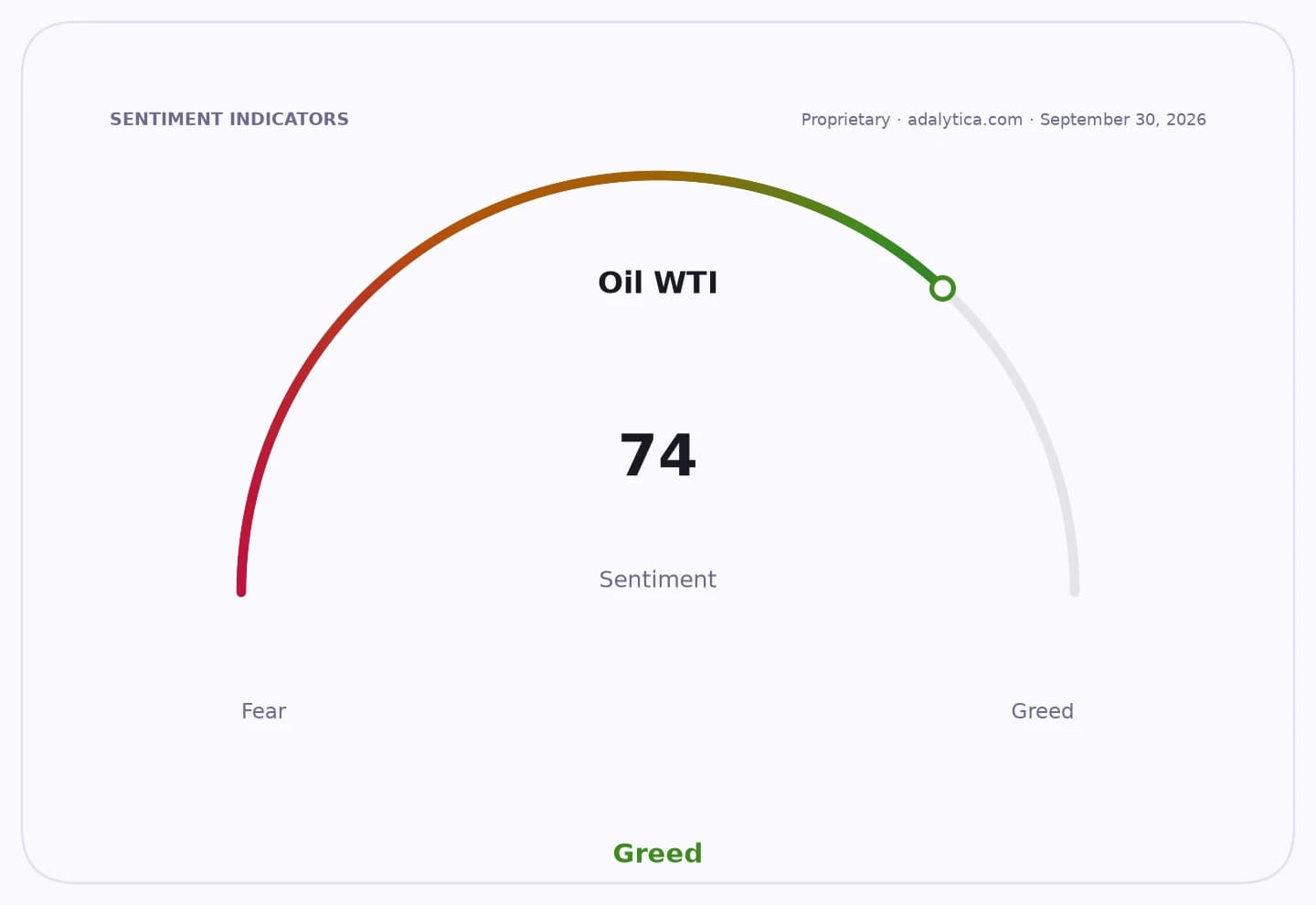
Sentiment IndicatorsⓘProprietary · adalytica.com · October 1, 2026
This is a snapshot — live sentiment, awareness and momentum for 130+ markets update continuously in the dashboard.Open AlphaPulse
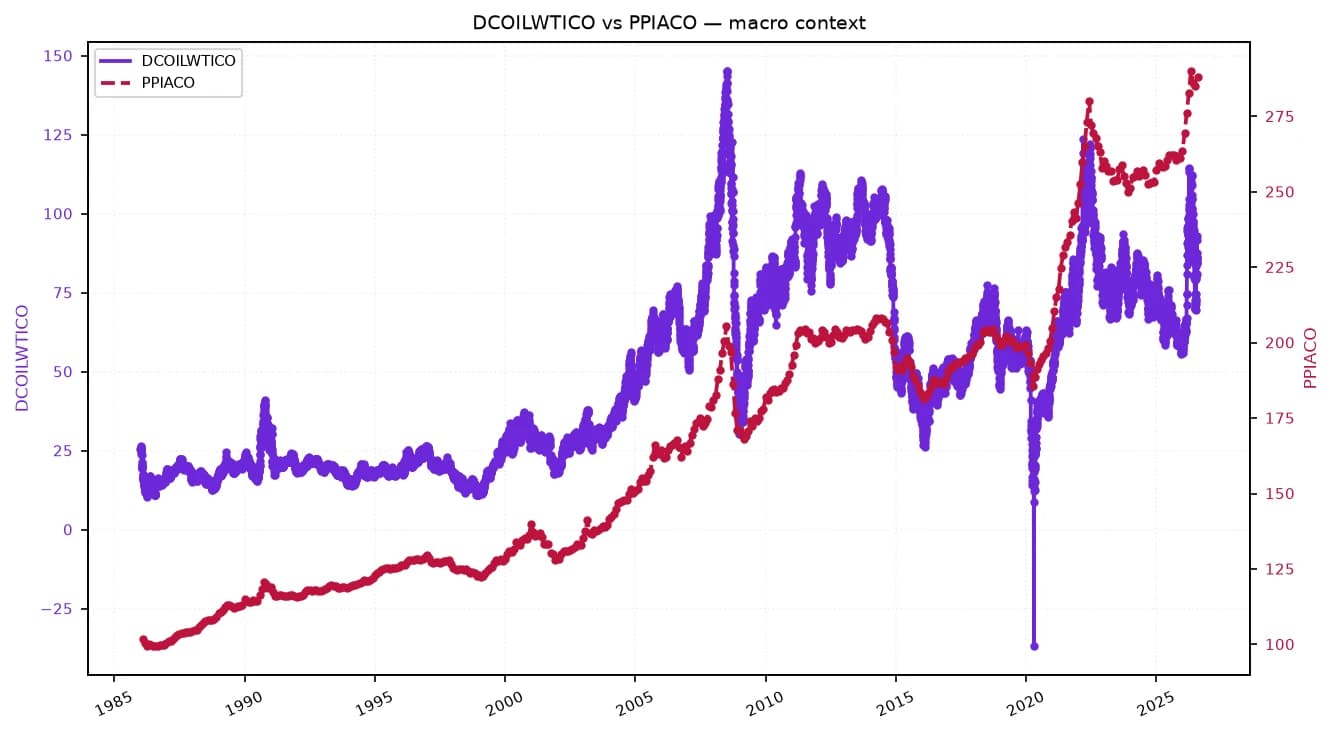
That dynamic is visible in the benchmark data. U.S. crude has swung sharply in recent years, including a surge to $123.64 a barrel in March 2022, and it was still trading near $96.16 at the end of September with a forecast around $96.72 for the next session. China’s industrial PPI has also climbed, with the broad producer price index at 287.928 in August and forecast to edge higher to 288.0287 in September.
The implication for investors is that energy shocks tend to reshape sector leadership rather than move the market uniformly. Energy-linked stocks have outperformed on the back of the oil move: the Energy Select Sector SPDR Fund rose to $61.50 on Sept. 30 after trading as high as $65.54 on Sept. 15, while the SPDR S&P Oil & Gas Exploration & Production ETF closed at $179.33, far above its 200-day moving average near $161.80.
The technical picture also shows the sector pulling back from stretched levels rather than breaking its trend. XLE finished Sept. 30 below its 50-day moving average of $61.67 after peaking in mid-September, while XOP closed at $179.33, also below its 50-day average of $182.17 and with a relative strength index of 28.7, a conventional sign the ETF has moved into oversold territory after its run-up.
Broader market signals remain mixed. Adalytica’s S&P 500 Trade Signals show neutral sentiment at 31 with fear still elevated in awareness, while its industrial production sentiment is at 89, suggesting investors are increasingly focused on a stronger factory backdrop even as the dollar signal shows extreme fear.
The key question now is whether the latest oil move becomes a temporary cost shock or a longer inflationary impulse. If fossil energy prices stay near current levels, China’s industrial PPI is likely to keep absorbing pressure in the more energy-intensive sub-industries, while any further supply disruption would sharpen the squeeze on margins and keep energy equities in focus.
| Entity | Gains | Losses |
|---|---|---|
| Energy producers | ▲Higher realized prices | ▼Demand destruction risk |
| Chinese heavy industry | ▲Faster pass-through to prices | ▼Margin compression |
| Energy ETFs (XLE, XOP) | ▲Stronger sector flows | ▼Pullback after overbought run |
| Consumers/importers | ▲None | ▼Higher fuel and input costs |