Oil’s move back above $90 a barrel is reviving a familiar inflation trade-off: higher energy costs can quickly lift headline prices, but they do not automatically translate into a lasting inflation problem unless the shock spreads into wages, services and longer-term expectations.
Oil Above $90 Revives Inflation Trade-Off

The benchmark West Texas Intermediate contract was trading around $92.41 a barrel on Sept. 25, after touching $105.83 earlier in the month and surging from the mid-$80s in April. The U.S. Oil Fund, a proxy for crude exposure, has climbed to $148.33 from $120.49 in late July, while the Energy Select Sector SPDR has risen to $62.04 from $57.23 over the same period. The market is clearly repricing energy risk. The question for policymakers and investors is whether that repricing stays confined to fuel bills or becomes embedded in broader inflation.
Sentiment IndicatorsⓘProprietary · adalytica.com · September 27, 2026
This is a snapshot — live sentiment, awareness and momentum for 130+ markets update continuously in the dashboard.Open AlphaPulse
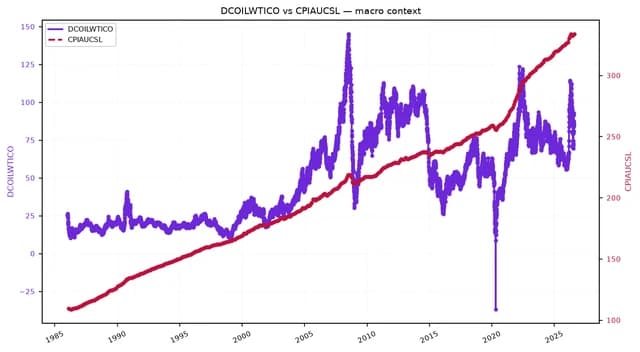
That distinction matters because oil shocks hit economies through several channels at once. They raise transport, freight and input costs for companies, squeeze household purchasing power and can force central banks to keep policy tighter for longer. But history also shows that the inflation impact fades if consumers and firms absorb the shock, if growth slows enough to curb demand, or if energy prices reverse. In other words, oil can ignite inflationary pressure without necessarily creating persistent inflation.
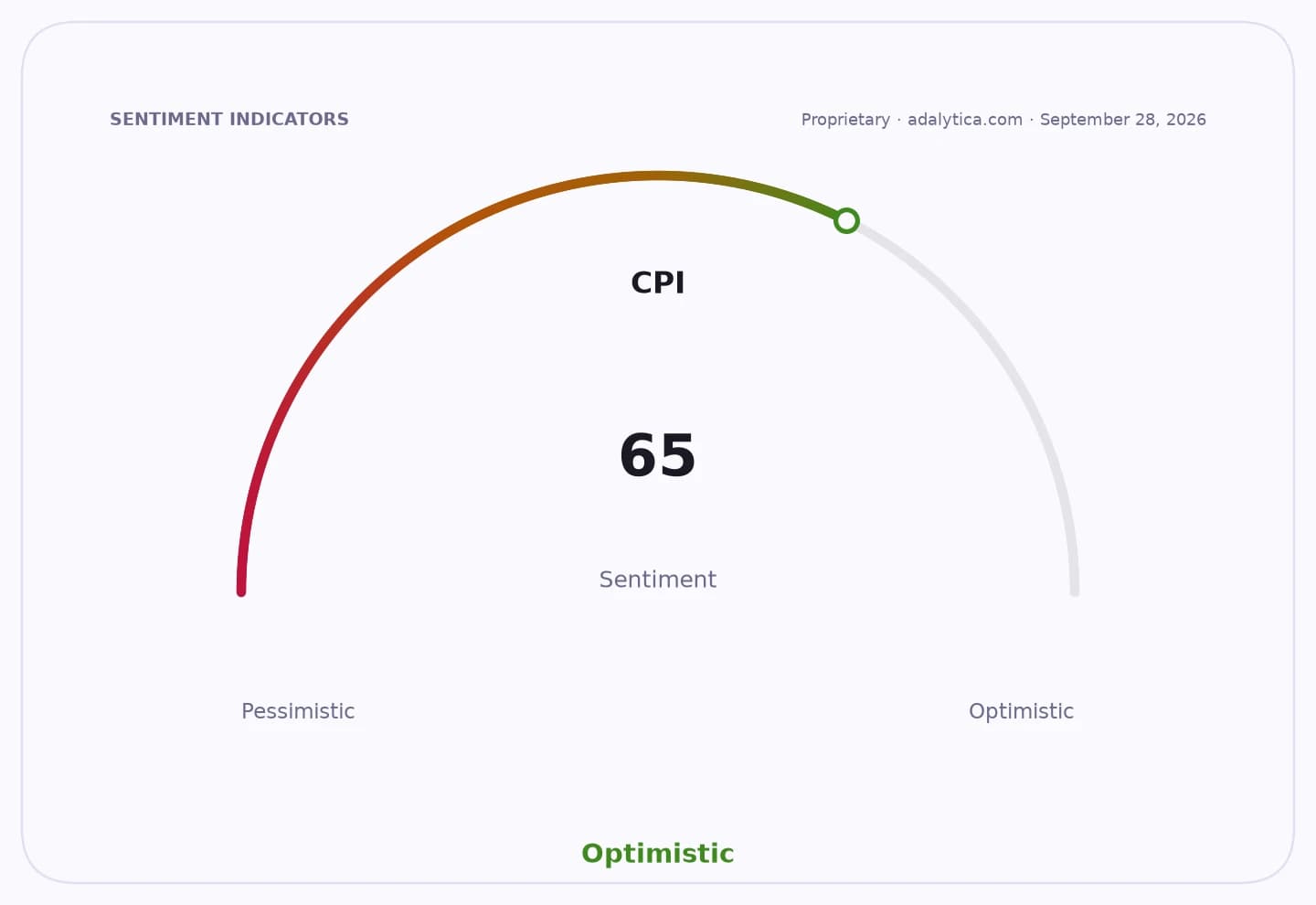
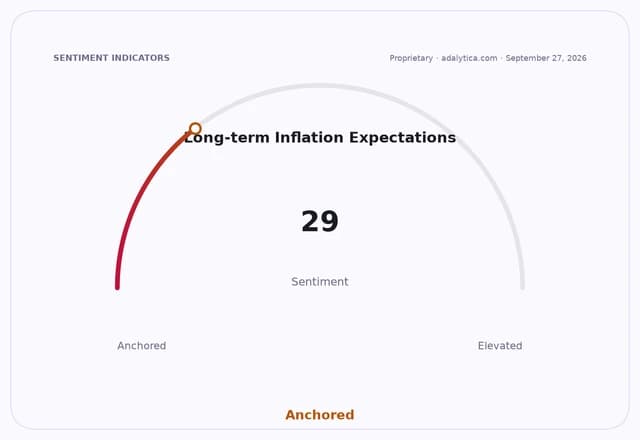
Recent U.S. price data suggest the second-round effects are still limited. The Consumer Price Index stood at 334.131 in August, while core CPI, which strips out food and energy, was 337.765. Core inflation has been advancing more steadily than headline prices, but not in a way that yet points to an energy-driven wage-price spiral. Adalytica’s long-term inflation expectations gauge still shows fear at 29, while its measure of confidence in the Federal Reserve’s 2% target sits at 43, suggesting investors and the public are wary but not convinced inflation is re-anchoring higher. Five-year inflation breakeven sentiment is also only 25, reinforcing the view that markets are treating this as a risk rather than a new regime.
The oil market itself remains volatile enough to keep that risk alive. WTI is far above its 50-day moving average of 88.04 and 200-day moving average of 81.55, though the latest close at 92.41 came after a pullback from the month’s highs. Relative strength readings near 51 imply momentum has cooled from overbought levels, but crude is still trading in a range that would keep pressure on gasoline, shipping and industrial costs if sustained. Technical conditions point to a market that has repriced sharply higher, even if it is not yet in a straight-line breakout.
For investors, the main implication is that oil is now working both as an inflation hedge and as a macro headwind. Energy producers and the wider oil complex remain the clearest beneficiaries of higher crude, while refiners, consumer discretionary names, transport companies and rate-sensitive sectors face margin pressure if fuel costs stay elevated. The risk is not just higher headline inflation prints; it is a more cautious central bank response that keeps discount rates elevated and restrains cyclical growth.
That is why the current debate matters. A sustained oil move can push inflation higher in the near term, but long-term inflation only follows if the shock becomes persistent enough to alter behavior. For now, the evidence points to an elevated risk environment rather than a full inflation reset. The next clues will come from how long crude stays near these levels, whether wage inflation starts to firm, and whether inflation expectations continue to drift higher or settle back once energy volatility eases.
| Entity | Gains | Losses |
|---|---|---|
| Oil producers | ▲Higher realized prices | ▼Consumer backlash if prices stay high |
| Energy ETF holders | ▲Stronger sector returns | ▼Higher volatility risk |
| Consumers | ▲None | ▼Higher fuel and transport costs |
| Central banks | ▲None | ▼Harder inflation-control trade-off |