A Shanghai contractor has lost about 170,000 yuan after a 65-year-old woman used AI-generated videos and fake identities to pose as a 29-year-old doctor, a case that underscores how quickly artificial intelligence is becoming a tool for financial fraud.
China AI Scam Raises Fraud Risk for Banks

What makes this case economically important is not just the amount stolen, but how little technology was needed to weaponize trust. The victim was not tricked by a sophisticated market scheme or a bank breach. He was drawn in by a believable online persona, repeated over months, and persuaded to send money for supposed business and family needs. That is the kind of fraud that scales well, costs little to run and can be repeated many times across many victims.
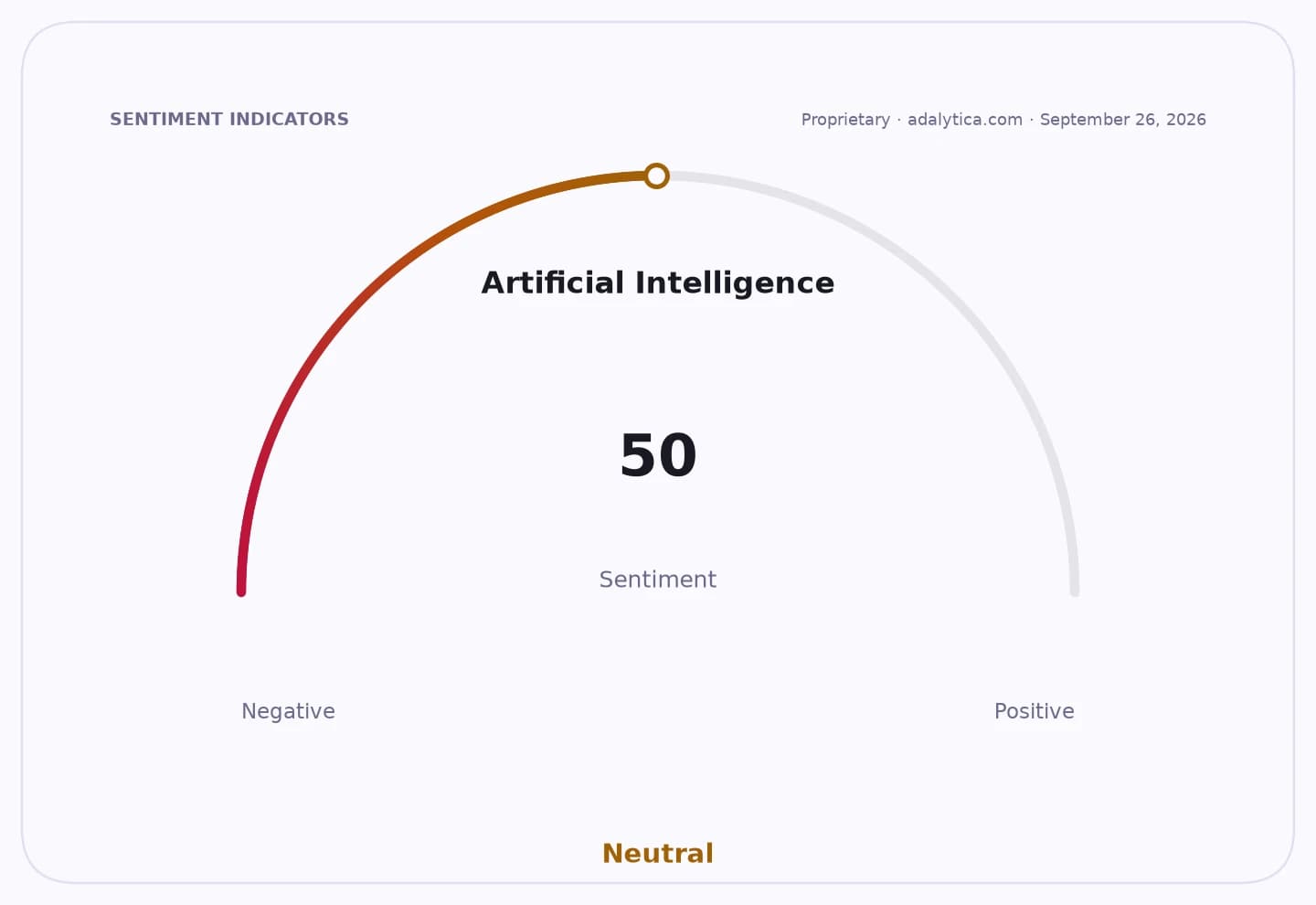
Sentiment IndicatorsⓘProprietary · adalytica.com · September 26, 2026
This is a snapshot — live sentiment, awareness and momentum for 130+ markets update continuously in the dashboard.Open AlphaPulse
For investors, the lesson is broader than one romance scam. AI is lowering the cost of deception across payments, social media, messaging apps and digital identity checks. That raises the stakes for banks, fintechs, telecom operators, cybersecurity firms and any platform that depends on user verification. If consumers become more suspicious of online identities, fraud prevention and authentication will become a bigger part of the cost structure for the digital economy.
Chinese authorities say the woman built a false online presence with thousands of videos and used different roles, including a fake mother, to keep the victim engaged. The account had about 7,000 videos and roughly 10,000 followers, giving the illusion of credibility. The money was allegedly spent on cosmetic treatments, skin products and clothing, and police said the suspect had a prior fraud conviction. That combination of AI-generated content, social engineering and reuse of old scam tactics is what makes the case so instructive.
This is also a warning for companies racing to deploy AI without equally strong guardrails. The same tools that can generate marketing clips, customer support bots and personalized content can also generate convincing lies at scale. The result is a structural arms race: better fraud tools for criminals, better detection tools for institutions and more demand for verification products that can prove who is real.
Adalytica’s Chinese yuan trade signals are neutral, but the China economic growth target sentiment is in extreme fear, and that fits the larger backdrop. When confidence in digital safety weakens, it can affect consumer behavior, online payments and trust in platform ecosystems. Over time, that can push regulators toward tougher disclosure rules for AI-generated content and stricter penalties for impersonation scams.
For long-term investors, the opportunity is on the defensive side of the AI boom. Companies that can authenticate identity, flag synthetic media, monitor transaction anomalies and secure digital channels should see growing demand. The more convincing AI becomes, the more valuable trust infrastructure will be. This is a space worth watching, especially for investors looking for durable winners in the next decade of the AI economy.
| Entity | Gains | Losses |
|---|---|---|
| Cybersecurity firms | ▲Higher demand for fraud detection | ▼More pressure to stay ahead |
| Banks and fintechs | ▲Stronger case for security spending | ▼Higher compliance costs |
| AI content platforms | ▲More use cases for generation tools | ▼Tighter regulation and scrutiny |
| Consumers and investors | ▲Better protection over time | ▼Greater exposure to deception |