A US government website briefly used an AI search tool powered by Alibaba’s Qwen model even as the FBI accused the Chinese company of copying Anthropic’s technology, underscoring the widening gap between Washington’s hard line on Chinese AI and the practical use of low-cost open-weight models across the federal and private sectors.
Federal Register Used Alibaba Qwen AI Tool
The episode matters because it sits at the intersection of national security, procurement policy and the AI cost curve. The Federal Register, run by the National Archives, had the Qwen-powered search option available on Wednesday for users browsing proposed federal regulations and public comments, before it was taken down the same day after social media attention. Reuters could not establish when the tool was deployed, but its appearance comes at a sensitive moment in US-China technology relations and ahead of a meeting next week between the countries’ leaders.
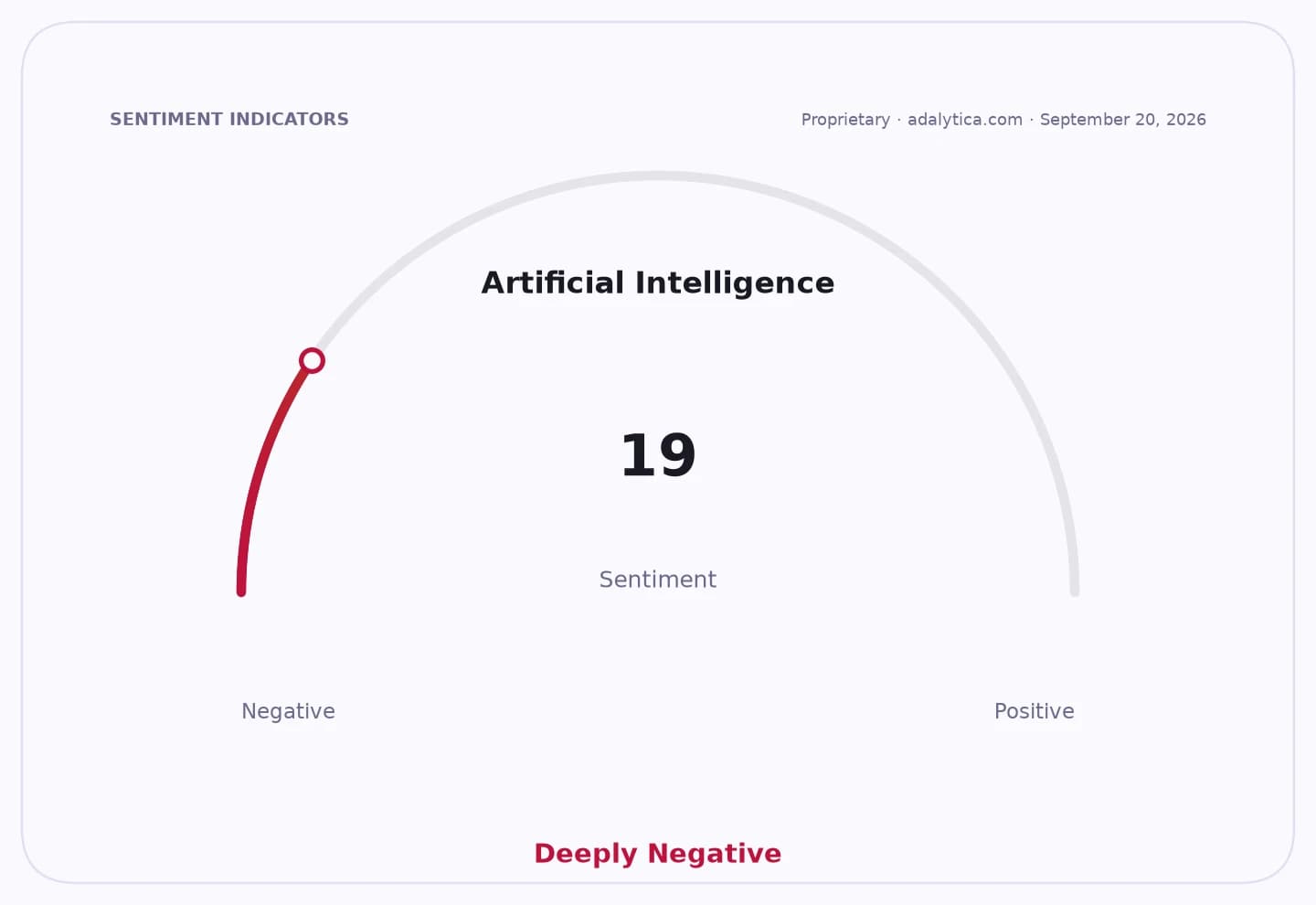
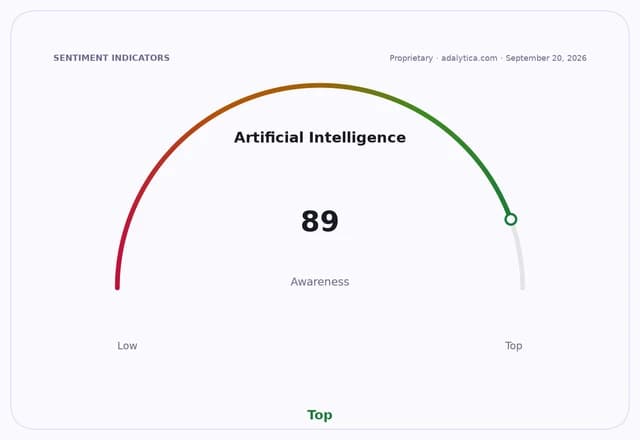
Sentiment IndicatorsⓘProprietary · adalytica.com · September 20, 2026
This is a snapshot — live sentiment, awareness and momentum for 130+ markets update continuously in the dashboard.Open AlphaPulse
For investors, the story reinforces a central tension in AI: the cheapest and most flexible models are often the ones most exposed to geopolitical scrutiny. Open-weight systems such as Qwen can be downloaded and modified, and they are attractive to organizations seeking lower costs and more control over data than with closed-model providers such as OpenAI and Anthropic. That makes them commercially compelling, but also politically fraught when the vendor is Chinese and the US government is publicly warning that Chinese AI firms are engaged in industrial-scale copying of American technology.
The FBI last week accused Alibaba of “malicious” copying of Anthropic’s models, part of a broader US campaign to cast Chinese AI development as both a competitive and a security risk. Alibaba rejected the allegation through the Chinese embassy in Washington, which called the claims unfounded. The contradiction is what gives the Federal Register incident its force: the government is warning companies and institutions about Chinese AI dependence while apparently making use of it itself.
The national-security risk may be limited in this specific case. Experts said the Federal Register was handling public material, not sensitive government data, and Georgetown law professor Anupam Chander said the tool did not appear to pose an immediate cybersecurity threat. Mark Warner, the Senate Intelligence Committee’s vice chairman, said the key question is whether any US data left the government security boundary and was processed on Alibaba-controlled systems. That distinction matters for agencies, contractors and cloud providers because the risk profile changes sharply depending on whether a model runs locally or on a vendor’s infrastructure.
Still, the optics are damaging for policymakers trying to draw bright lines around trusted AI use. Daniel Castro of the Information Technology and Innovation Foundation called it a stark disconnect between US-China AI competition and a federal site using a Chinese model. The episode also lands as Congress scrutinizes Chinese AI integration more broadly: House committees earlier this year questioned Airbnb over its use of Qwen as part of an inquiry into national security risks created by Chinese AI tools in platforms used by Americans.
For the market, the immediate read-through is not about revenue at Alibaba or Microsoft overnight, but about regulation, procurement standards and demand for compliant domestic models and hosting. A tougher stance on Chinese AI could favor US cloud and model providers, while increasing compliance costs for firms that rely on open-weight systems to keep AI margins in check. It also highlights a likely split in the market between enterprises prioritizing price and speed and those willing to pay for political and security insulation.
The broader narrative is that AI adoption is outrunning the policy framework meant to govern it. As regulators debate safeguards, and as Washington tightens rhetoric toward Chinese technology, government agencies and private companies are still being drawn to the same economic logic: use the cheapest capable model available. That clash is likely to shape procurement rules, cross-border AI restrictions and investor sentiment toward the companies supplying both the infrastructure and the models behind the next phase of AI deployment.
| Entity | Gains | Losses |
|---|---|---|
| US open-model providers | ▲More trust and demand | ▼None |
| Alibaba/Qwen | ▲Wider awareness | ▼Political scrutiny |
| US agencies using low-cost AI | ▲Cheaper tools | ▼Security backlash |
| Closed-model vendors | ▲Compliance-driven demand | ▼Price pressure |