China’s consumer inflation rose in August for the first time since April, as energy costs climbed and factory-gate prices accelerated more than expected, a reminder that the world’s biggest buyer of Russian gas is not immune to the inflation shock spreading through global fuel markets.
China Inflation Rises as Energy Costs Climb

That matters because higher energy prices are feeding directly into the cost base of the Chinese economy just as growth is already being squeezed by weak consumer demand, trade tension and weather disruptions. The stronger print suggests the disinflation story that has helped support policy easing expectations is less secure than investors had hoped, especially if crude and gas remain elevated into the winter.
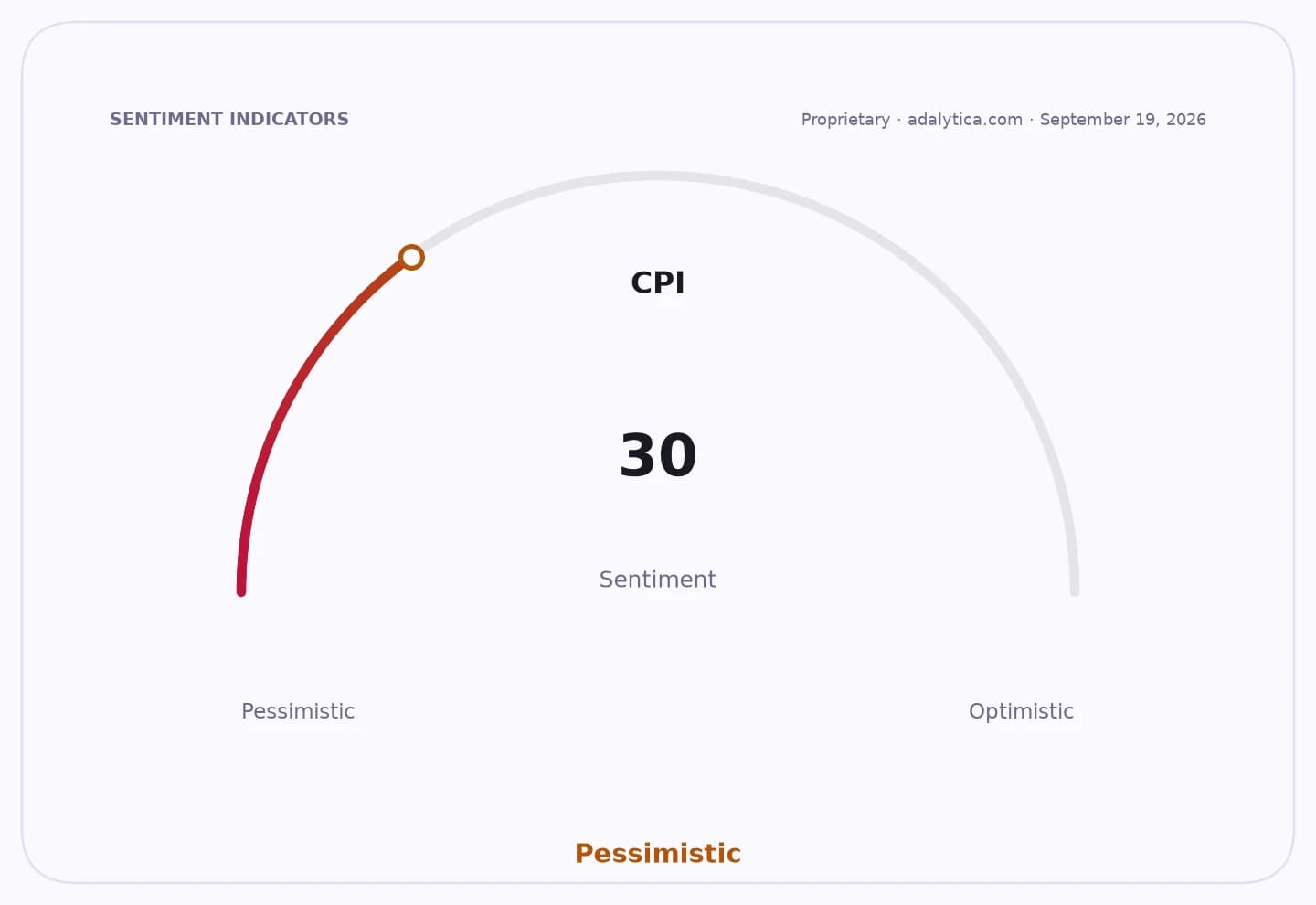
Sentiment IndicatorsⓘProprietary · adalytica.com · September 10, 2026
This is a snapshot — live sentiment, awareness and momentum for 130+ markets update continuously in the dashboard.Open AlphaPulse

The consumer price index rose 0.8% from a year earlier, while producer prices increased 3.8%, up from 3.5%. Energy was the main driver, with food prices also rising for fresh vegetables, eggs and pork. Reuters noted that China still has to navigate soft household spending and external pressure, but the latest figures show imported inflation is now the bigger risk to margins in industry and purchasing power at the consumer level.
For markets, that combination is critical. A country that buys enormous volumes of Russian energy can still end up paying more for it through the global pricing system, and when energy costs rise, the pain spreads across transport, chemicals, manufacturing and retail. The result is a squeeze on the very sectors that have helped make China the anchor of global demand for commodities.

Investors should read this as a warning that inflation is becoming less of a developed-market problem alone and more of a cross-border energy trade problem. Higher crude and gas prices tend to favor upstream producers, tanker names, and energy-equipment suppliers, while they punish energy-intensive industrials, consumer staples with thin margins, and cyclicals that rely on stable input costs. It also keeps pressure on Chinese policymakers, who may have less room to stimulate if headline inflation keeps firming.
The broader narrative is simple: geopolitical stress is turning energy into an inflation tax again. If Middle East and Russia-related supply risks keep oil and gas elevated, China’s inflation will likely stay sticky, and that means the next leg in the market may not be about demand recovery at all, but about who can profit from persistent energy scarcity. I believe investors should stay positioned in the infrastructure and supply beneficiaries of that regime, while remaining cautious on heavy energy users and consumer-facing businesses exposed to another round of cost inflation.
| Entity | Gains | Losses |
|---|---|---|
| Oil and gas producers | ▲Higher realized prices | ▼Demand uncertainty |
| Energy infrastructure suppliers | ▲More capex and orders | ▼Margin pressure elsewhere |
| Chinese industrial users | ▲None | ▼Higher input costs |
| Chinese consumers | ▲None | ▼Lower purchasing power |