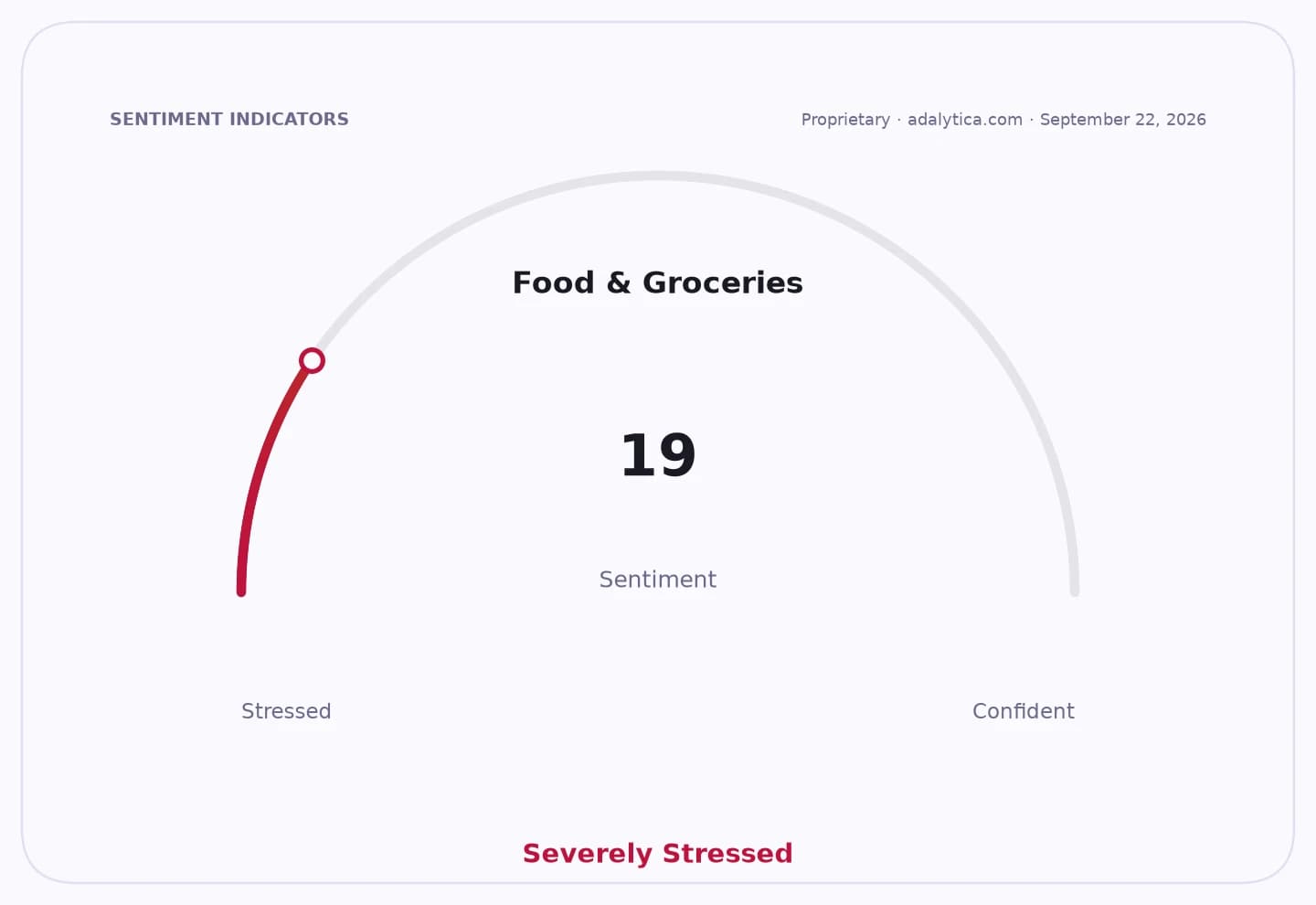
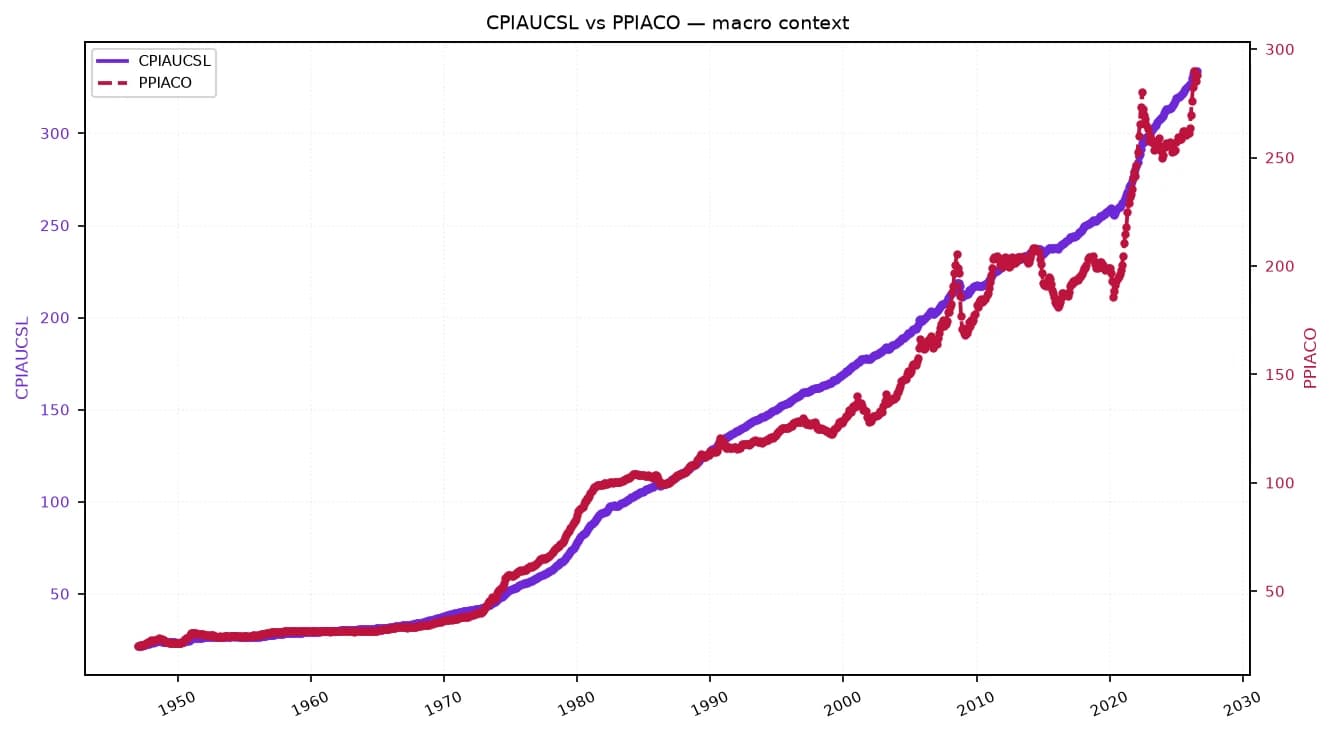
US import prices rose 7.0% from a year earlier in August, the biggest increase since 2022, reviving a key inflation risk just as markets were already bracing for firmer consumer and producer prices and the prospect of tighter Federal Reserve policy.
US import prices rise 7.0% in August
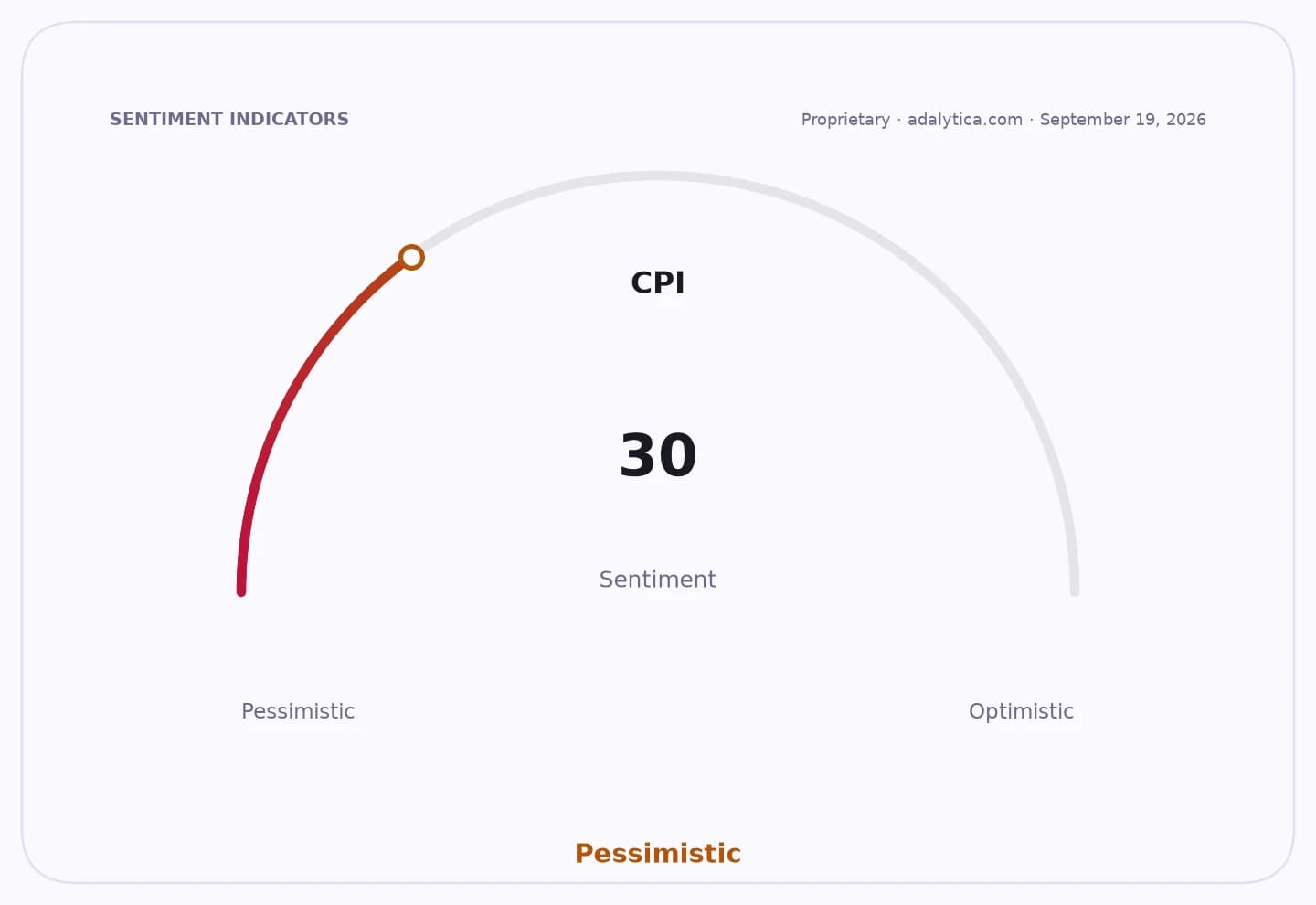
The increase matters because import costs are often the first place global price pressures show up in the US economy. Unlike the consumer price index, import-price data do not feed directly into inflation readings, but they can determine how much room companies have to absorb higher costs before they are passed through to retailers and households. A sustained move higher would squeeze margins for import-heavy businesses and make it harder for consumers to get relief on goods prices.
Sentiment IndicatorsⓘProprietary · adalytica.com · September 19, 2026
This is a snapshot — live sentiment, awareness and momentum for 130+ markets update continuously in the dashboard.Open AlphaPulse
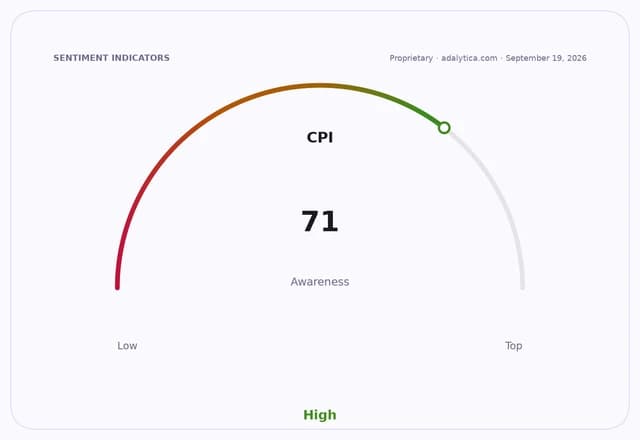
The Labor Department said import prices rose 0.7% in August after two months of declines, while export prices climbed 0.6% on the month and 8.6% from a year earlier. Excluding energy, import prices still advanced 0.8% in August and were up 5.5% year on year, the strongest annual gain since May 2022, underscoring that the pressure is no longer just a fuel story.
Energy remains a major driver, but it is not the only one. Imported fuel prices fell 0.1% in August and were down 10.2% over three months, yet they still stood 26.8% above a year ago. Crude and refined products were up 27.3% year on year, while imported natural gas surged 102.6%. That combination points to renewed pressure on transportation, manufacturing and inventory costs, especially for firms that cannot hedge energy exposure effectively.
The broader concern is that price gains are spreading into industrial and capital goods. Imports from China rose 1.0% in August, the largest monthly increase in the series going back to 2004, driven by computers and electronics. Machinery and mechanical equipment climbed 1.5% on the month and 10.9% over the year, while copper, aluminum and tin jumped 31.7%, 30.0% and 54.4%, respectively. Those moves are especially relevant for manufacturers, builders, cloud-computing and data-center operators, all of which are exposed to equipment and metals costs.
The export side shows the same inflationary dynamic from a different angle. US export prices rose 0.5% for agricultural goods and 0.7% for non-agricultural goods in August, leaving them 5.8% and 8.9% higher than a year earlier, respectively. That indicates US producers are facing both higher input costs and stronger pricing power abroad, a mix that can help revenues but also raises the risk that global inflation proves stickier than policymakers want.
For investors, the report reinforces the case that inflation is not fully back under control and that the Fed may have less room to ease policy than markets had hoped. It also complicates the outlook for retailers, consumer staples groups and industrial companies that rely on imported merchandise, metals or components. Big-box chains and value retailers may be able to push back against some price increases, but their SEC filings already warn that absorbing higher costs can pressure gross margins if they avoid passing them on.
The market implications are straightforward: inflation-sensitive assets face renewed scrutiny, while companies with strong pricing power or domestic supply chains are better positioned than import-dependent peers. If energy and metals prices stay elevated, the squeeze on corporate margins could linger into year-end and eventually show up in consumer prices, forcing the debate over US inflation and Fed policy back to center stage.
| Entity | Gains | Losses |
|---|---|---|
| US exporters | ▲Higher selling prices | ▼Foreign buyers facing costlier goods |
| Import-dependent retailers | ▲Potential margin protection if costs are passed on | ▼Margin compression from higher input costs |
| Domestic producers with pricing power | ▲Better revenue uplift | ▼Consumers facing higher prices |
| Consumers | ▲Little immediate benefit | ▼Higher goods and fuel costs |