Slovenia’s producer price inflation has climbed to its highest level in more than three years, a sign that cost pressures are still working their way through the industrial economy and could keep consumer inflation sticky if firms pass them on.
Slovenia producer prices rise 3.5% in August
Industrial producer prices rose 3.5% year on year in August, accelerating from 3.4% in July and marking the fastest pace since July 2023, according to the country’s statistics office. Output prices have been rising since February, and the August reading showed broad-based strength across both domestic and export markets.
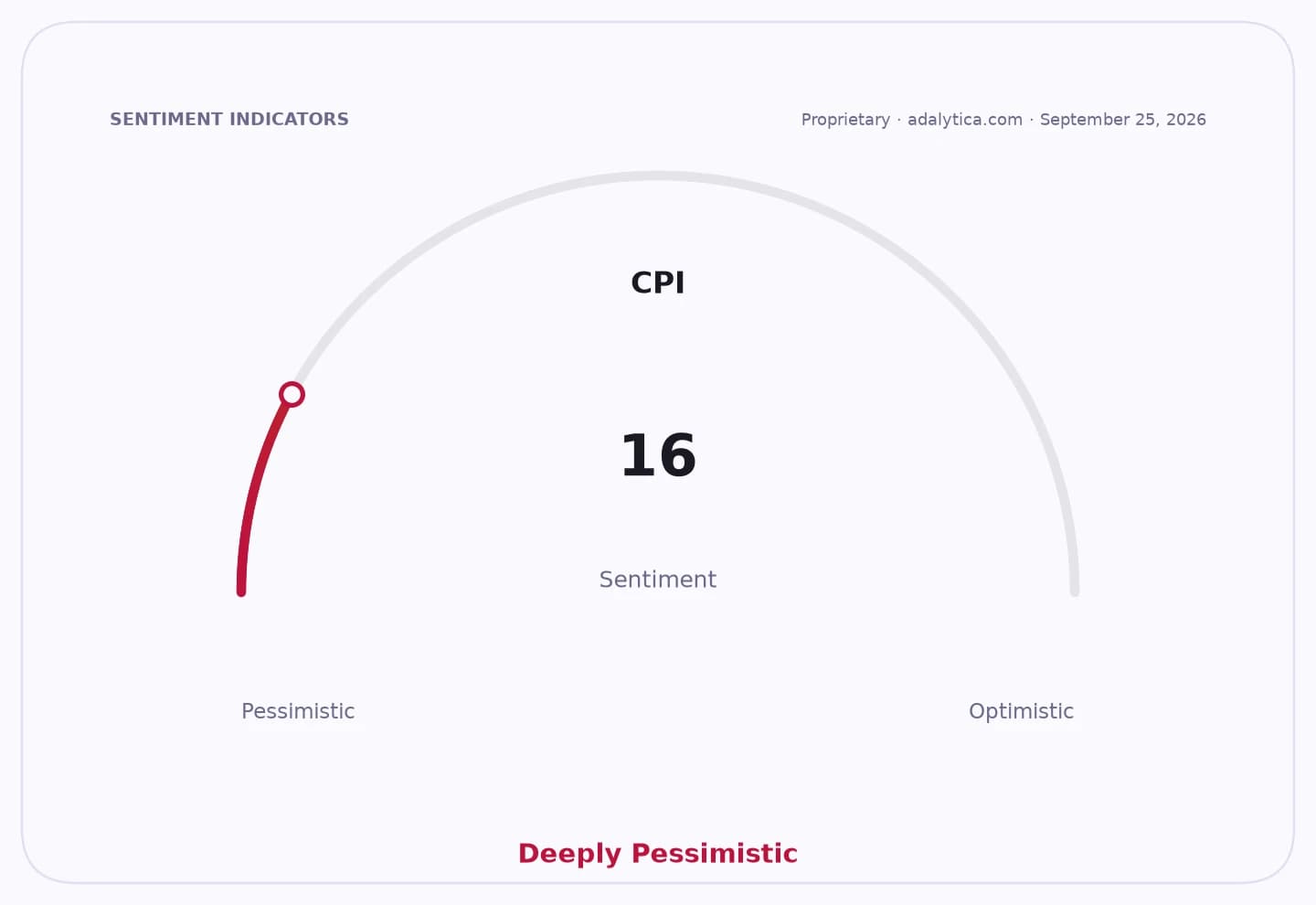
Sentiment IndicatorsⓘProprietary · adalytica.com · September 25, 2026
This is a snapshot — live sentiment, awareness and momentum for 130+ markets update continuously in the dashboard.Open AlphaPulse
The development matters because producer prices tend to feed into consumer prices with a lag, especially when firms face stronger input costs for intermediate goods, energy and capital equipment. In Slovenia, prices for intermediate goods climbed 5.8%, the sharpest among the main industrial groups, while energy prices were 2.6% higher. Domestic-market prices increased 3.7% and those for non-domestic markets rose 3.4%, suggesting cost inflation is not confined to one channel of demand.
For policymakers, the data complicates the case that inflationary pressure is fully contained. Slovenia, like much of the euro area, has benefited from the easing of the post-pandemic price shock, but a persistent rise in producer prices can keep the European Central Bank wary of declaring victory too soon. The bigger question for markets is whether firms can absorb these costs in margins or will eventually push them through to households.
That distinction matters for investors. If businesses successfully pass through higher input costs, consumer inflation could stay above target for longer, supporting a firmer rate path. If they cannot, margins may come under pressure, especially in manufacturing-heavy sectors exposed to energy and materials costs. Either outcome has implications for earnings, pricing power and domestic demand.
The monthly gain of 0.3%, after 0.7% in July, suggests the pace of acceleration has moderated, but not reversed. That leaves the inflation picture vulnerable to any renewed lift in energy prices or supply-chain costs, while also keeping attention on whether the current trend spreads further into consumer goods.
| Entity | Gains | Losses |
|---|---|---|
| Slovenian producers with pricing power | ▲Can pass through higher costs | ▼Face softer volumes if demand weakens |
| Consumers and importers | ▲— | ▼Higher goods prices and living costs |
| Inflation-sensitive bondholders | ▲— | ▼Risk of stickier inflation and higher yields |
| Energy and intermediate-goods suppliers | ▲Stronger pricing environment | ▼— |