China is laying out a timetable to turn the Moon from a science target into a resource platform, with researchers saying Beijing needs to prove key technologies by 2030 and move toward large-scale extraction by 2050 as competition with the U.S. for a long-term lunar foothold intensifies.
China lunar resource roadmap targets 2050 extraction

The roadmap matters because it pushes space strategy into the realm of industrial policy. If China can produce water, oxygen and construction materials on the Moon, it would cut the cost of sustained missions, support crewed bases and strengthen its hand in the next phase of space competition, where access to in-situ resources could decide who can stay longer and move farther.
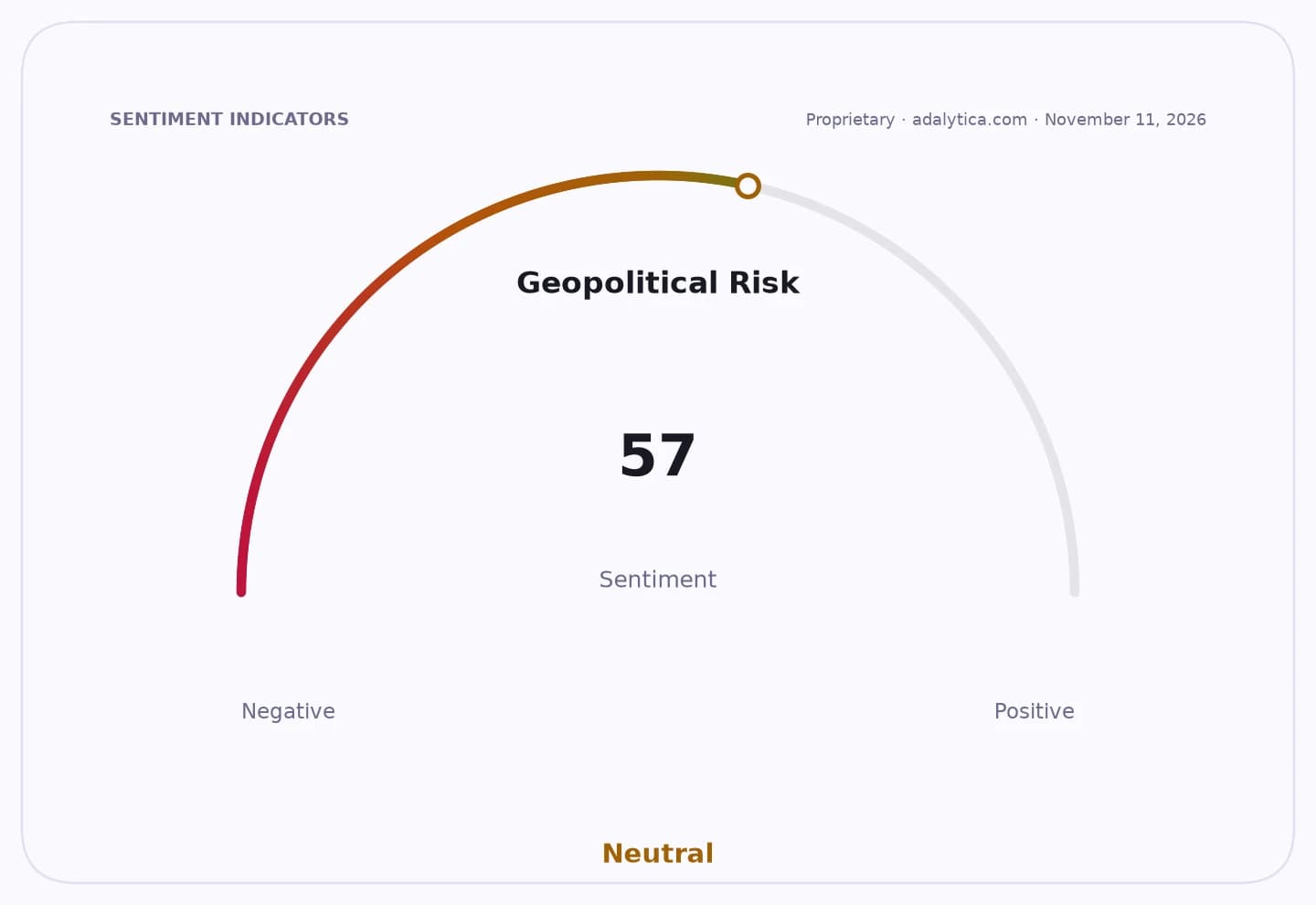
Sentiment Indicators

In a study expected to appear in the journal Deep Space Exploration, lead researcher Wu Weiren said China must test at least one critical technology — such as extracting ice or separating oxygen from lunar soil — on a future Chang’e robotic mission or a crewed landing program. The plan calls for a small industrial facility by 2040 and “large-scale” lunar resource use by 2050.
The authors said the next 20 years could be the pivot point when extraterrestrial resources shift from scientific exploration to industrial application. They also acknowledged China is behind in long-term planning, noting that it still lacks a dedicated national strategy or medium- and long-term roadmap for extraterrestrial resource development.
Geopolitical Risk
That gap stands in contrast with the U.S., which has spent more than two decades formalizing lunar resource rights and usage. President George W. Bush asked NASA to study extraction and use of space resources in 2004, Congress passed a law in 2015 allowing Americans to own and sell what they mine in space, and the Trump administration in 2020 said the U.S. would not treat outer space as global commons. NASA’s Artemis program also treats lunar resources as a foundation for a permanent Moon base and future Mars missions.
The competition is not just about what lies under the lunar surface. Chinese researchers said key positions in space, including Lagrange points and distant retrograde orbits around the Moon, are strategic hubs for surveillance and for deeper exploration. China already placed the Queqiao relay satellite near a lunar Lagrange point in 2018, while NASA flew the uncrewed Orion spacecraft into distant retrograde orbit during Artemis I in 2022.
Beijing is also being urged to bring more private companies into the effort. The researchers said China needs clearer mechanisms for commercial participation and a national fund to support the industry, arguing that state-led missions should pave the way for private investment and eventual market demand.
For investors, the story reinforces the long-duration case for lunar and deep-space contractors, even though the payoff is still years away. Shares of Intuitive Machines, Rocket Lab and MP Materials were all volatile in recent trading, reflecting how quickly space and strategic-materials themes can reprice on policy and contract news.
| Entity | Gains | Losses |
|---|---|---|
| China space program | ▲Strategic autonomy | ▼Planning gap |
| U.S. Artemis program | ▲Policy momentum | ▼Chinese rivalry |
| Lunar contractors | ▲Long-term demand | ▼Execution risk |
| Private space investors | ▲New market narrative | ▼Timing uncertainty |