China is easing the pace of preparations for robot manufacturers seeking stock market listings as regulators grow wary that investor enthusiasm has pushed valuations beyond what the business models can justify.
China slows robot IPO prep as valuations cool
The move matters because robotics has been one of the clearest beneficiaries of China’s policy push into advanced manufacturing and artificial intelligence, and any official hesitation could cool funding for a sector that still depends heavily on capital to scale production, improve autonomy and win commercial contracts. If the IPO pipeline slows, private backers may have to wait longer for exits, while listed peers could face a sharper reset in the lofty assumptions that have built up around humanoid and service robotics.
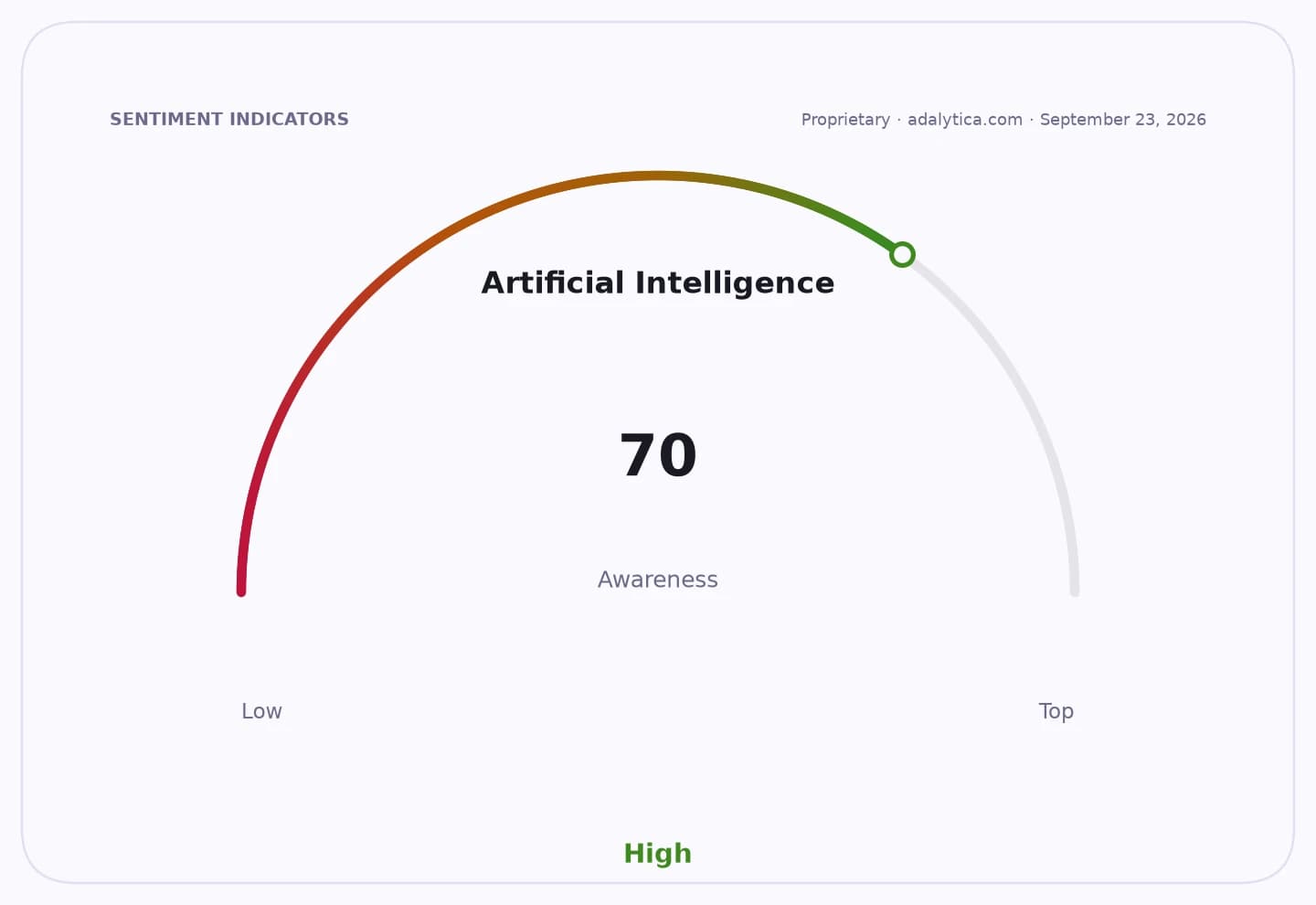
Sentiment IndicatorsⓘProprietary · adalytica.com · September 25, 2026
This is a snapshot — live sentiment, awareness and momentum for 130+ markets update continuously in the dashboard.Open AlphaPulse
That risk is not theoretical. The market has already shown how quickly enthusiasm can outrun fundamentals in automation-themed equities. The BOTZ robotics and automation ETF has swung from a February close of 35.75 to 40.88 in late May before sliding back to 35.22 on Sept. 24, with its 50-day moving average now around 35.68 and the share price still below its 200-day average of 36.89. ROBO has been steadier, closing at 80.38 on Sept. 24, but it too has lost some momentum after earlier strength. The broader pattern suggests investors are still willing to pay for robotics growth, but are becoming more selective about execution, profitability and commercialization timelines.
For Chinese authorities, the concern is less about robotics as a strategic industry than about market discipline. Beijing has encouraged investment in next-generation manufacturing, but it has also repeatedly shown a willingness to intervene when sectors attract speculative capital faster than earnings can catch up. Slowing IPO preparation gives regulators a way to cool froth without abandoning support for the industry altogether.
For investors, the implication is twofold. On one hand, a tighter listing environment may limit near-term supply of new robotics names and reduce the risk of a flood of debutante stocks trading on hype rather than cash flow. On the other, it reinforces that the path from prototype to scalable commercial business remains uncertain, especially for humanoids and service robots where unit economics are still being tested. A slower IPO calendar could also push more capital toward established automation names, software-enabling firms and industrial suppliers with clearer revenue visibility.
The next watchpoint is whether the slowdown remains a selective regulatory filter or broadens into a more cautious stance toward the sector’s financing channels. If Beijing is simply trying to prevent inflated pricing, the effect may be temporary. If it is signaling that robotics valuations have outrun fundamentals, then private funding rounds, domestic listings and even global robotics proxies may all face a reality check.
| Entity | Gains | Losses |
|---|---|---|
| Regulators | ▲More pricing discipline | ▼Faster capital formation |
| Established listed robotics firms | ▲Less IPO competition | ▼Fewer sector-wide valuation boosts |
| Private robot makers | ▲Longer runway to mature | ▼Delayed exits and funding uncertainty |
| IPO investors/speculators | ▲Fewer overpriced listings | ▼Less access to high-growth names |