China’s stock market is stuck in a tug-of-war, with technology shares pushing higher even as banks and insurers slump after Beijing unveiled plans for a combined $54 billion capital injection into state-owned lenders and insurers.
China stocks split as tech rises, banks fall

That matters because the move underscores two competing forces that continue to shape Chinese equities: policy support for financial stability on one side, and investor enthusiasm for chips, artificial intelligence and other growth sectors on the other. For investors, the message is simple — this is still a stock market where sector selection matters more than betting on the index as a whole.
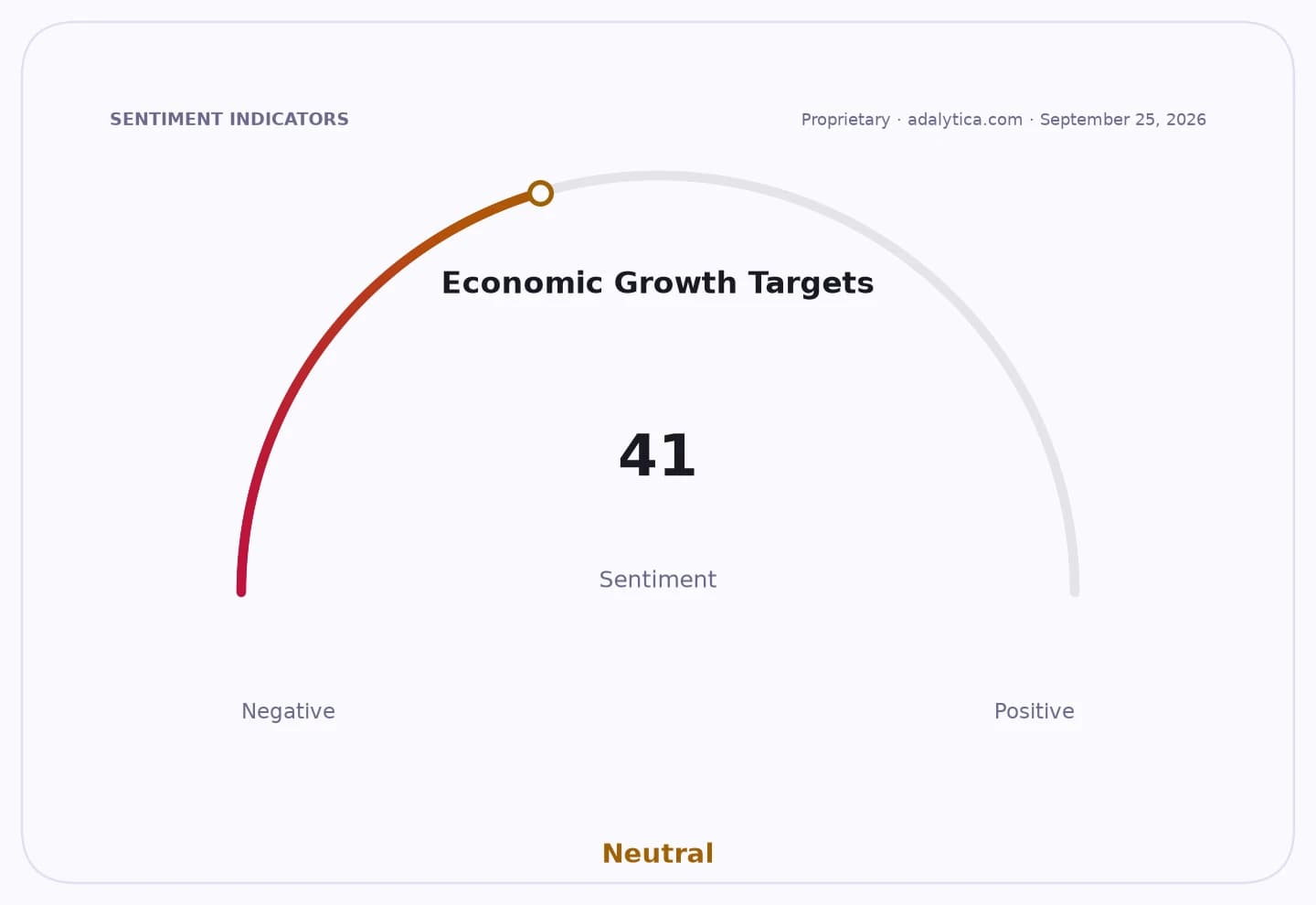
Sentiment IndicatorsⓘProprietary · adalytica.com · September 7, 2026
This is a snapshot — live sentiment, awareness and momentum for 130+ markets update continuously in the dashboard.Open AlphaPulse

The Shanghai Composite slipped 0.2% to 3,920.70 at the midday break, while the CSI 300 edged up 0.2%. The market’s split personality was even clearer in the growth-heavy corner of the market, where the ChiNext Composite rose 2.6% and the STAR50 added 1.6%. Chip stocks gained 2.6% and the CSI 5G Communication Index climbed nearly 5%, led by Zhongji Innolight, which jumped 8.1%.
That tech strength is being driven by the same forces that have lifted semiconductor and AI-related names across global markets: expectations for rising demand, improving sentiment around advanced chips and a willingness by investors to pay up for companies tied to the next wave of computing. In the near term, that can keep China’s technology leaders resilient even when the broader economy looks uneven.
The weaker side of the tape was financials. China’s finance ministry said it plans to lead the capital injection into state-owned insurers and banks, part of a wider effort to bolster the balance sheets of key lenders and reinforce confidence in the financial system. Markets read that as support, but also as a reminder that parts of the banking and insurance sectors still need help. Insurance stocks fell 2.5% and banks declined 1.5%.
For long-term investors, that split is important. Capital injections can stabilize the system and reduce tail risk, but they also dilute the idea that financials are a clean growth story right now. By contrast, the strength in chips and 5G suggests China’s most investable growth themes are increasingly tied to technology self-sufficiency and digital infrastructure rather than credit creation.
The mixed tone was not limited to the mainland. Hong Kong’s Hang Seng Index and Hang Seng Tech Index were both down about 1%, showing that enthusiasm for Chinese tech is still vulnerable to global risk appetite, policy uncertainty and U.S.-China tensions. Across Asia, equities were broadly firmer after a stronger U.S. jobs report helped support the view that global growth is holding up, but oil prices also edged higher after Gulf shipping attacks involving the United States and Iran, keeping geopolitical risk in the background.
For investors, the best takeaway is that China is still a stock-picker’s market. If you want exposure, the opportunity may be less about chasing the headline index and more about owning the businesses with secular growth, pricing power and demand tied to AI, semiconductors and communications equipment. Banks and insurers may remain useful for stability, but they are facing a very different set of economics.
If this pattern holds, China equities could stay range-bound at the index level while leadership rotates sharply underneath. That makes patience, diversification and a focus on durable competitive advantages even more valuable. In other words: watch the tech leadership closely, but don’t assume the whole market has turned.
| Entity | Gains | Losses |
|---|---|---|
| China tech stocks | ▲AI and chip optimism | ▼Broader index weakness |
| Banks and insurers | ▲Capital support | ▼Profit and valuation pressure |
| Mainland stock indexes | ▲Stability from policy backing | ▼Lack of broad participation |
| Hong Kong tech shares | ▲None on the session | ▼Global risk-off sentiment |