Circle’s USDC is emerging as the first stablecoin to sit squarely under the European Union’s new crypto rulebook, a regulatory advantage that could strengthen its pitch to banks, payment firms and exchanges at a time when compliant digital dollars are becoming more valuable than the biggest market share.
Circle USDC Gains EU Compliance Advantage

The shift matters because the EU’s Markets in Crypto-Assets framework is forcing issuers to prove they can operate under tighter reserve, disclosure and governance standards. For investors, that turns regulation from a compliance burden into a competitive moat: the stablecoin that is easiest for institutions to use in Europe may gain distribution, transaction volume and a bigger share of the global dollar-token market.
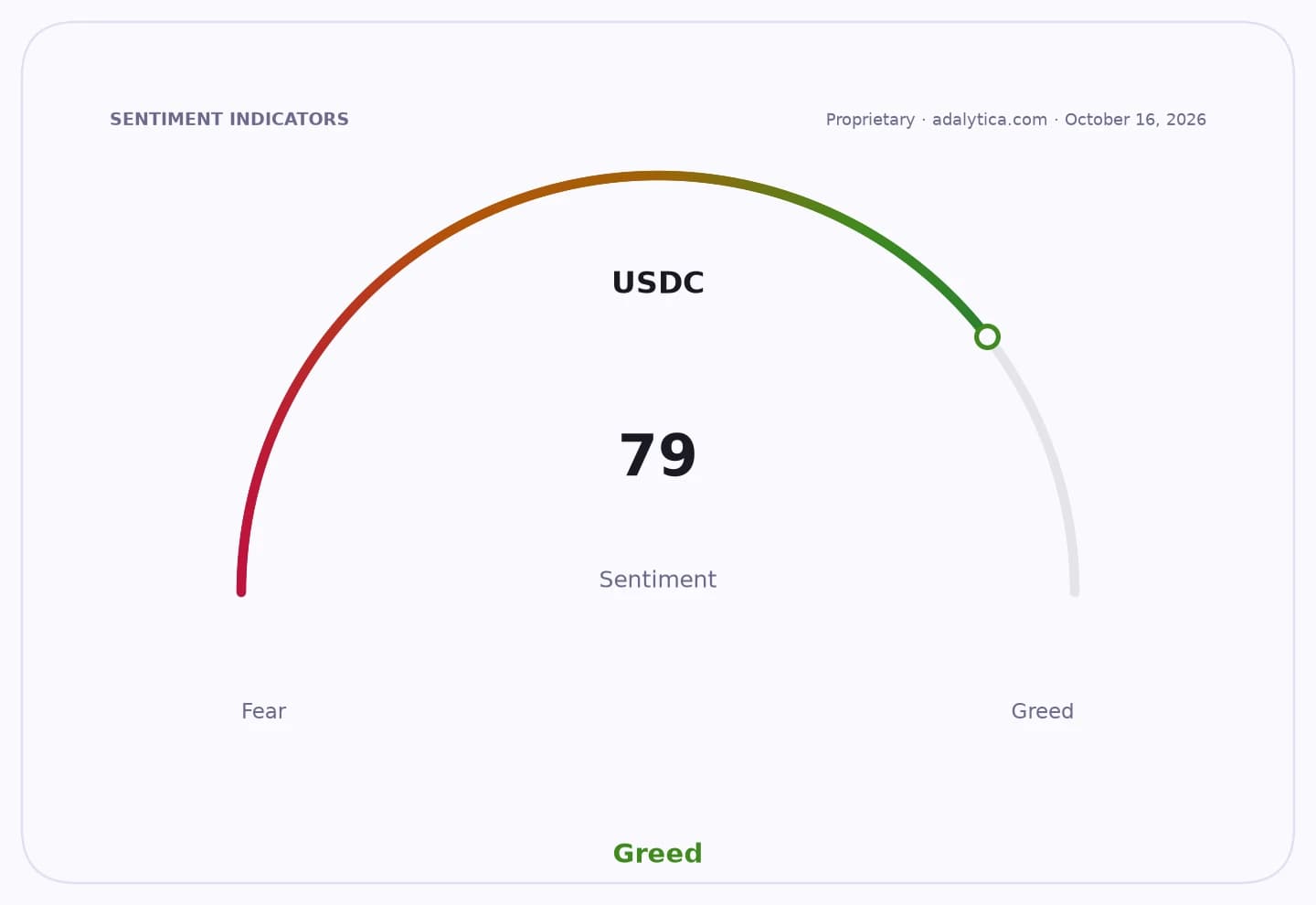
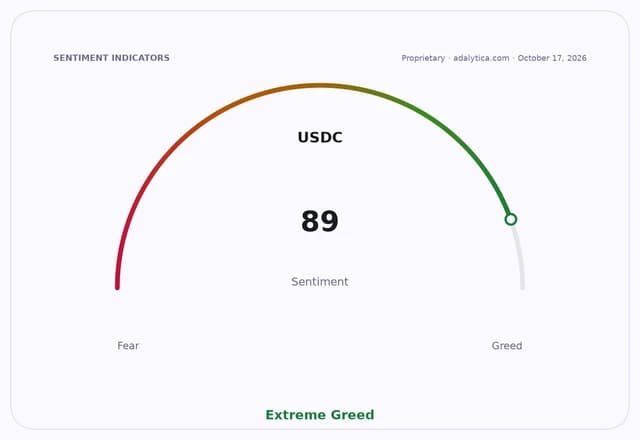
Sentiment IndicatorsⓘProprietary · adalytica.com · October 17, 2026
This is a snapshot — live sentiment, awareness and momentum for 130+ markets update continuously in the dashboard.Open AlphaPulse
Circle’s stock has been volatile around that narrative. Shares closed at $82.22 on Oct. 16, down from $97.42 on Sept. 14 and well below the $131.76 peak in May, with the 50-day moving average at $85.40 and the 200-day average at $86.08. The stock’s RSI reading of 44.7 suggests momentum is neither oversold nor overheated, while the MACD remains negative, underscoring a market that is still waiting for a clearer catalyst.
The EU backdrop is especially important because stablecoins are increasingly being used as settlement rails rather than speculative tokens. A compliant USDC can be more attractive to exchanges, fintechs and cross-border payment firms that do not want to risk running afoul of European rules, while rivals such as Tether’s USDT face a more complicated path in regulated European markets.
That makes Circle’s regulatory positioning a strategic issue, not just a legal one. The company is trying to turn USDC into the preferred institutional dollar token in markets where oversight is tightening and where access to banking partners, exchanges and payment networks may depend on meeting the new standards.
The broader market context still favors stablecoin adoption. Institutional interest in digital dollars continues to build across payments, remittances and crypto trading, even as policymakers scrutinize reserve quality and consumer protections. For Circle, the next test is whether EU compliance translates into faster adoption, deeper liquidity and a more durable gap over less-regulated competitors.
| Entity | Gains | Losses |
|---|---|---|
| Circle / USDC | ▲EU compliance edge | ▼Less regulated rivals |
| Tether / USDT | ▲Global demand growth | ▼EU market access pressure |
| Banks and payment firms | ▲Clearer operating rules | ▼Higher compliance costs |
| Crypto exchanges | ▲Easier EU listings | ▼Weaker stablecoin choice if noncompliant |