Travala.com has made USDC a more practical payment rail for travel bookings, a small operational change that underscores a larger shift toward stablecoins as settlement currency in online commerce.
Travala Adds USDC Payments for Travel Bookings
The online travel agency now lets customers deposit USDC into their account wallet and use it to pay for flights, hotels, activities, travel credits and gift cards with no transaction fees, according to the company. For a business built on cross-border payments, that matters because it reduces friction for users who already hold crypto and may improve conversion at checkout by avoiding repeated wallet transfers and withdrawal charges.
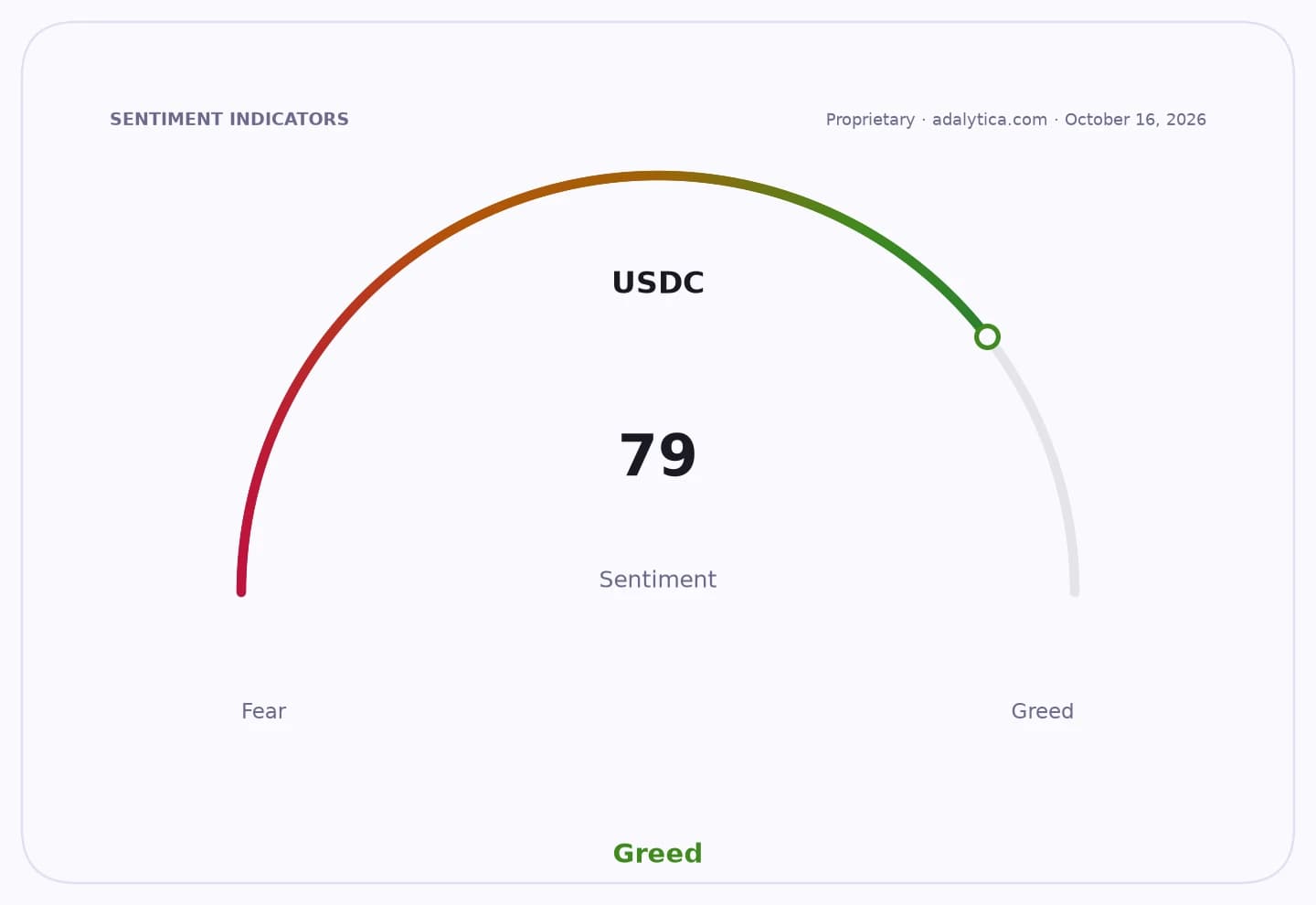
Sentiment IndicatorsⓘProprietary · adalytica.com · October 16, 2026
This is a snapshot — live sentiment, awareness and momentum for 130+ markets update continuously in the dashboard.Open AlphaPulse
Travala said USDC accounts for about 6% of monthly bookings, equivalent to more than $3.5 million of the company’s roughly $60 million in 2023 booking volume. That is not enough to move the travel industry, but it is meaningful evidence that stablecoins are becoming a real payments tool rather than just a trading instrument. The ability to fund a wallet once and spend repeatedly also makes USDC more competitive with card payments for digitally native travelers.
The move fits a broader travel trend toward more personalized, digitally enabled booking behavior. As the sector leans into niche itineraries, experiential trips and direct-to-consumer distribution, payment methods that are fast, borderless and cheap become more relevant. Stablecoins are especially attractive for international customers, where exchange fees, banking delays and card declines can reduce completion rates.
For investors, the key question is whether USDC usage on platforms like Travala is a niche feature or an early signal of deeper adoption in travel commerce. The bullish case is that stablecoins can lower payment costs, improve settlement speed and broaden access to global customers. The bearish case is that usage remains concentrated among crypto-savvy users and depends on continued confidence in the issuer and underlying blockchain infrastructure.
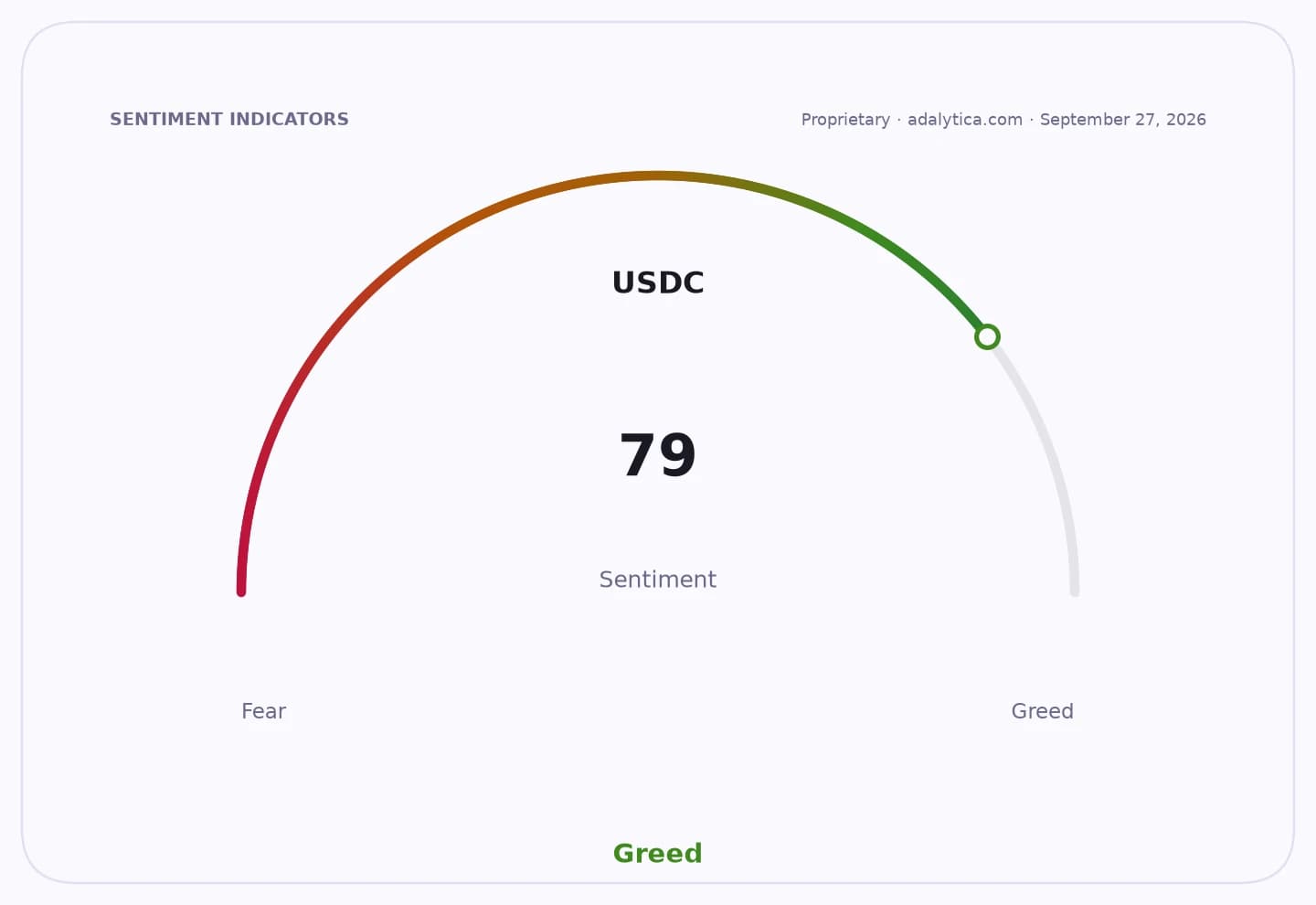
USDC itself is trading at $1, in line with its peg, while Adalytica’s USDC Trade Signals snapshot shows sentiment in “Greed” territory. That suggests healthy interest, even as broader crypto market indicators remain weak: Bitcoin’s sentiment gauge is in “Extreme Fear,” and ether has struggled to recover from recent weakness. In other words, stablecoin adoption can advance even when speculative crypto markets are under pressure.
For Travala, the immediate significance is operational rather than transformational: fewer payment frictions and a smoother path for repeat purchases. For the wider market, it is another example of stablecoins moving closer to mainstream consumer finance, with travel emerging as a natural use case because bookings are global, fragmented and fee-sensitive.
The next test is whether other travel platforms follow suit and whether USDC usage broadens beyond a crypto-native audience. If it does, stablecoins could take a bigger share of cross-border travel payments than many traditional processors currently expect.
| Entity | Gains | Losses |
|---|---|---|
| Travala.com | ▲Lower payment friction | ▼Card and transfer fees |
| USDC | ▲More real-world utility | ▼Pure trading relevance |
| Travelers | ▲Faster, cheaper checkout | ▼FX and withdrawal costs |
| Traditional payment rails | ▲— | ▼Share of cross-border travel payments |