Coca-Cola’s 64th straight annual dividend increase is the real story for investors who care about cash flow, not just stock charts.
Coca-Cola Raises Dividend for 64th Straight Year

That kind of consistency matters because it tells you something a price move never can: the business has been able to return more cash to owners through recessions, wars, shifting consumer tastes and changing interest rates. For long-term investors, that is the essence of a durable dividend stock. It is not about chasing the highest current yield. It is about finding companies that can keep raising the payout for years, even decades, and let compounding do the heavy lifting.
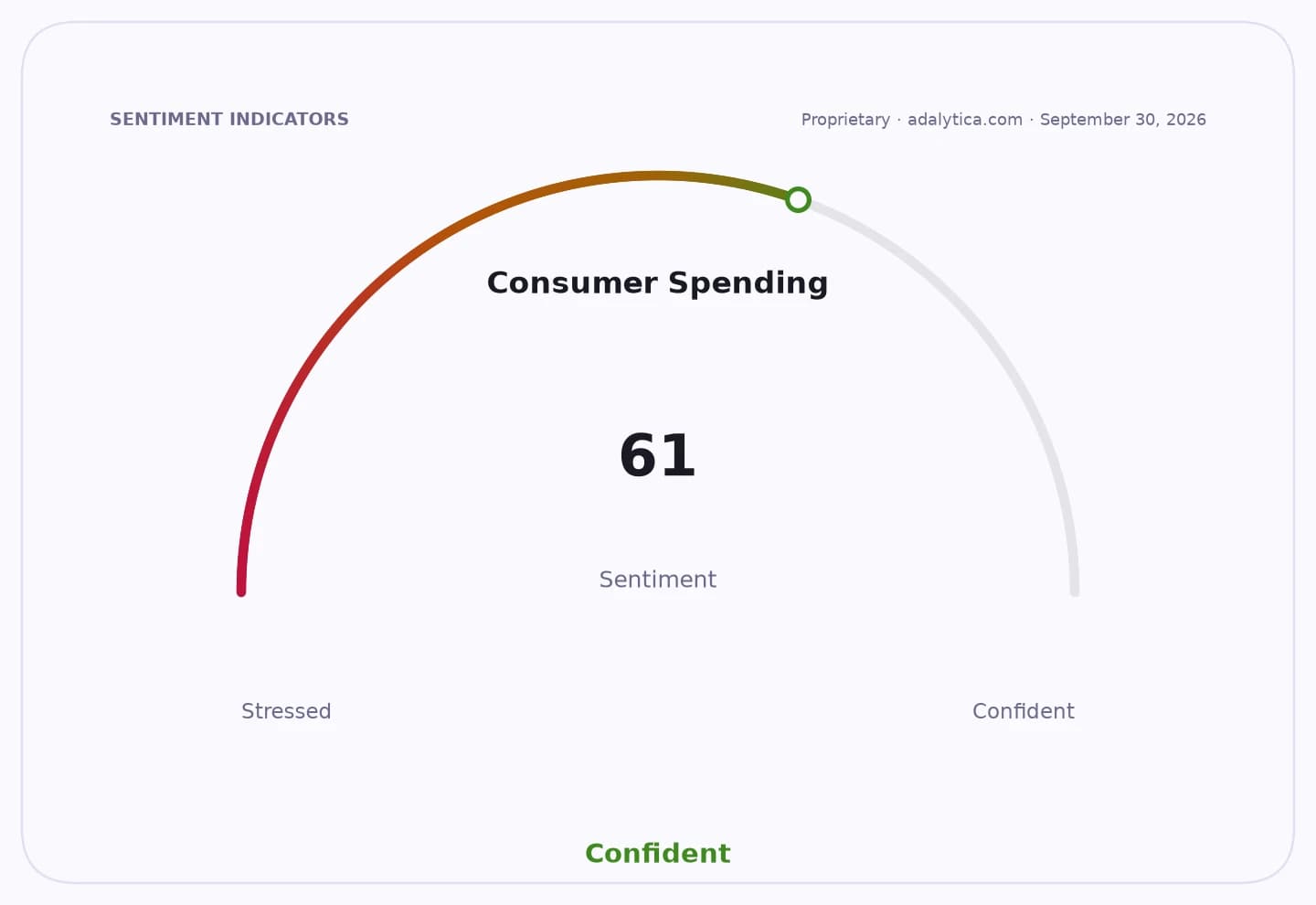
Sentiment IndicatorsⓘProprietary · adalytica.com · September 28, 2026
This is a snapshot — live sentiment, awareness and momentum for 130+ markets update continuously in the dashboard.Open AlphaPulse
The lesson from Coca-Cola is simple and transferable. Before buying any dividend stock, investors should check five things: a long record of annual increases, a business with a real moat, rising operating cash flow, manageable debt, and a valuation that does not force you to overpay for quality. Those are not abstract rules. They are the difference between a dividend that grows with inflation and one that eventually gets cut.
Coca-Cola’s latest increase lifted its annual payout to $2.12 a share from $2.04. That may not sound dramatic in a single year, but over time it adds up. Berkshire Hathaway’s Coca-Cola stake is the clearest example of why patience matters: Warren Buffett built the position for about $1.3 billion and never sold a share. At the current payout rate, that holding is generating roughly $848 million a year in dividends. That is the power investors are really buying when they own a company with decades of dividend growth behind it.
Procter & Gamble offers an even stronger proof point, with 70 consecutive annual increases and 136 straight years of paying a dividend. Those are the kinds of records that tell investors a management team treats shareholder payouts as part of the business model, not as an afterthought.
The stock charts, however, remind investors to stay disciplined. Coca-Cola shares have recently hovered around $87.81, above both its 50-day and 200-day moving averages, while the RSI has eased from overbought levels, showing momentum remains positive but no longer stretched. Walmart has been far choppier, and the company’s stock has slipped back to about $107.98, below its 200-day moving average. Costco, meanwhile, is still expensive at roughly $922.77 a share, which helps explain why even quality dividend names can be a poor buy if investors pay too much.
That valuation point matters. Dividend investing works best when you combine quality with patience, not when you reach for excitement. Mature companies such as Coca-Cola and P&G may not deliver the explosive revenue growth of faster-moving businesses, but they can quietly deliver a far better long-term experience for investors who want income, stability and compounding.
There are risks, of course. A structurally weaker consumer backdrop, changing habits around sugary drinks or packaged goods, or simply paying too rich a price can all undermine the appeal of a dividend stock. But for investors building portfolios over five, 10 or even 20 years, the companies that keep raising cash to owners are often the ones worth holding through volatility.
The takeaway is straightforward: dividend investing is not about finding a high yield today. It is about finding businesses that can increase payouts year after year and still protect their cash-generating power. Coca-Cola remains one of the best examples in the market, and the five-rule framework applies just as well to Walmart, Costco, Procter & Gamble and the next dividend champion you add to your watchlist.
| Entity | Gains | Losses |
|---|---|---|
| Coca-Cola long-term holders | ▲Rising cash income | ▼Short-term traders |
| Dividend growth investors | ▲Compounding payouts | ▼Yield chasers |
| Quality businesses with moats | ▲Patient capital | ▼Weak cash-flow names |
| Costco buyers at rich valuations | ▲Stable operations | ▼Margin of safety |