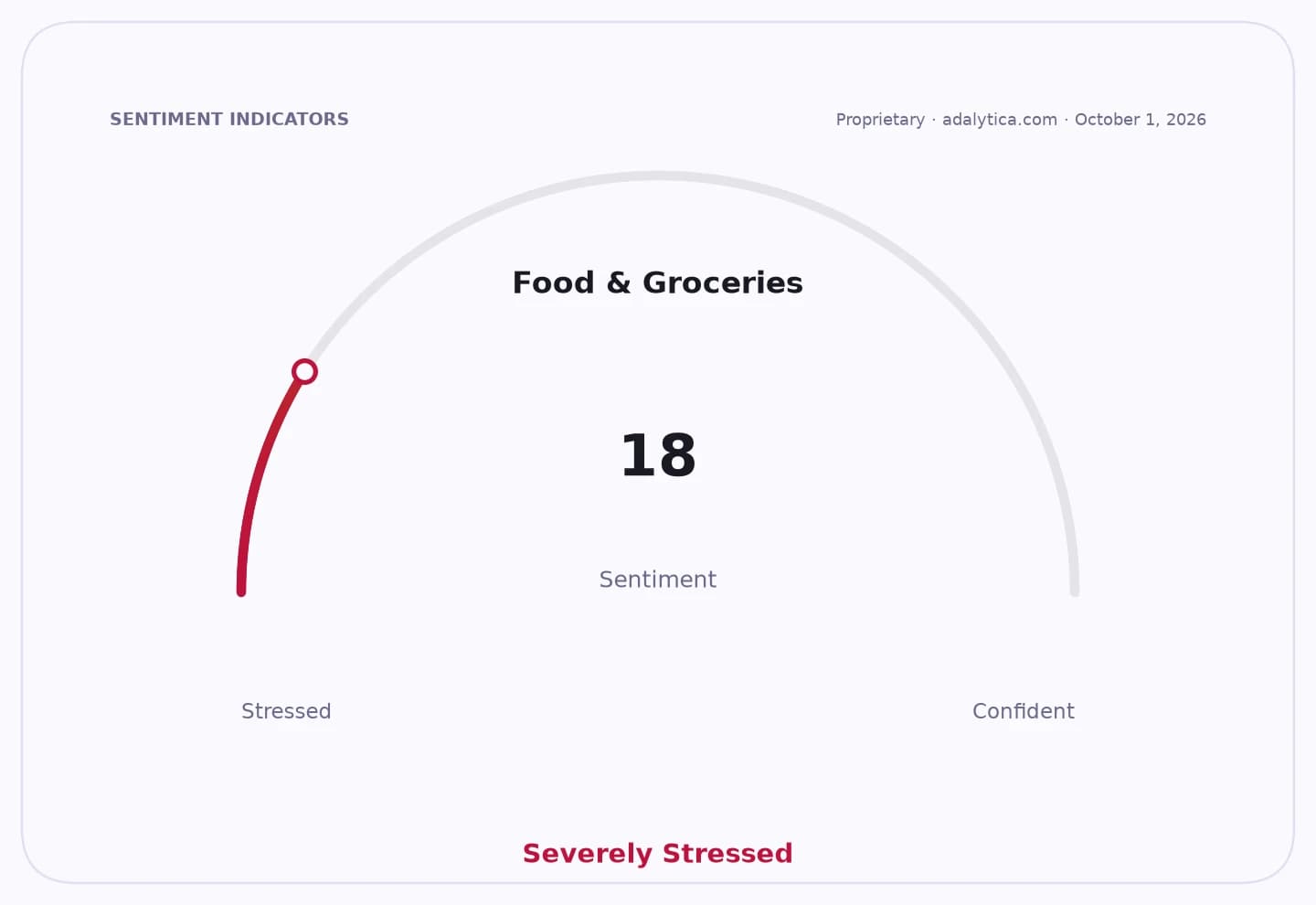
Costco Wholesale is heading into its fiscal fourth-quarter earnings with investors focused less on another clean beat and more on whether the warehouse giant can keep traffic and margins intact as U.S. consumers grow more selective and the broader market turns defensive.
Costco Earnings Focus on Traffic, Margins, Guidance
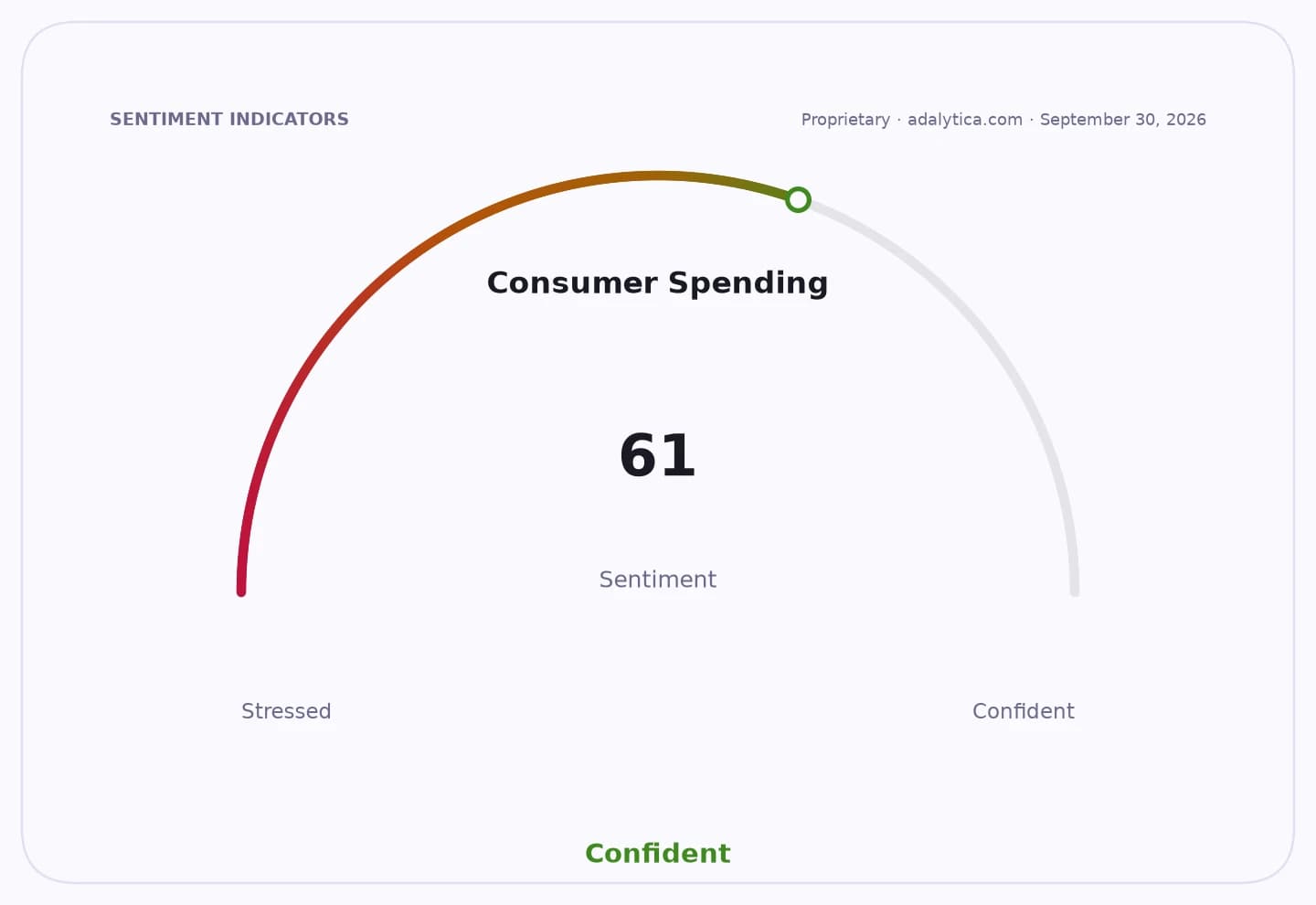
That makes the report a key read-through for discretionary spending, grocery inflation and the durability of value retailing. Costco has long been one of the few retailers able to take market share in softer environments because membership revenue cushions profits and its bulk-price model keeps shoppers loyal. But with consumer-spending sentiment easing and the S&P 500 trading under pressure, the bar for upside has risen: investors want evidence that Costco can protect comparable sales without giving up margin to promotions, freight costs or tariff-related input pressure.
Sentiment IndicatorsⓘProprietary · adalytica.com · September 30, 2026
This is a snapshot — live sentiment, awareness and momentum for 130+ markets update continuously in the dashboard.Open AlphaPulse
The stock has already given back some of its earlier-year strength. Costco closed at $924.59 on Sept. 29, below its 50-day moving average of $933.77 and its 200-day average of $958.79, after swinging between an August surge to $1,092.58 and a sharp mid-summer pullback. Recent RSI readings have recovered into the low 60s, suggesting momentum has improved, but the shares remain below the long-term trend line, leaving little room for disappointment if management’s outlook is cautious.
That technical setup matters because Costco’s valuation has often left the shares sensitive to even modest changes in guidance. A stronger-than-expected membership renewal rate or upbeat commentary on basket size could help the stock re-rate, especially if shoppers continue to trade down from weaker competitors. By contrast, any sign that price investment is eating into margins, or that tariff pass-through is becoming harder to manage, could reinforce the view that Costco’s premium multiple already reflects much of its quality.
The macro backdrop is mixed. Adalytica’s consumer-spending snapshot points to neutral sentiment but extremely low awareness, while its S&P 500 trade signals show broad fear in the market. That combination usually favors defensive names like Costco, but it also implies that investors are increasingly looking for proof rather than assuming resilience. Walmart’s own earnings sentiment has weakened sharply, underscoring how quickly the market is turning skeptical on big-box retail even when business models remain strong.
For Costco, the central question is whether its scale and membership model can keep converting a cautious household into steady volume growth. Bulls will point to the company’s ability to win share in grocery, general merchandise and e-commerce while preserving loyalty. Bears will argue that with the consumer more pressured and policy uncertainty around tariffs still hanging over imports, even Costco’s pricing power has limits.
The next catalyst is not just the earnings print itself, but the tone of management’s guidance on traffic, renewal rates and margin discipline heading into the holiday quarter. If Costco shows it can defend growth without leaning too heavily on price cuts, the shares may regain support. If not, investors may decide the stock’s premium deserves a reset.
| Entity | Gains | Losses |
|---|---|---|
| Costco | ▲traffic resilience | ▼margin pressure |
| Value shoppers | ▲lower prices | ▼less room for discounts |
| Bulls | ▲share-share gains | ▼valuation risk |
| Bears | ▲weaker guidance trade | ▼upside surprise |