Supermarket inflation is still eating into household budgets, even as the broader U.S. inflation picture cools and retailers fight harder for price-sensitive shoppers.
Walmart, Costco, XLP Benefit From Grocery Inflation
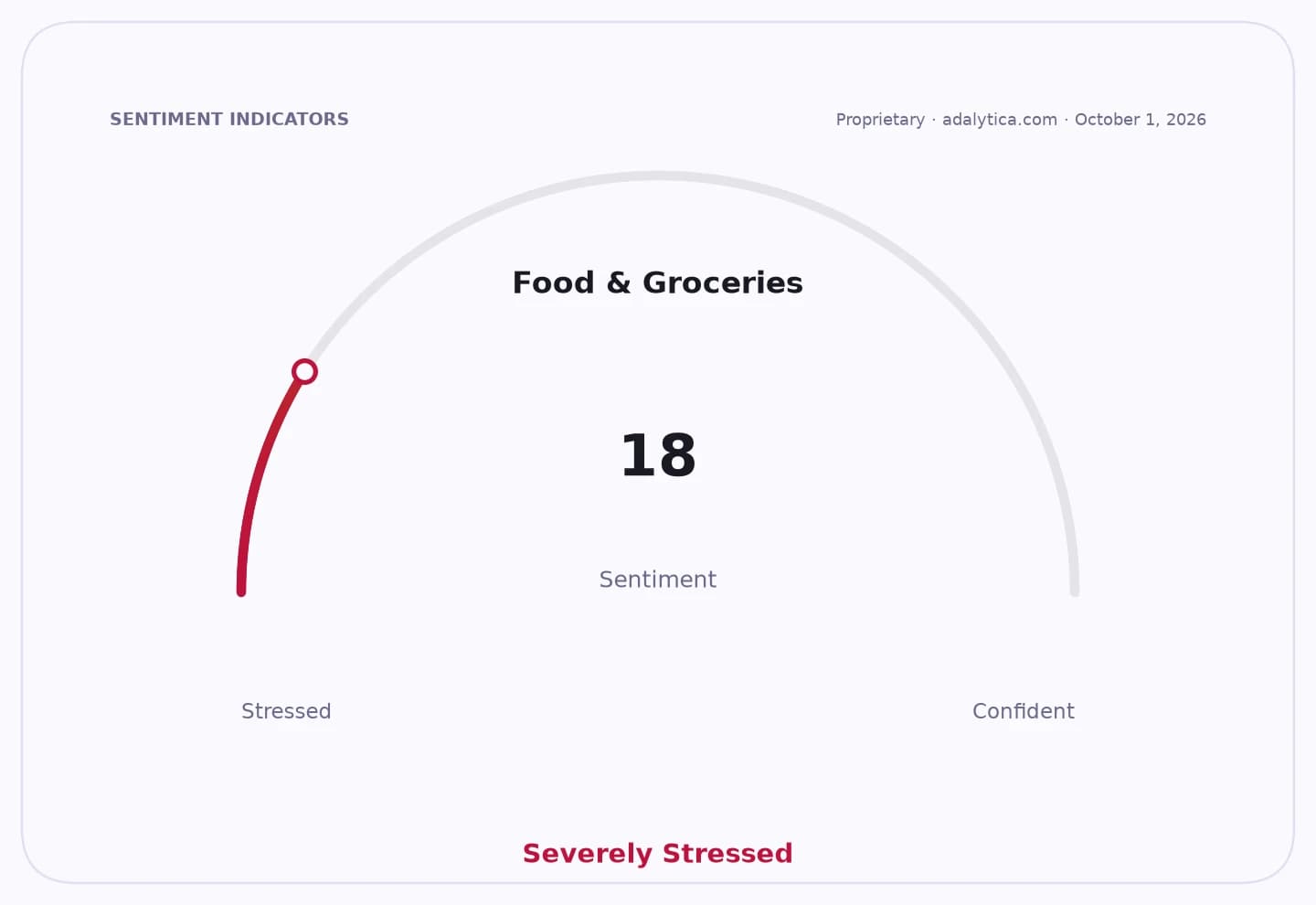
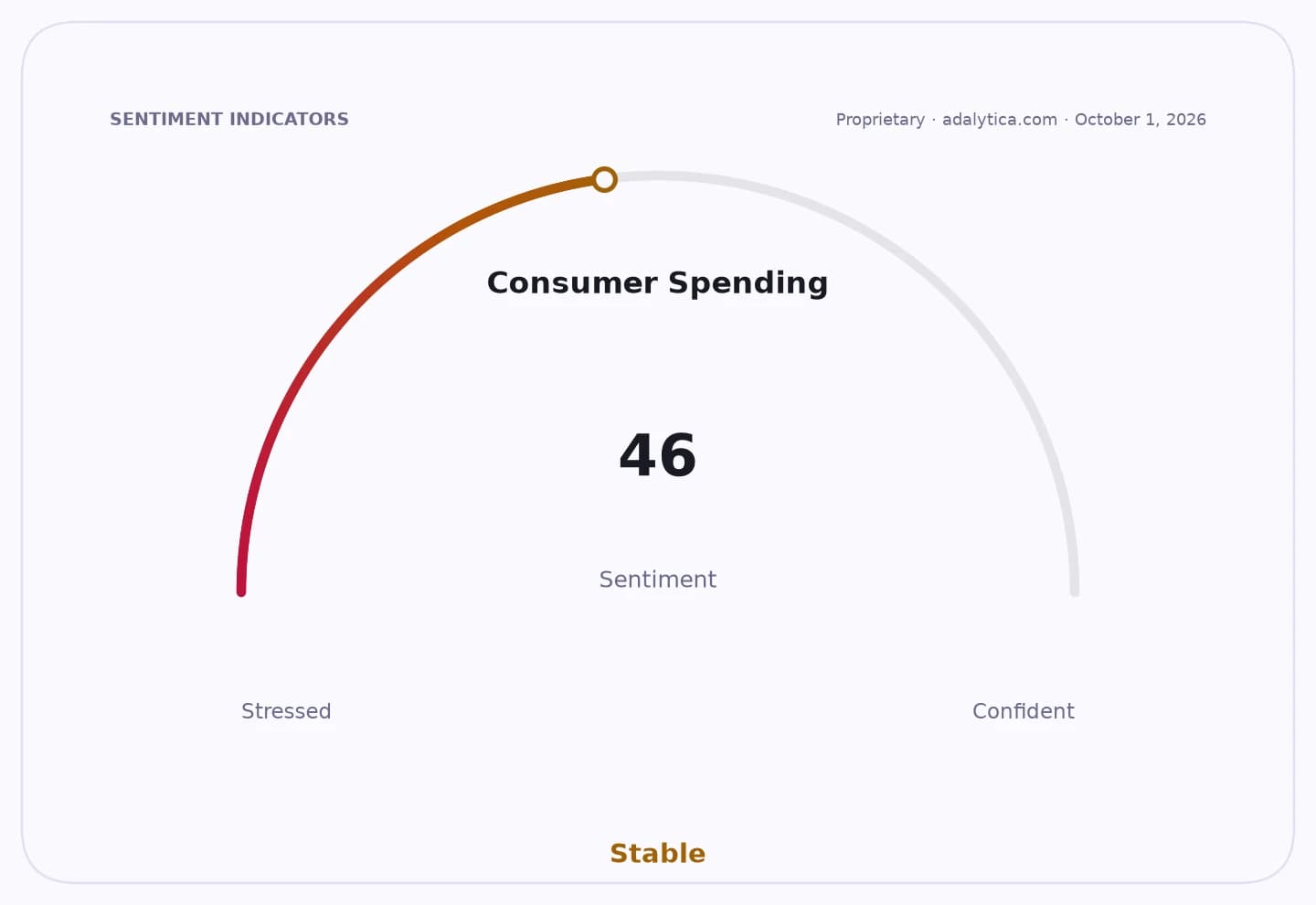
That is the market-moving takeaway from the latest price data and retail trading patterns: headline U.S. consumer prices are still running well above the Federal Reserve’s 2% target, core inflation remains sticky, and the grocery aisle is where consumers feel it first. The Consumer Price Index stood at 334.131 in August, up 0.4% from July and 40.72% from the 2026 cycle low in the data set, while core CPI rose 0.29%. With unemployment at 4.1%, the economy is not in recession, but consumers are still being squeezed by food, staples and other everyday purchases.
Sentiment IndicatorsⓘProprietary · adalytica.com · September 29, 2026
This is a snapshot — live sentiment, awareness and momentum for 130+ markets update continuously in the dashboard.Open AlphaPulse
That matters because grocery inflation is not just a household annoyance; it is a transfer of purchasing power that shapes everything from retail margins to Fed policy expectations. When families spend more on basics, they have less left for discretionary categories, and that changes where capital flows in the market. Staples become defensive havens, discounters gain share, and premium grocers or branded suppliers risk being forced into promotions to protect traffic.
The evidence is showing up in the stocks. The Consumer Staples Select Sector SPDR Fund, XLP, has rebounded from the mid-80s after a sharp pullback earlier this year, with the fund recently near $82 and still trading below its spring highs. Walmart has held up far better than the broad staples complex, reflecting its leverage to value-seeking shoppers and grocery traffic. Costco, meanwhile, continues to command a premium valuation because investors still view it as one of the clearest beneficiaries of trading-down behavior and membership resilience, even though its shares have been choppy after a powerful run.
The market is also signaling that inflation remains a policy problem, not a solved one. Adalytica’s measure of confidence in the Fed’s 2% inflation target sits at 57, neutral but accompanied by extremely low awareness and sharp recent swings. Long-term inflation expectations are still not anchored with the kind of conviction bulls would like to see, which keeps pressure on rates, keeps real yields relevant and keeps defensive consumer names in the conversation.
For investors, the opportunity is in the second-order effects. The winners are not just the biggest grocers, but the entire value chain built around price competition: private-label suppliers, discount chains, warehouse clubs and logistics players that move high volumes at low margins. The losers are weaker branded food companies and retailers with less pricing power, because they have to either eat margin compression or lose basket share.
The broader narrative is simple: inflation may be slowing in the macro data, but the supermarket remains a live battleground. As long as households are choosing between brands, packs and retailers on the basis of price, the market underestimates how durable the value trade can be. I believe investors should stay positioned in retailers with scale, supply-chain leverage and traffic capture, while avoiding businesses that still depend on easy pricing power in a world where every trip to the store is a comparison shop.
| Entity | Gains | Losses |
|---|---|---|
| Walmart | ▲Grocery traffic, share gains | ▼Smaller regional chains |
| Costco | ▲Trading-down shoppers, membership stickiness | ▼Higher-cost retailers |
| Consumer staples ETF XLP | ▲Defensive bid | ▼Cyclical consumer names |
| Branded food suppliers | ▲Short-term volume defense | ▼Margin pressure from promotions |