Grocery chains may be looking at GLP-1 drugs as a niche health trend, but the numbers suggest a far larger and more persistent hit to basket size is coming.
Walmart, Costco Gain as GLP-1 Cuts Grocery Baskets
That is the real market risk buried in the industry conversation at Groceryshop 2026 in Las Vegas, where Brendan Witcher said fewer than one in five grocery executives expect GLP-1 use to hurt top-line sales over the next five years, even though only 2% think the impact will exceed 10% and 20% see a decline above 5%. His point is straightforward: if weight-loss drugs become a lifelong treatment for a much larger share of consumers, grocers could face a structural shift in demand, not a temporary consumer fad.
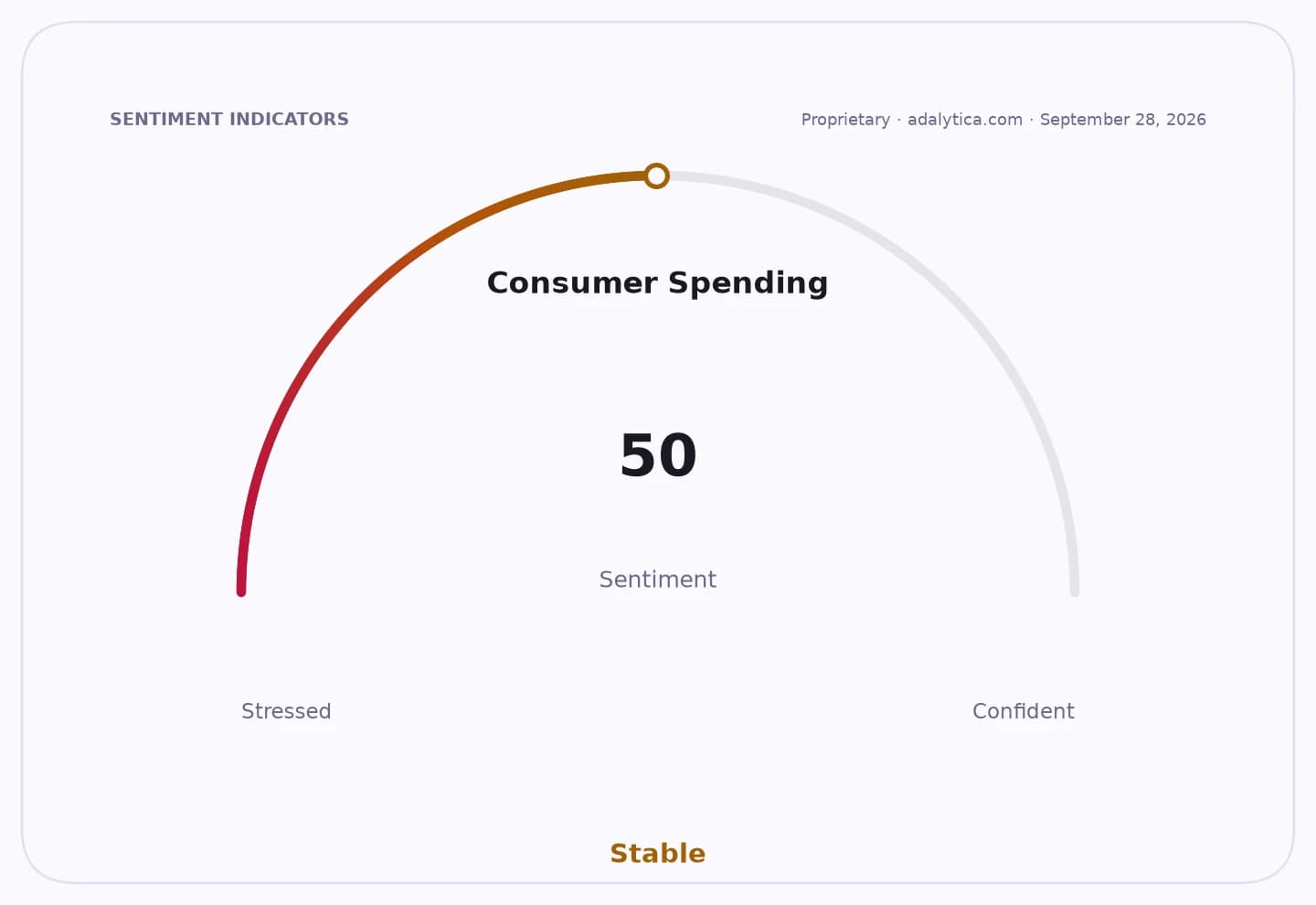
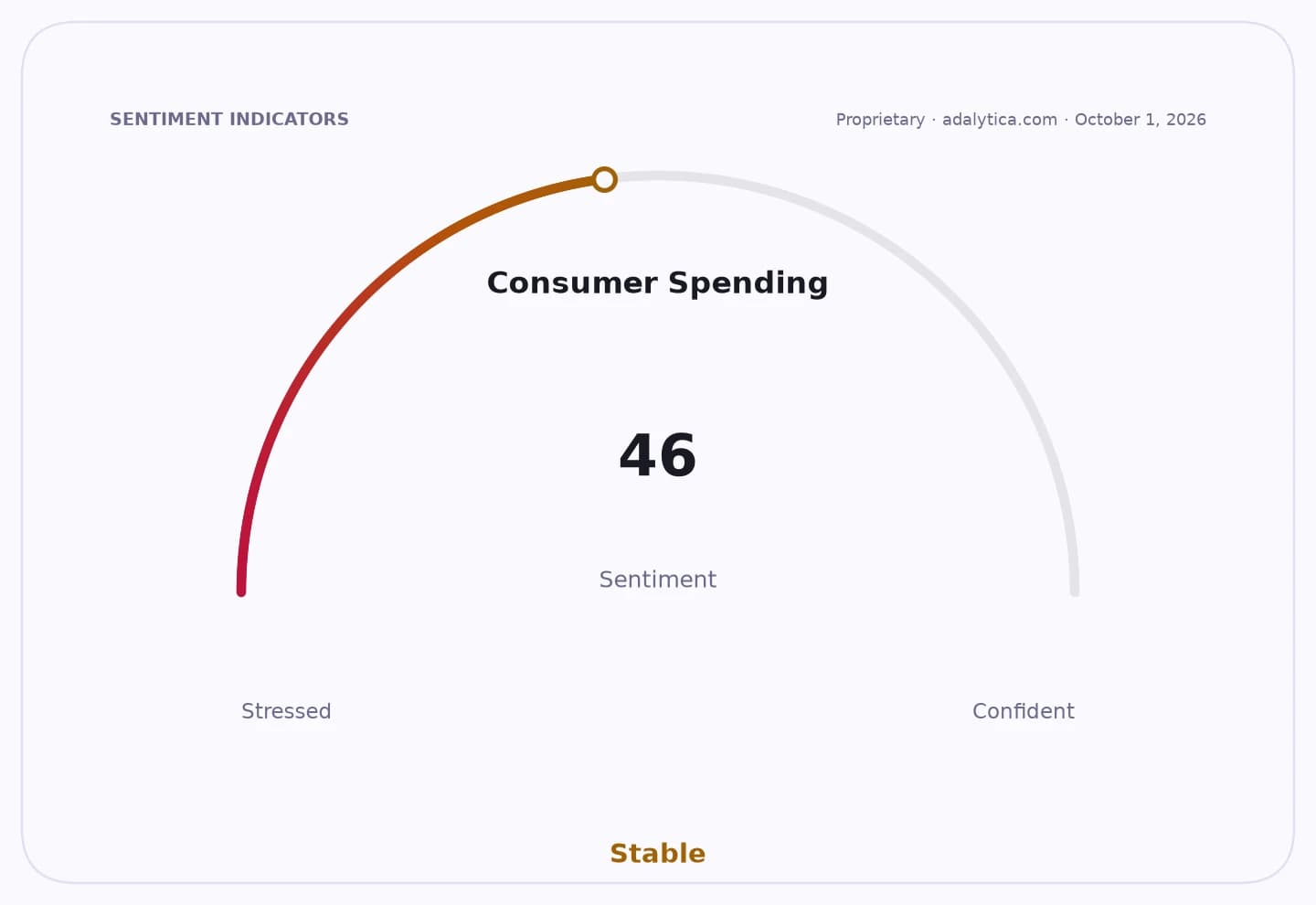
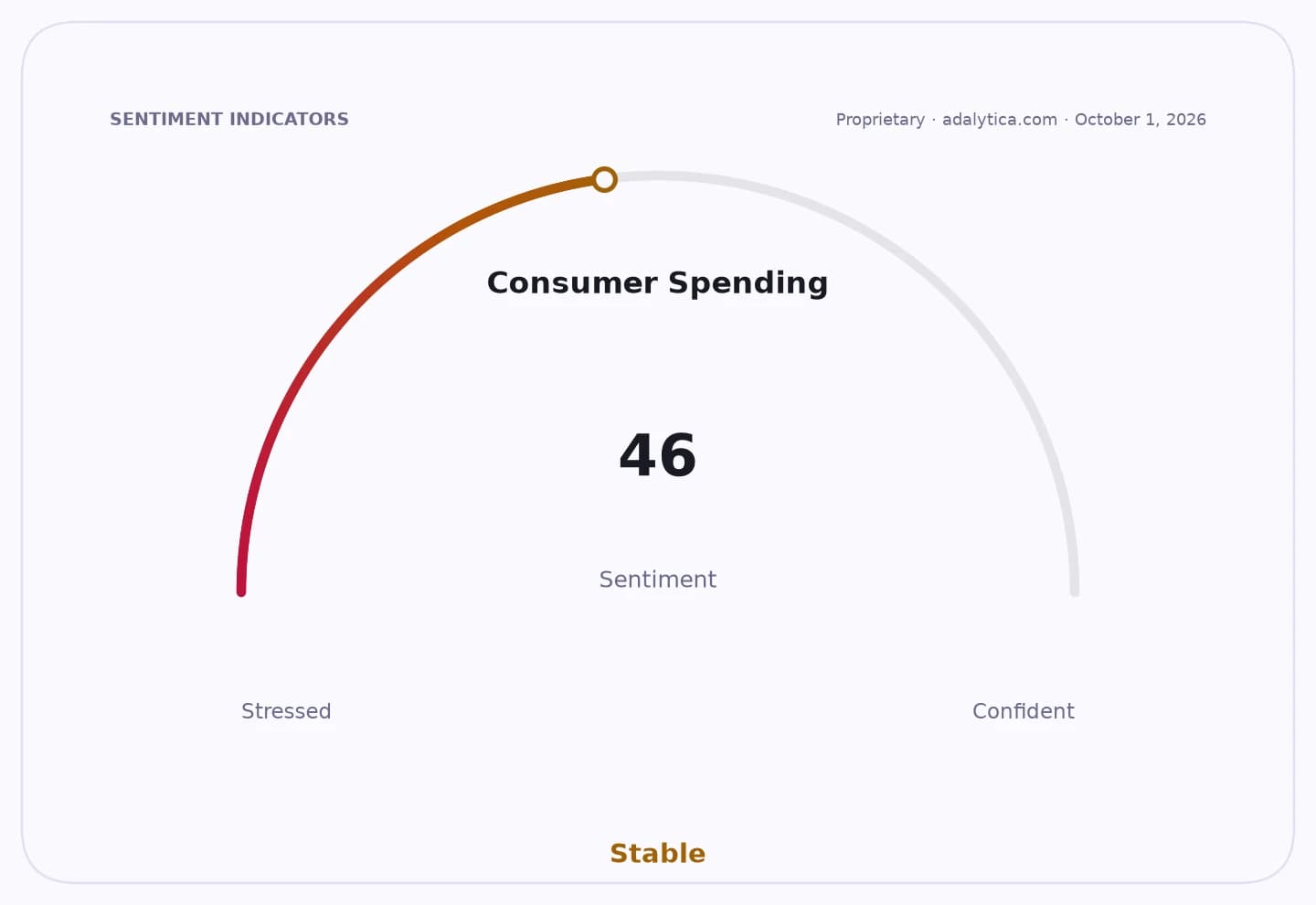
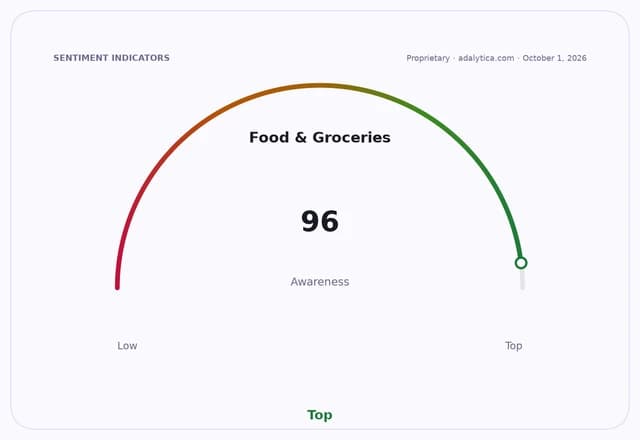
Sentiment IndicatorsⓘProprietary · adalytica.com · October 1, 2026
This is a snapshot — live sentiment, awareness and momentum for 130+ markets update continuously in the dashboard.Open AlphaPulse
The economic importance is bigger than one product category. Witcher noted 72% of U.S. residents are overweight and 40% are obese, leaving plenty of room for wider GLP-1 adoption. If more households eat less, buy smaller quantities and change what they put in the cart, the pressure will land first on packaged-food brands, then on grocers’ unit volumes and eventually on pricing power. That matters in an industry already fighting a consumer who is cutting spending, trading down and leaning harder on promotions.
The backdrop is not friendly. A July 2026 Bain & Company study cited by Witcher found 80% of Americans were trying to cut spending, more than one in four were trying to reduce grocery outlays, 49% were buying fewer items, 56% were trading down to lower-priced brands and 44% were relying more on discounts. In other words, grocers are already defending traffic and basket size in a demand environment where value is the priority. GLP-1 use adds a second layer of pressure: lower caloric consumption, changing product mix and potentially less snack, beverage and impulse demand over time.
Investors should see this as a margin and mix story, not just a revenue story. Retailers with strong private label, pharmacy, digital engagement and fulfillment scale are better positioned to offset smaller baskets with higher-frequency services and sharper targeting. CPG companies that can credibly market “GLP-1 friendly” products may preserve share, while legacy snack and packaged-food names face a more subtle but more durable risk of volume erosion. That is why packaging changes and product reformulation matter: they are early signs that management teams are already preparing for demand displacement.
The stock market has not fully priced that transition. Consumer staples, as measured by the XLP ETF, has been volatile around its 50-day and 200-day moving averages, underscoring how quickly investors are rotating between defensives and growth names. But the better way to play the trend is not to hide in the sector indiscriminately. It is to own the companies that benefit from consumers buying differently, not necessarily buying more.
Walmart remains one of the clearest beneficiaries because of its scale, grocery penetration and ability to use digital and in-store media to shape spending decisions. Costco is similarly well placed because its membership model and bulk-value positioning can still resonate even as shoppers become more selective. On the other side, companies most exposed to snack, convenience and impulse consumption face the most risk if GLP-1 adoption keeps spreading and basket sizes keep shrinking.
The key catalyst now is adoption itself. Witcher’s message was that the market is treating GLP-1 use like a passing diet story, when it is increasingly looking like a structural consumer-health reset. If that proves right, the winning trade is to own the retailers and brands that adapt fastest, and to be far more cautious on the names whose growth depends on Americans eating the same way they always have.
| Entity | Gains | Losses |
|---|---|---|
| Walmart | ▲More grocery share | ▼Smaller baskets |
| Costco | ▲Value-conscious shoppers | ▼Impulse sales |
| GLP-1-friendly CPG brands | ▲Product differentiation | ▼Legacy snack volumes |
| Snack and packaged-food makers | ▲— | ▼Demand erosion |