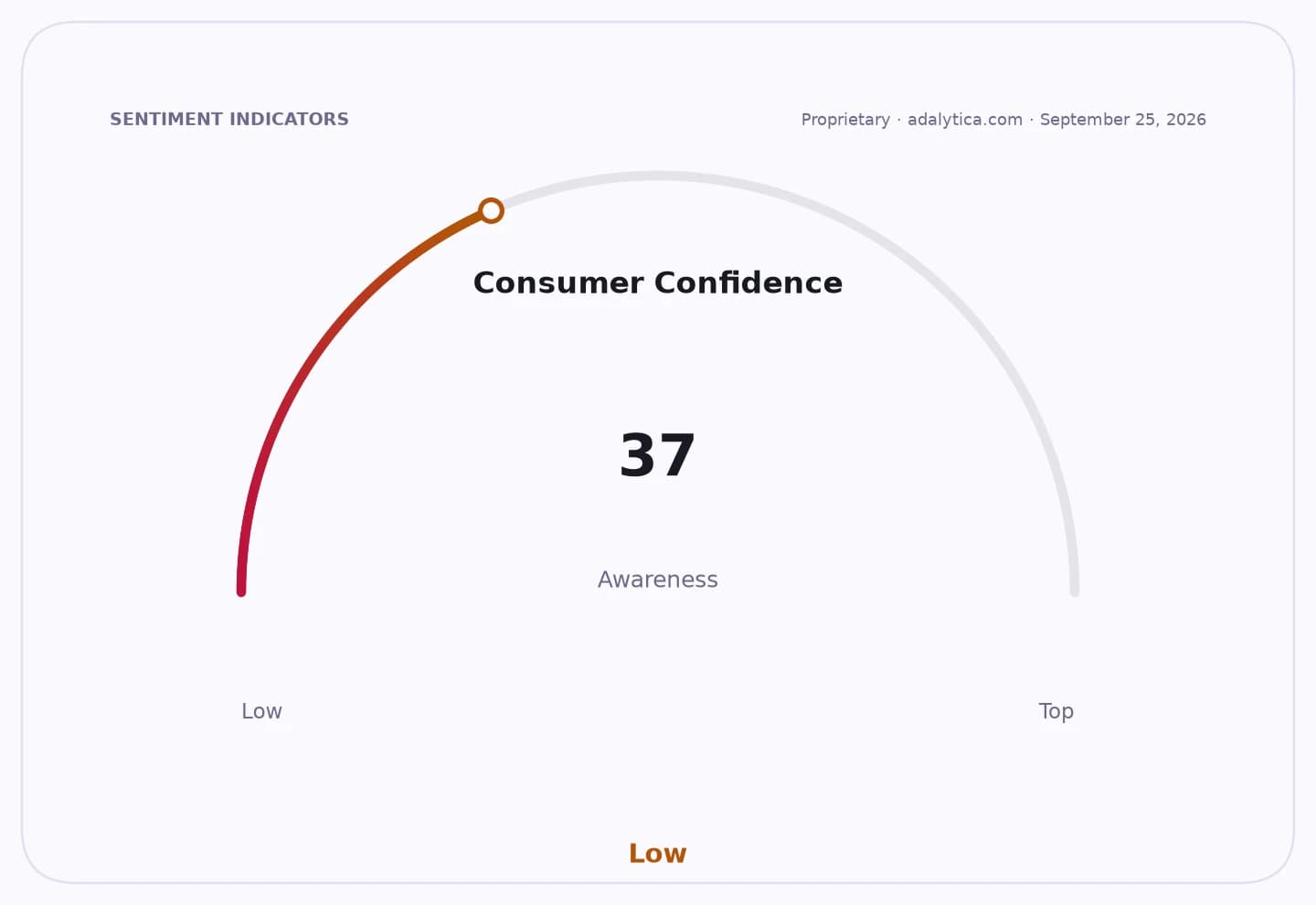
Consumer cyclicals are weakening again as households face slower wage gains, sticky prices and a softer growth backdrop that is starting to show up in sector trading. The Consumer Discretionary ETF, XLY, has fallen back to $114.86 from an August peak of $118.59, while the S&P 500 has held near record territory and Consumer Staples, XLP, has outperformed on a relative basis.
XLY Falls as Consumer Staples Outperform
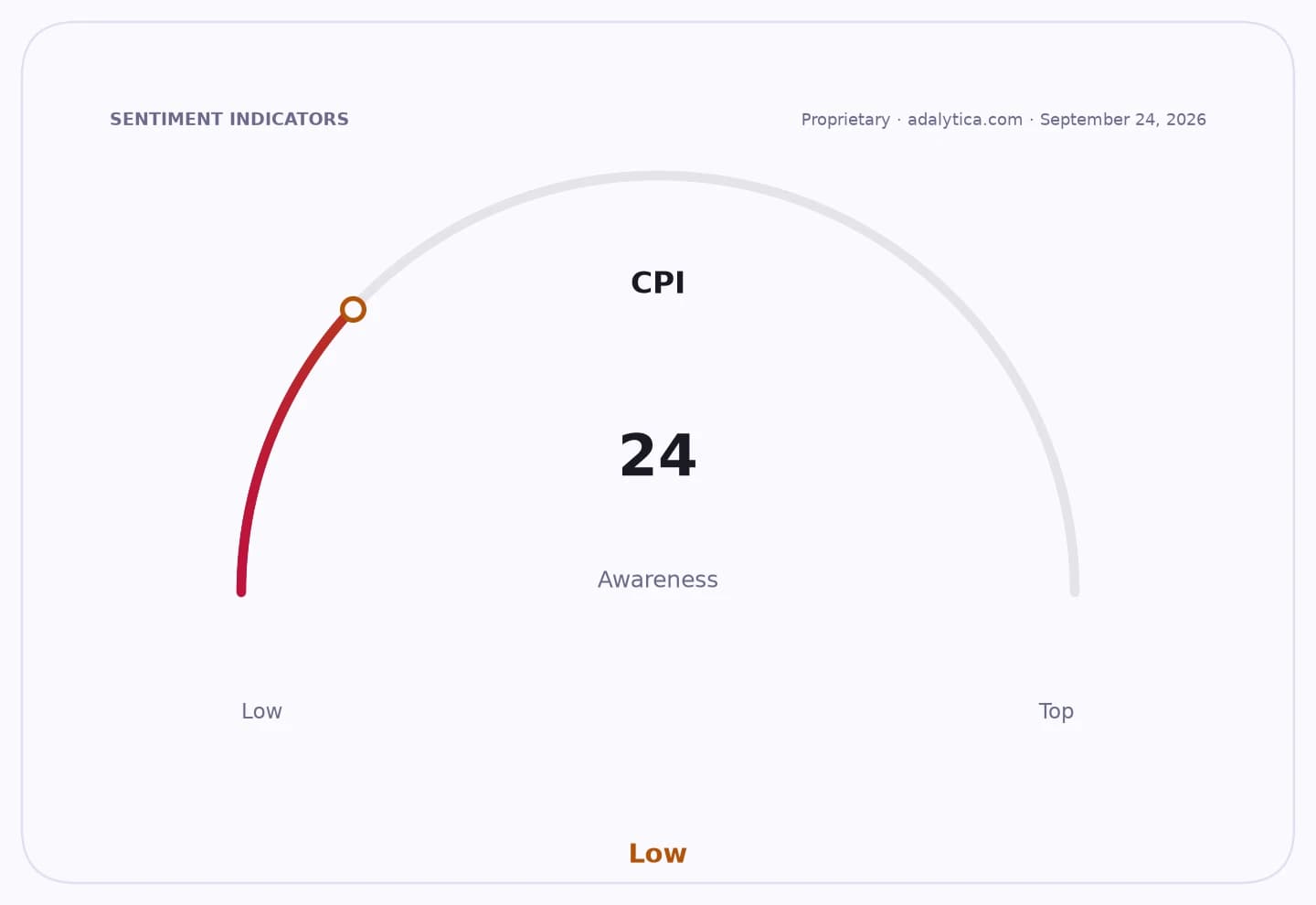
That gap matters because discretionary stocks are usually the first place investors see consumers trade down. When essentials stay expensive and wage growth fails to keep pace, demand shifts away from big-ticket and aspirational spending toward staples, value retail and services perceived as necessities. The latest labor and inflation data point in that direction: unemployment is forecast to edge down to 4.09% in August, but consumer prices are still projected to rise 0.35% on the month, leaving real purchasing power under pressure.
Sentiment IndicatorsⓘProprietary · adalytica.com · September 4, 2026
This is a snapshot — live sentiment, awareness and momentum for 130+ markets update continuously in the dashboard.Open AlphaPulse
The market has already started to price in that strain. XLY is trading below both its 50-day and 200-day moving averages, with RSI readings near 38 indicating weak momentum after a sharp slide from above 118 in mid-August. By contrast, XLP has been climbing and now sits above both its 50-day and 200-day averages, a sign investors are favoring defensive exposure as confidence in the consumer cycle fades.
The shift is consistent with corporate commentary from the sector. Amazon has warned in its latest filing that retail demand can fluctuate significantly with “global economic conditions,” while Nike said declines in consumer spending can lead to reduced demand, higher discounts and weaker margins. Those risks become more acute when inflation eats into disposable income and companies lose pricing power.
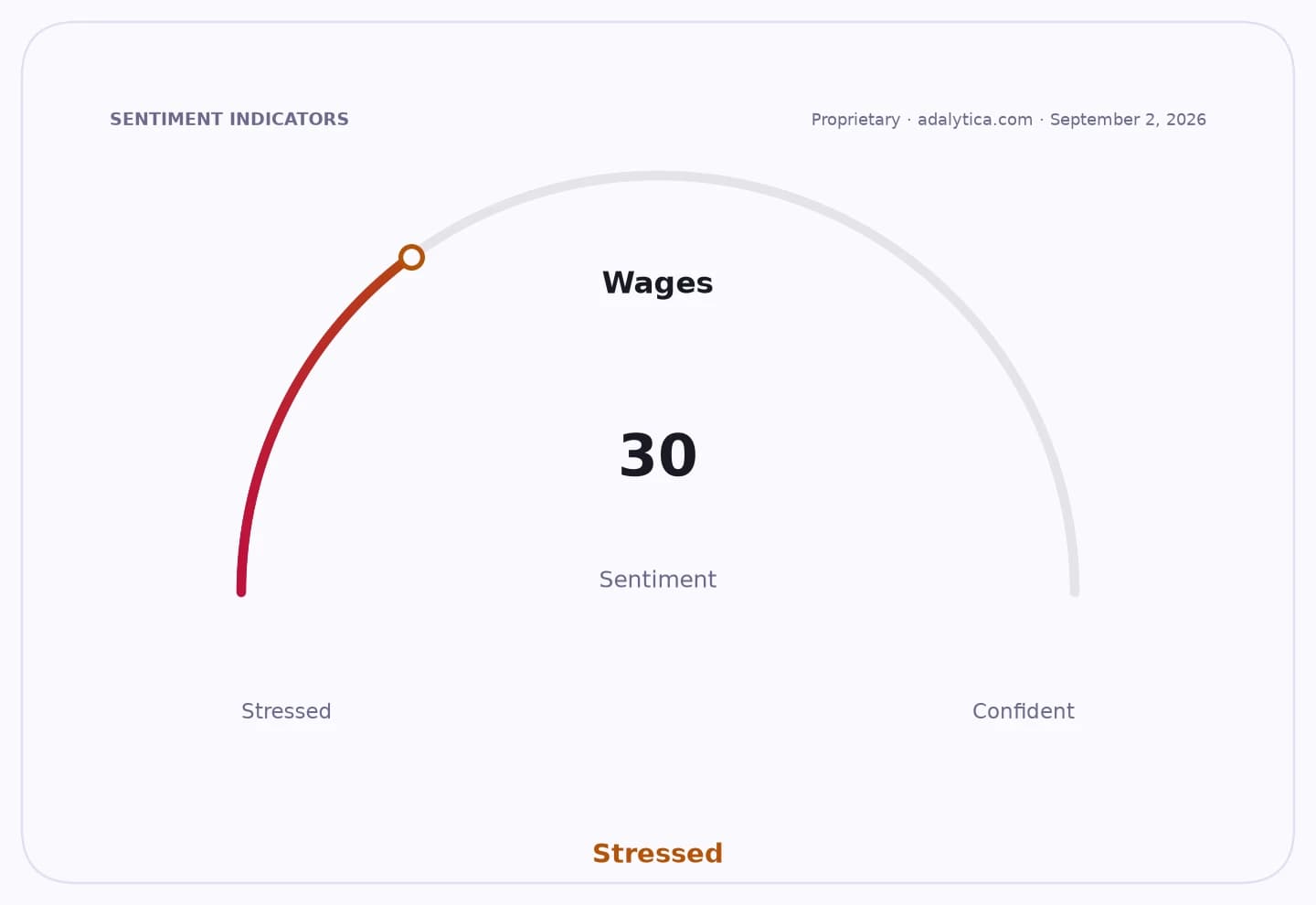
Adalytica’s Wage Inflation Sentiment gauge is flashing Fear at 26, down 67 points over the past month, underscoring the market’s concern that pay gains are no longer keeping up with living costs. Meanwhile, confidence in the Fed’s 2% inflation target has jumped to an extreme reading, suggesting investors are betting price pressures will remain manageable only if demand cools.
For investors, the key question is whether the current weakness in discretionary shares is a temporary pullback or an early read-through of slower consumption in the months ahead. If real wages keep lagging and inflation proves sticky, consumer cyclicals may continue to underperform the broader market, while staples, discount retailers and select value names should remain the relative winners.
| Entity | Gains | Losses |
|---|---|---|
| Consumer Staples (XLP) | ▲Defensive inflows | ▼Cyclical rotation |
| Consumer Discretionary (XLY) | ▲None | ▼Lower spending, weaker momentum |
| Amazon, Nike | ▲Value demand, trade-down traffic | ▼Margin pressure, softer orders |
| Households | ▲Short-term price relief | ▼Purchasing power, discretionary demand |