The U.S. government’s suspension of Cognizant’s new green card filings is more than a company-specific compliance headache: it is a fresh warning that America’s crackdown on foreign-worker programs could make it harder, and slower, for Indian IT professionals to build long-term careers in the U.S.
Cognizant green card filings frozen by U.S. probe

For investors, that matters because Cognizant, Infosys, Tata Consultancy Services and their peers have long relied on the same cross-border talent model to support margins and client delivery. If Washington is now scrutinizing PERM labor-certification filings more aggressively, the entire Indian IT services industry faces higher compliance costs, more documentation, and potentially less flexibility in moving workers onto permanent residency tracks.
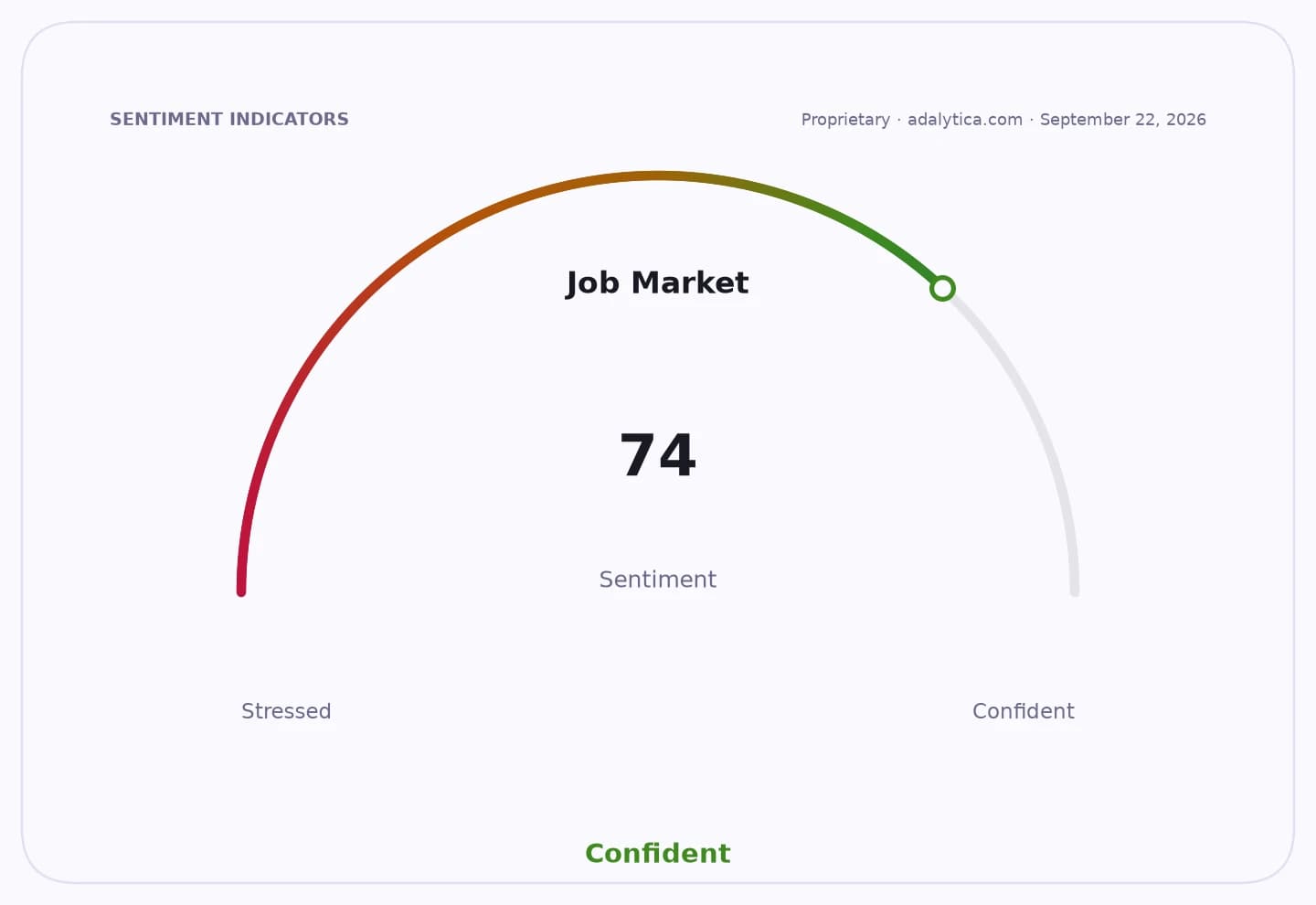
Sentiment IndicatorsⓘProprietary · adalytica.com · September 10, 2026
This is a snapshot — live sentiment, awareness and momentum for 130+ markets update continuously in the dashboard.Open AlphaPulse
The Department of Labor said Cognizant can no longer file new Permanent Labor Certification, or PERM, applications while a federal probe into alleged immigration fraud, visa abuse and foreign-worker exploitation continues. That effectively freezes the first step in employer-sponsored green cards for new applicants, though it does not affect workers who already have approved labor certifications or I-140 petitions, and it does not automatically suspend H-1B visas or extension filings.
That distinction matters. The immediate pain falls on Indian employees waiting for a permanent residency pathway, who may now face open-ended delays. But the broader message is aimed at the business model itself. U.S. regulators are looking at whether employers properly recruited American workers, paid market wages and documented hiring decisions before turning to foreign professionals. In plain English: companies will have to prove far more carefully that they are not sidelining U.S. candidates.
Cognizant has already been reducing its dependence on foreign-worker visas. Approved H-1B petitions at the company fell to 3,510 in 2026 from 9,413 in 2020, while it has also said it plans to hire 1,500 U.S. college graduates. That shift shows how the economics of offshore delivery are evolving. The old model, built on large pools of imported labor, is giving way to a more localized workforce, partly by design and partly because regulators are forcing the issue.
For long-term investors, the key question is whether this becomes a one-off enforcement action or the start of a wider industry reset. Indian IT firms have spent decades turning visa access into a competitive advantage. If that access becomes harder to use, they will need to lean more heavily on domestic hiring in the United States, automation, and offshore productivity gains to protect growth. Those are not bad things over a five- to 10-year horizon, but they do require adaptation.
The stock reaction suggests investors are treating the issue as a real risk, not just a legal footnote. Cognizant shares have been volatile this year, with the stock trading at 58.32 on Sept. 10, well below a July peak near 64.64 and far below the 200-day moving average around 61.84. The broader setup is mixed across the sector, with Indian IT names facing both policy pressure and demand uncertainty.
Still, investors should keep this in perspective. U.S. labor policy can slow hiring plans and create friction, but it does not erase the secular demand for digital transformation, cloud migration and enterprise software services. Over time, the winners in Indian IT will likely be the companies that can recruit locally, comply cleanly and keep expanding automation and high-value consulting work.
For now, Cognizant’s green card freeze is worth watching as a signal of a tougher operating environment for Indian IT workers and the firms that employ them. Long-term investors should treat it as another reason to favor companies with strong compliance, diversified delivery models and the flexibility to grow even when immigration rules get tighter.
| Entity | Gains | Losses |
|---|---|---|
| U.S. regulators | ▲Stronger enforcement leverage | ▼None in the near term |
| American job seekers | ▲Better screening for openings | ▼Less immediate effect from outsourcing |
| Cognizant and peers | ▲Push to localize hiring over time | ▼Higher compliance burden and slower staffing |
| Indian IT workers | ▲Some gain from more local hiring in the long run | ▼Delayed green cards and tougher U.S. immigration scrutiny |