Colombia’s business lobbies are pressing the government to turn hydrogen and renewable gases from policy ambition into investable projects, arguing that the country’s energy security and growth outlook now depend on adding new sources of supply.
Colombia Business Lobbies Back Hydrogen Projects

The message from Andi and Naturgas came at a hydrogen and renewable gases forum in which both groups framed the clean-fuels buildout as a way to reduce vulnerability in a tighter global energy market and attract capital into Colombia. Bruce Mac Master, the president of Andi, said the country faces “a new, different and complex” energy squeeze that requires a clearer path to autonomy, while Naturgas chief Luz Stella Murgas argued that security of supply should sit at the center of economic decisions.
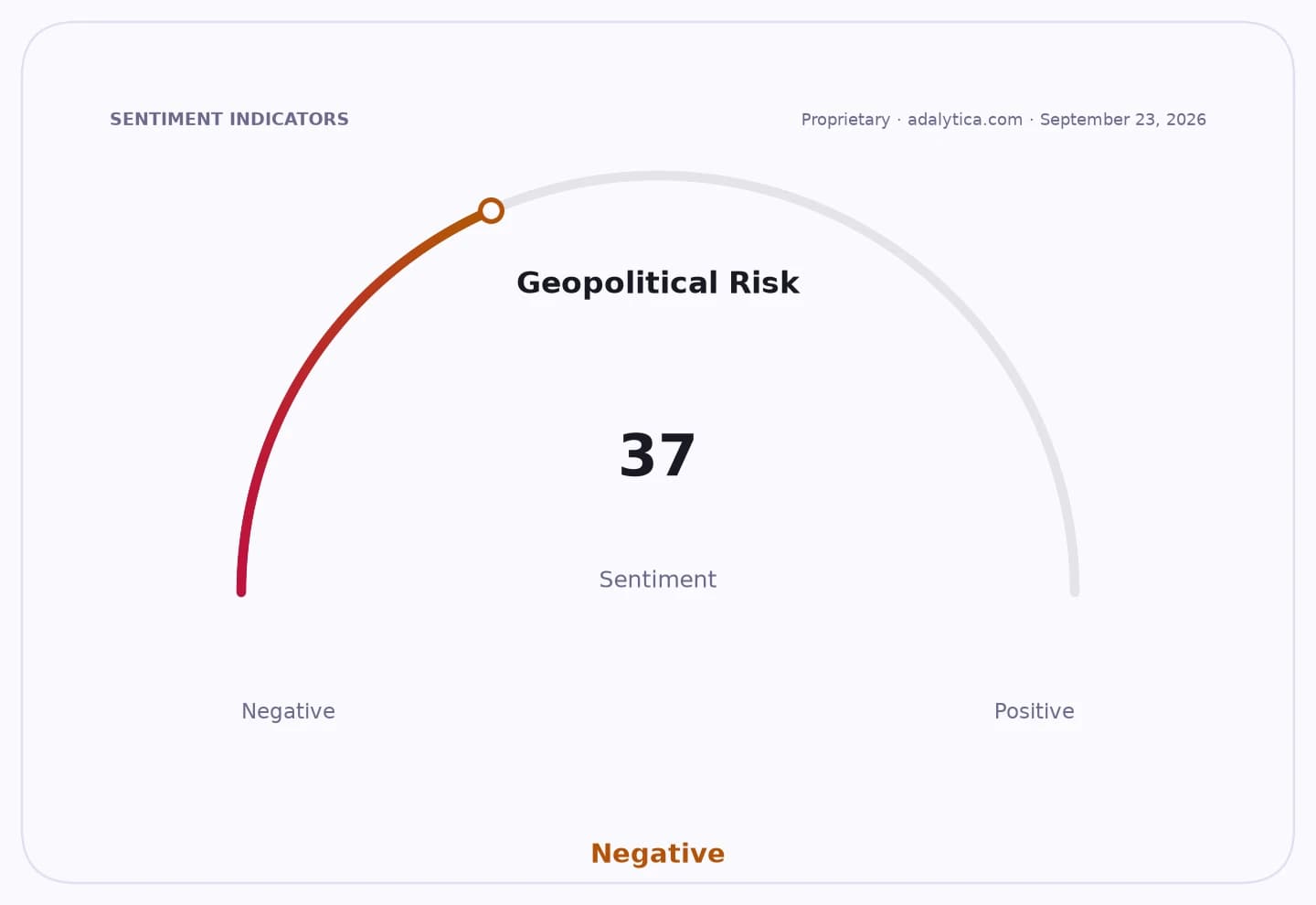
Sentiment IndicatorsⓘProprietary · adalytica.com · September 4, 2026
This is a snapshot — live sentiment, awareness and momentum for 130+ markets update continuously in the dashboard.Open AlphaPulse
The economic stakes are substantial. Andi said Colombia’s hydrogen opportunity could draw more than US$20 billion across about 20 projects, with spillover into fertilizers, heavy transport and refineries. For a country trying to lift growth and broaden its industrial base, that kind of investment would matter far beyond the energy patch: it would support employment, expand domestic value chains and potentially ease pressure on imported fuels and gas infrastructure over time.
The pitch also reflects a broader debate over how Colombia should finance its transition without sacrificing reliability. Industry leaders are not arguing for an abrupt break with existing energy systems. Instead, they are calling for a multi-technology approach that includes biogas and biomethane alongside hydrogen, particularly in regions such as Valle del Cauca, Antioquia and Cundinamarca where biomass resources are more abundant. That matters for investors because the near-term winners are likely to be the companies and regions that can move fastest from feasibility studies to bankable projects with clear permits, offtake agreements and grid or pipeline access.
For equity investors, the story underscores why clean-energy names remain highly sensitive to capital allocation and policy visibility. Shares of Plug Power, First Solar, Enlight Renewable Energy and Energy Fuels have all remained volatile, reflecting how dependent the sector still is on financing conditions, execution and government support. The technical backdrop in several of those stocks shows that even where long-term themes remain intact, investor conviction is fragile: clean-energy equities have been trading well below recent highs, with some names still under pressure versus their 200-day moving averages.
That makes Colombia’s message economically important beyond its borders. Global oil prices around $91 a barrel and a 10-year U.S. Treasury yield near 4.8% point to a costlier financing environment for energy infrastructure, especially for capital-intensive new fuels. In that setting, projects with credible policy backing and clear demand links are more likely to attract funding, while speculative plans are likely to be repriced or delayed.
The near-term test is execution. Andi said Colombia already has the resources; what it lacks is agreement on rules and conditions that can move those resources into real projects. That is the point investors will watch most closely: whether the government can convert a strategic narrative about autonomy and diversification into regulatory certainty, infrastructure buildout and bankable demand.
| Entity | Gains | Losses |
|---|---|---|
| Colombia government | ▲More investment and energy security | ▼Pressure to deliver regulation |
| Hydrogen developers | ▲New project pipeline | ▼Higher financing and execution risk |
| Natural gas sector | ▲Longer-term diversification role | ▼Slower pivot if policy stalls |
| Fossil-fuel importers | ▲Potentially lower demand | ▼Loss of share to cleaner fuels |