A former adviser to Argentina’s President Javier Milei is helping steer a $1 billion bet on an AI-focused city in Uruguay, a sign that the next wave of artificial intelligence investment may be as much about where people live and work as it is about chips and software.
+Colonia Plans $1 Billion AI District in Uruguay
Eduardo Bastitta, chief executive and founder of +Colonia, said the project will host Praxis, a global AI community of more than 150,000 members, in a new physical district in Colonia del Sacramento. The plan matters because it turns AI from a mostly digital network into a real estate and infrastructure story, with homes, offices and supporting services that could draw talent, capital and long-term demand to the Uruguay side of the Rio de la Plata.
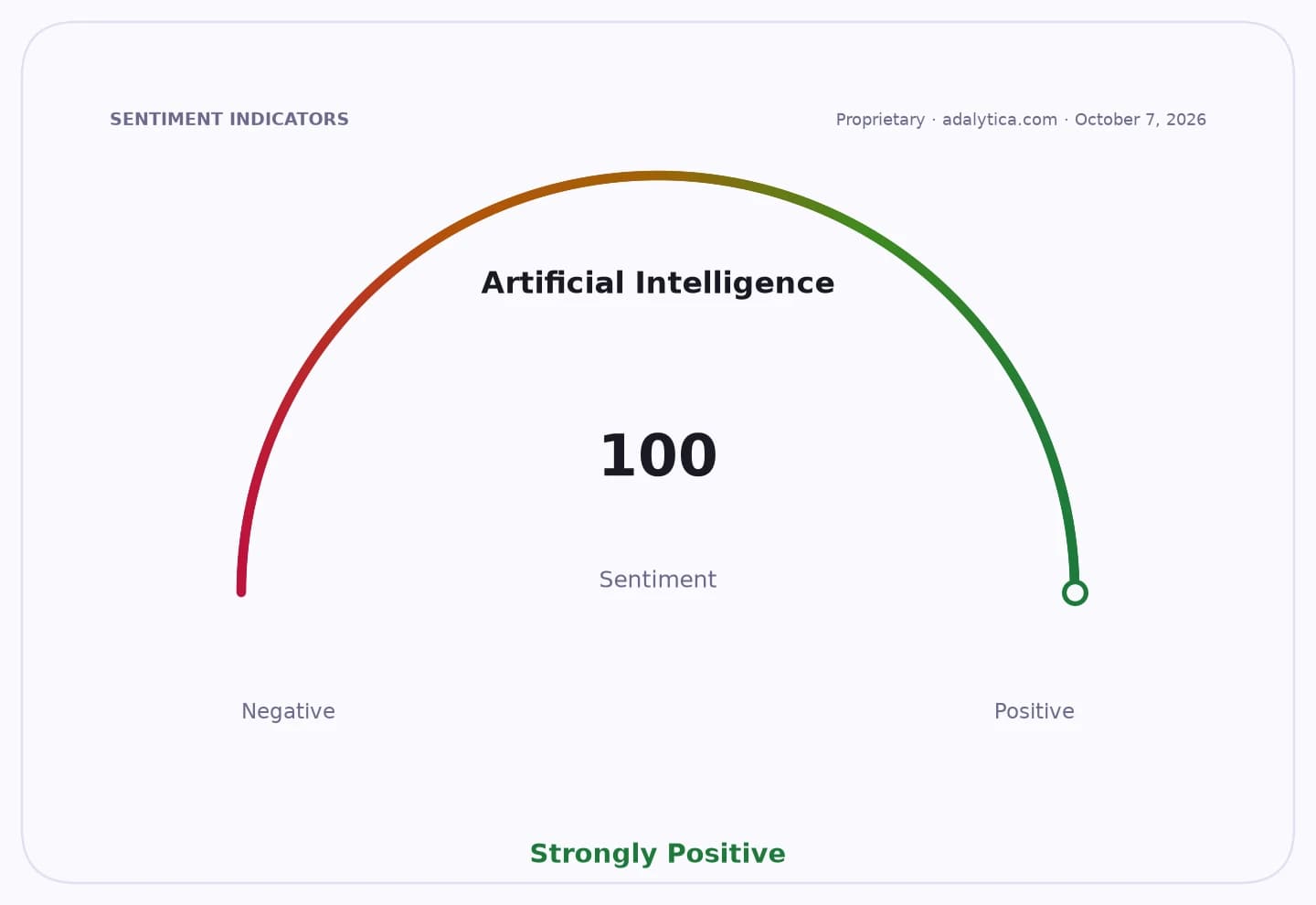
Sentiment IndicatorsⓘProprietary · adalytica.com · September 27, 2026
This is a snapshot — live sentiment, awareness and momentum for 130+ markets update continuously in the dashboard.Open AlphaPulse
The first phase calls for about 350,000 square meters of buildable area, with the development unfolding in stages. Praxis already has about 2,700 members who say they want to live there, and the first residents are expected by mid-2027. The land purchase is still pending final subdivision work, with completion expected in the first half of 2027.
That timing is important for investors because it underscores both the promise and the patience required in AI-related property plays. Unlike the near-instant revenue growth that comes from selling software or semiconductors, this kind of project relies on multi-year execution, regulatory approvals and sustained interest from founders, engineers and investors who want to build a life around the AI economy. If it works, the payoff could be durable: a community that generates recurring demand for housing, retail, education and mobility services.
Bastitta is positioning +Colonia as more than a gated development. He has framed it as a “two shores” concept linking Buenos Aires and Colonia, appealing to younger professionals who want to work across Argentina and Uruguay without committing to one side permanently. That pitch taps a broader economic reality: as AI reshapes labor markets, talent will increasingly cluster around places that offer flexibility, quality of life and access to capital.
The project also fits a larger global pattern. Big technology companies are pouring money into AI infrastructure, from cloud data centers to power-hungry computing campuses, while investors are looking for second-order beneficiaries such as housing, construction and services. Microsoft, Nvidia and Alphabet all continue to warn in their filings that AI growth depends on massive spending, supply chain access and long lead times. +Colonia is a smaller-scale version of the same thesis: if AI keeps pulling people and money into new ecosystems, the best assets may be the places that can actually house them.
For Uruguay, the upside is obvious. The country has been a relative haven for stability in a region that often struggles to offer it, and a flagship AI community could strengthen its pitch to foreign professionals and dollar earners. For Argentina, the project is a reminder that some of the region’s most ambitious new bets may be happening just across the border.
Still, investors should keep the risks in view. The deal is not fully formalized, the land transfer remains unfinished and the development depends on phased construction over years. AI enthusiasm can move fast; urban development does not. Even so, for long-term investors looking at the broader AI buildout, +Colonia is worth watching as a rare attempt to translate the AI boom into a tangible, compounding asset.
| Entity | Gains | Losses |
|---|---|---|
| +Colonia / Bastitta | ▲Land value, scale, visibility | ▼Execution risk |
| Praxis members | ▲New live-work community | ▼Long buildout |
| Uruguay | ▲Investment, talent inflow | ▼Pressure on infrastructure |
| Competing AI hubs | ▲Less share of talent | ▼Relative appeal |