Conflict across the Middle East, North Africa, Afghanistan and Pakistan is doing immediate damage to growth, but the bigger investment story is that artificial intelligence could become the region’s escape hatch if governments move fast enough to build the compute, data and talent base it lacks today.
MENAAP Growth Outlook and AI Infrastructure
The World Bank now expects the MENAAP region to contract 2.1% in 2026, with oil-exporting Gulf economies bearing the brunt of the shock as output there is seen falling 4.3%. That is an economically meaningful downgrade for a region that sits at the crossroads of global energy, trade and capital flows, and it reinforces the market’s central worry: conflict is no longer just a geopolitical headline, it is a direct tax on activity through higher inflation, broken logistics and damaged infrastructure.
Sentiment IndicatorsⓘProprietary · adalytica.com · October 7, 2026
This is a snapshot — live sentiment, awareness and momentum for 130+ markets update continuously in the dashboard.Open AlphaPulse
The split inside the region matters. Oil importers are still projected to grow 4.3%, showing that parts of MENAAP can absorb the hit better when they are less exposed to the conflict and energy disruption. But for the Gulf, the closure of key shipping lanes and the deterioration of productive assets threaten everything from transport costs to fiscal planning and private investment. If the fighting eases, the World Bank sees a rebound of 7.8% in 2027, underscoring how much upside is being held back by security rather than fundamentals.
That creates a classic asymmetric setup for investors. The near-term macro picture is weak, but the structural opportunity is not in waiting for peace alone — it is in the region’s push to capture the AI buildout that could raise productivity in 13% to 20% of jobs. That is the kind of second-order story markets often miss. AI does not just mean software adoption; it means data centers, power, semiconductors, cloud platforms, networks and the policy framework to train local models in Arabic and other underrepresented languages.
Artificial Intelligence vs NVDAadalytica.com
Explore this data interactively — full history, time series and cross-market comparisons.Open AlphaPulse
The World Bank’s warning is clear: the region still lacks local-language data, broad AI adoption, capital and infrastructure, while the private sector remains too shallow to scale innovation quickly. Those gaps are precisely why the upside is so large. MENAAP does not need to become Silicon Valley to benefit. It needs to become a serious buyer and builder of AI infrastructure. That favors the same global winners already exposed to enterprise AI spending: Nvidia, Microsoft and semiconductor suppliers through the SOXX ETF. Their shares reflect a market that still underestimates how much capex will be redirected toward AI capacity outside the U.S. and China.
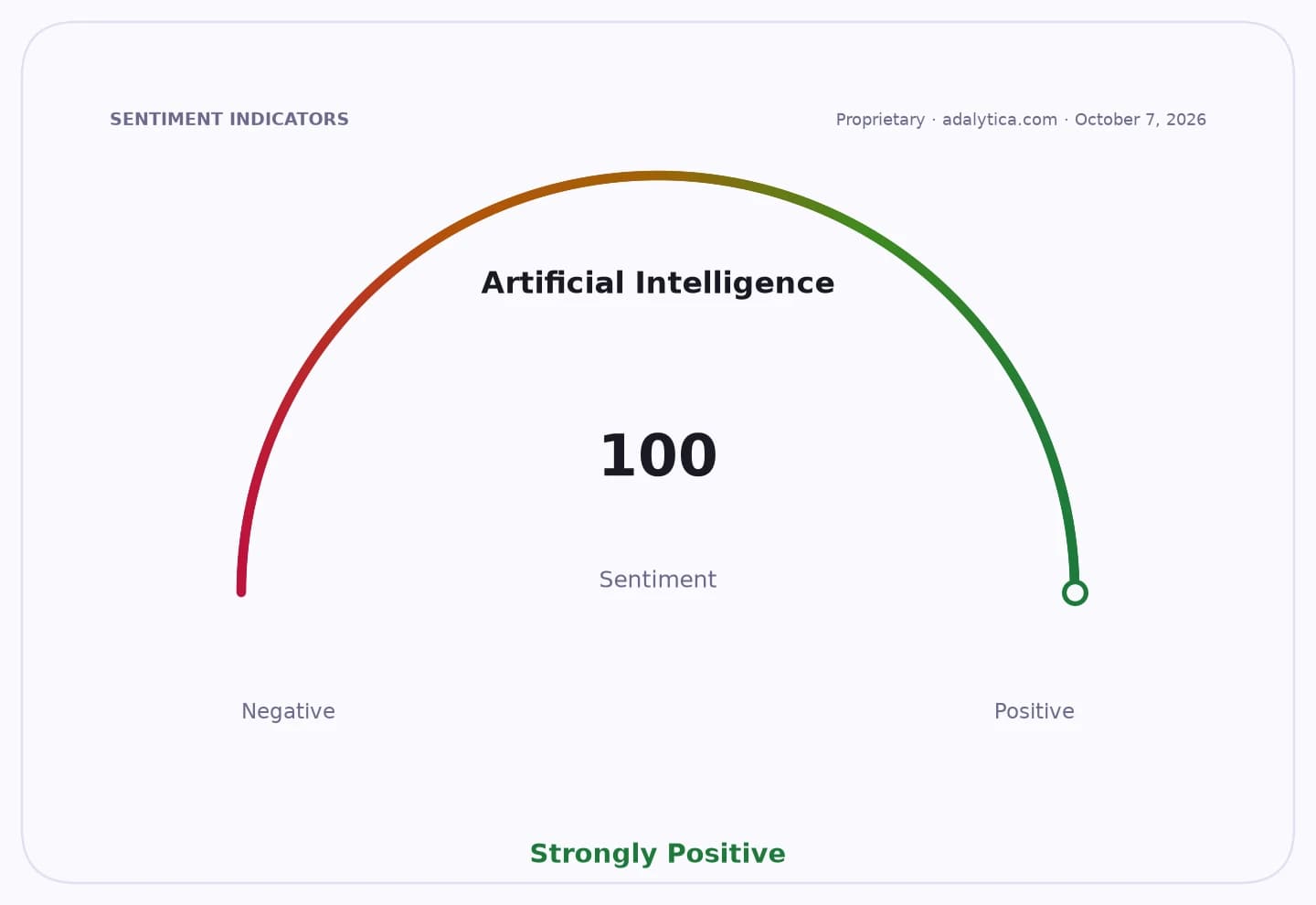
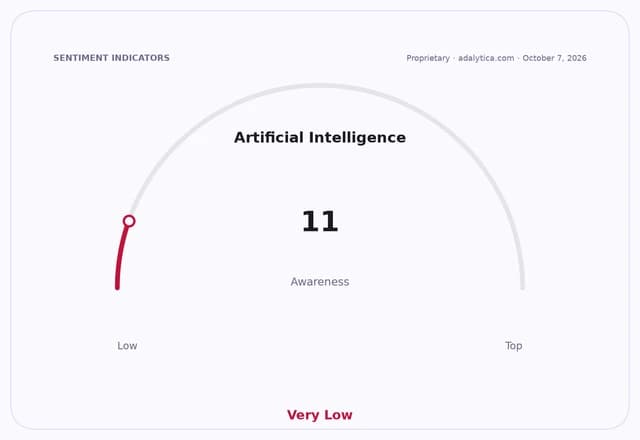
The latest price action supports that thesis. Nvidia and Microsoft remain well above their 200-day moving averages, while SOXX has extended sharply higher, a sign that investors continue to reward the picks-and-shovels layer of the AI trade. Adalytica’s AI sentiment gauge is flashing extreme greed, which tells you enthusiasm is already high, but awareness remains low — exactly the kind of combination that can leave room for a longer, underappreciated regional capex cycle rather than just another U.S.-centric AI rally.
For MENAAP itself, the investment takeaway is straightforward: conflict will keep suppressing growth in the short run, but the region’s medium-term winners will be the economies that secure energy, connectivity and policy reform fast enough to monetize AI. That means the market should look beyond headline GDP weakness and position for the infrastructure layer of the next growth cycle.
| Entity | Gains | Losses |
|---|---|---|
| AI infrastructure providers | ▲Higher capex demand | ▼Adoption delays from weak local ecosystems |
| Nvidia and SOXX components | ▲More AI hardware orders | ▼Geopolitical supply-chain disruption |
| Microsoft and cloud peers | ▲Enterprise AI expansion | ▼Capacity-investment risk |
| Gulf oil exporters | ▲None near term | ▼Growth, logistics, fiscal flexibility |