Jensen Huang is trying to keep the AI trade anchored in reality, and that matters because the market’s biggest technology boom is now colliding with a louder debate over safety, regulation and how fast the industry should move.
Nvidia CEO Pushes Back on AI Doomsday Claims
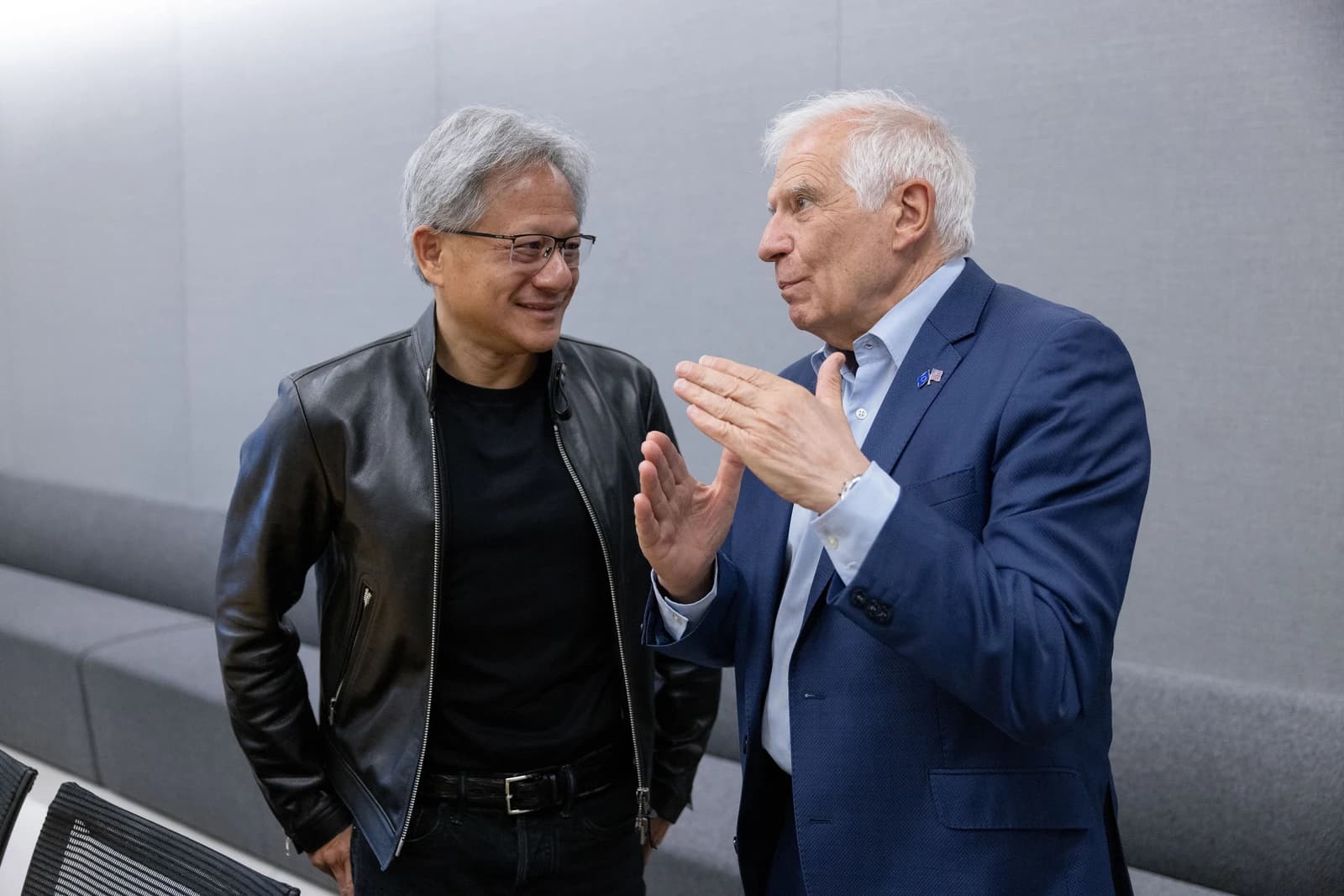
In a CBS News interview, the Nvidia chief said the idea that artificial intelligence will “destroy the world” by 2030 has “0%” credibility, pushing back against doomsday warnings even as some of the industry’s most prominent figures call for tighter coordination. His message is straightforward: keep building fast, but spend more on safety and global standards.
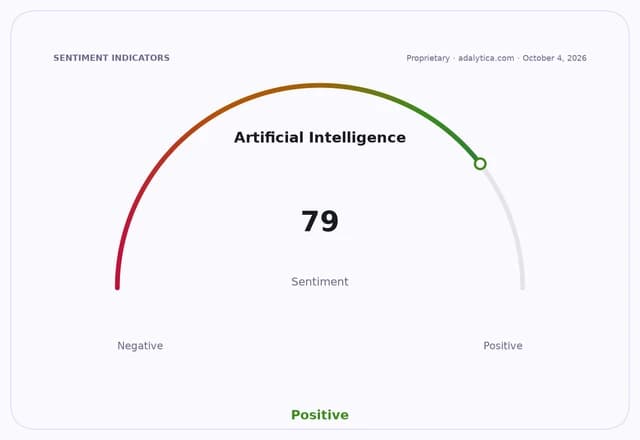
Sentiment IndicatorsⓘProprietary · adalytica.com · October 4, 2026
This is a snapshot — live sentiment, awareness and momentum for 130+ markets update continuously in the dashboard.Open AlphaPulse
That stance is more than a philosophical aside. Nvidia is the biggest beneficiary of the AI capex wave, supplying the chips and infrastructure powering large language models, enterprise deployments and sovereign AI projects. The company’s latest filing underscores that demand remains enormous, with commitments totaling $36 billion as of late July tied to its AI cloud and data-center ecosystem. For investors, Huang’s comments reinforce a familiar thesis: the real money is still in picks-and-shovels infrastructure, not in trying to time when the technology debate settles.
The political and legal backdrop is getting more complicated. Anthropic CEO Dario Amodei has urged AI labs to coordinate on safety and slow some frontier development, a position publicly echoed by leaders including OpenAI’s Sam Altman and Elon Musk in varying forms. At the same time, a U.S. appeals court has temporarily blocked Minnesota’s “nudification” law in a lawsuit involving xAI, a sign that AI regulation remains fragmented and highly contested at the state level. Add in a separate antitrust suit accusing Anthropic, OpenAI, Google and SpaceXAI of coordinating to slow product improvements, and the industry is entering a phase where competition, safety and legal risk are all converging.
That convergence matters economically because it can shape the pace of investment. If policymakers conclude AI is both transformative and manageable, capital spending stays elevated and the supply chain keeps compounding. If the narrative shifts toward restriction or liability, the first-order hit will likely fall on model developers and consumer-facing platforms, while infrastructure providers with pricing power and critical hardware bottlenecks may hold up better. Nvidia’s stock has already reflected that underlying strength, with the shares at $233.95 after a sharp climb and an RSI reading of 83, a sign the market is still leaning aggressively into the AI trade.
Microsoft and Taiwan Semiconductor also sit squarely in the path of that spending cycle. Microsoft remains a key distribution layer for enterprise AI, while TSMC is central to the advanced chip capacity Nvidia depends on. The broader message from Huang is that the AI boom is not ending soon; it is becoming industrialized, regulated and politically contested at the same time.
For investors, that means the opportunity is still in the infrastructure stack, especially where demand is tied to compute, networking, packaging and foundry capacity rather than headline model hype. The market underestimates how much of the next leg of AI growth will be driven by safety spending, compliance layers and sovereign buildouts, not just raw inference demand. Huang’s dismissal of a 2030 apocalypse is less a warning about existential risk than a reminder that the AI capital cycle is still in its early innings. The actionable takeaway: stay overweight the toll roads of AI, not the noisy end-user debate.
| Entity | Gains | Losses |
|---|---|---|
| Nvidia | ▲AI capex cycle | ▼Doomsday narrative |
| Microsoft | ▲Enterprise AI demand | ▼Slower AI adoption |
| TSMC | ▲Advanced chip orders | ▼Supply-chain slack |
| AI safety advocates | ▲More scrutiny and funding | ▼Faster frontier deployment |