Dark-money groups are spending millions in Colorado to hire petition collectors and force roughly a dozen measures onto the statewide ballot, underscoring how wealthy interests can buy their way around a Legislature they cannot reliably control.
Colorado ballot initiatives and policy risk for businesses
That matters because ballot initiatives have become one of the most effective tools for reshaping taxes, regulation and social policy in states where partisan gridlock or one-party dominance leaves major legislative change difficult. In Colorado, where voters must produce 124,238 valid signatures to qualify a measure, the signature-gathering process has turned into a cash-intensive campaign in its own right, with deep-pocketed political networks such as Coalition for American Prosperity and Growth and Advance Colorado financing the effort.
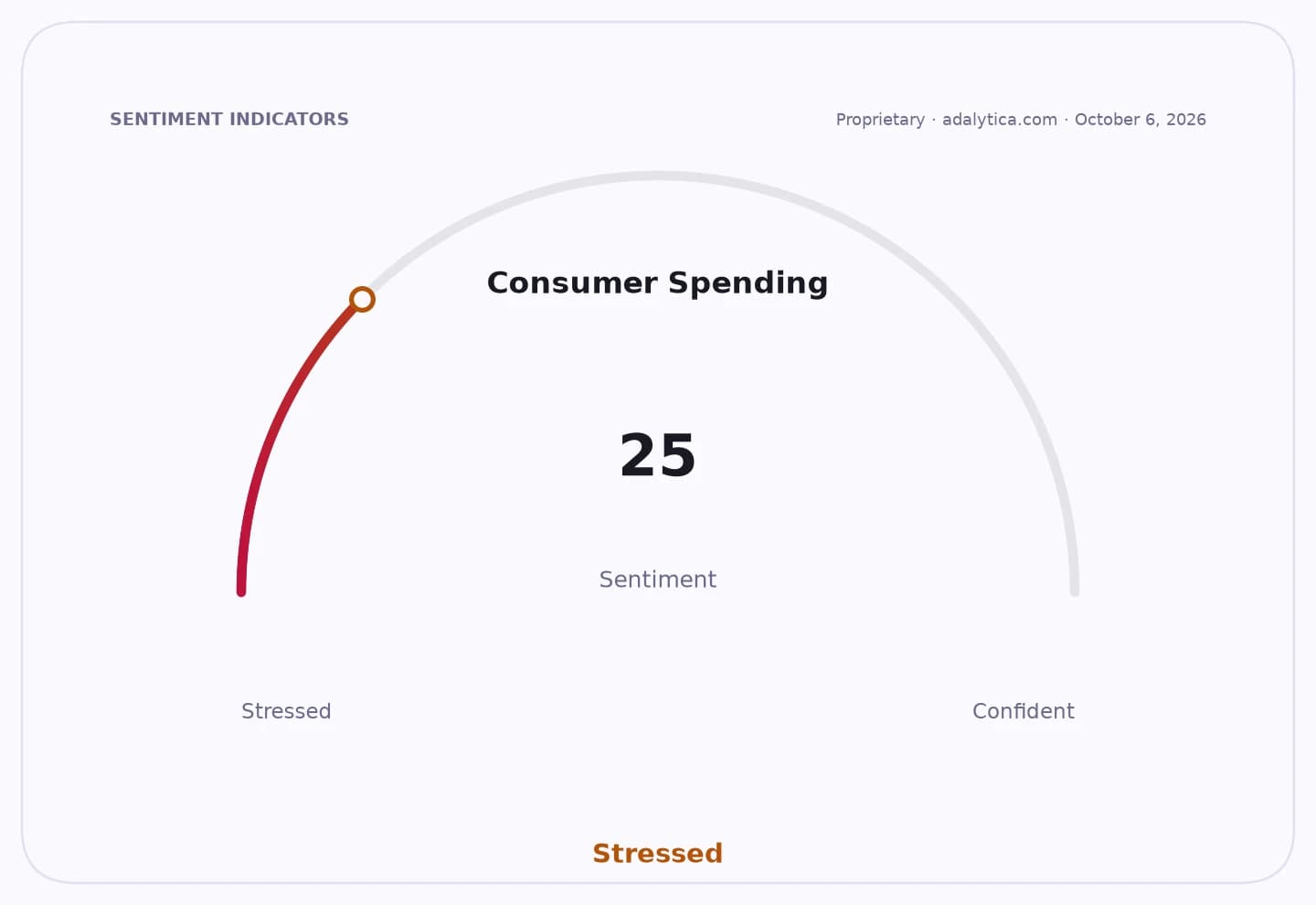
Sentiment IndicatorsⓘProprietary · adalytica.com · October 11, 2026
This is a snapshot — live sentiment, awareness and momentum for 130+ markets update continuously in the dashboard.Open AlphaPulse
The economic significance goes beyond election-year messaging. When private groups can bankroll access to the ballot, they gain leverage over policy outcomes that affect state revenue, spending priorities and business costs. Measures touching income taxes, energy, hunting, voting rules and criminal penalties can alter the fiscal outlook for schools, infrastructure, local governments and regulated industries. For companies exposed to Colorado’s policy environment, the difference between a legislative compromise and a voter-approved mandate can mean a change in tax liabilities, compliance burdens or market access with little warning.
The immediate market impact is limited, but the broader investment implication is clear: ballot initiatives can create policy volatility that is harder to handicap than ordinary legislation. Businesses usually have time to lobby lawmakers, but once a measure reaches voters, the campaign often shifts to high-spending advertising and emotionally charged messaging, making outcomes more binary. That raises execution risk for utilities, energy producers, consumer-facing companies and financial firms that depend on stable tax and regulatory frameworks.
Colorado’s ballot process also shows how direct democracy can be repurposed by partisan minorities when they lack votes in the chamber. The article argues that the state’s system, once intended as a check on lawmakers, has become a vehicle for groups that cannot win at the Capitol to go around elected officials altogether. That dynamic is especially important in a state where the Taxpayer’s Bill of Rights still constrains fiscal policy and where any shift in tax structure or spending rules can have outsized effects on public finances.
For investors, the key question is not whether a single proposition passes or fails, but whether the rise in paid signature drives points to a lasting escalation in policy-making by petition. If so, the cost of political risk rises for anyone doing business in states where wealthy donors can subsidize ballot access at scale. That means more unpredictability in taxes, public spending and regulation — and more need to monitor not just legislatures, but the money behind the petitions.
| Entity | Gains | Losses |
|---|---|---|
| Deep-pocketed political groups | ▲Policy leverage | ▼Campaign cost efficiency |
| Petition collectors | ▲Paid work | ▼— |
| Colorado lawmakers | ▲— | ▼Control over policy agenda |
| Businesses exposed to ballot outcomes | ▲Some may win favorable measures | ▼Policy certainty |