Alberta’s craft whisky makers are getting a rare national retail platform just as a looming U.S. ban on Canadian alcohol threatens to narrow their export options and intensify the need for domestic sales.
Costco Stocks Alberta Craft Whisky in Province
Costco Wholesale has begun stocking eight whiskies from seven Alberta distilleries across its 15 liquor stores in the province, a rollout that gives small producers access to a retailer known for turning limited shelf space into meaningful volume. For distillers that usually struggle to secure distribution at scale, the timing matters as much as the channel: the three months into Christmas are the sector’s biggest sales window, and the added visibility could help offset pressure from trade disruption.
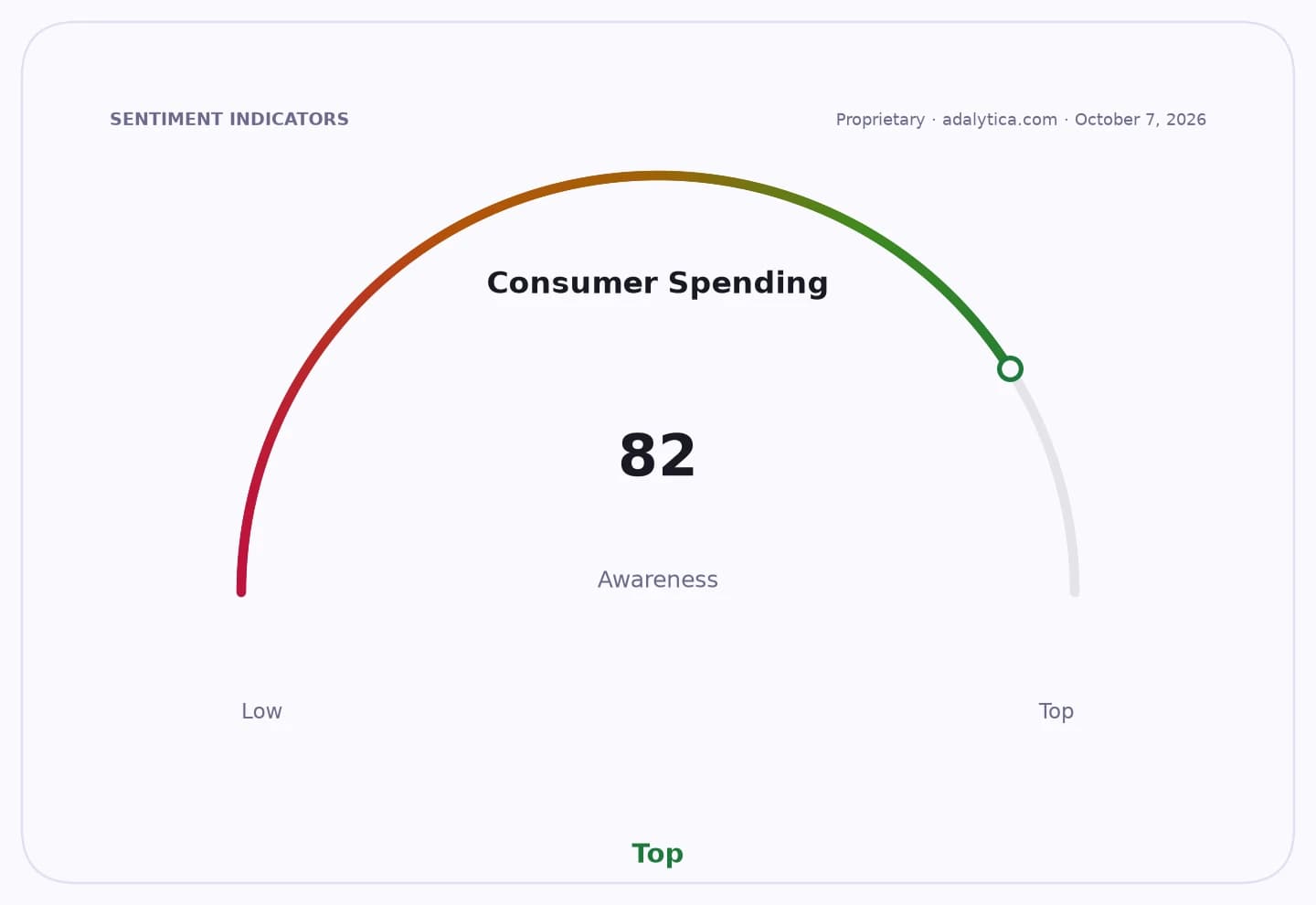
Sentiment IndicatorsⓘProprietary · adalytica.com · September 27, 2026
This is a snapshot — live sentiment, awareness and momentum for 130+ markets update continuously in the dashboard.Open AlphaPulse
The move is also strategically important for Costco, which has built a business around a tightly curated assortment and high turnover. Its stores carry roughly 4,000 items, far fewer than conventional mass merchants, so getting a product on the shelf is an endorsement of both value and supply reliability. For Alberta producers, that hurdle is often the biggest barrier to growth. For Costco, local whisky gives it a differentiated regional offering that aligns with consumers’ shift toward Canadian-made goods.
The broader backdrop is deteriorating for alcohol exporters. Canada exported $1.36 billion of alcoholic beverages in 2023, and 90% of that went to the United States, according to the federal Trade Commissioner Service, with spirits making up about two-thirds of those exports. A planned U.S. ban on Canadian alcohol imports from Sept. 29 would not only hit the small slice of producers that sell abroad, but also inject uncertainty into investment and production planning across the sector.
That makes domestic retail expansion more valuable, especially in Alberta, where a highly competitive liquor market and interprovincial trade barriers make shelf access hard to win and harder to defend. The Alberta government’s new whisky designation rules and the association’s branding push appear to have helped create a cleaner identity for local spirits, making it easier for retailers such as Costco to market them as a distinct category rather than just another small-label product.
Investors should not read the Costco rollout as a major earnings event for the warehouse club, but it does reinforce a familiar Costco strength: selective merchandising that can lift basket appeal without requiring a broad SKU expansion. The stock has been under pressure recently, with its shares slipping below the 50-day moving average and trading near the lower end of their recent range, but the company’s model still benefits from categories that deepen member engagement and support repeat traffic. For smaller distillers, by contrast, the upside is more direct: incremental distribution at a high-traffic retailer ahead of peak gifting season can translate into a meaningful revenue lift.
The bull case for Alberta craft whisky is that local demand, patriotic buying and premiumization can partly replace lost export opportunities. The bear case is that these are still small brands in a crowded province, and sustained growth depends on whether they can maintain production, stay on shelf and avoid a broader consumer pullback. If the U.S. ban arrives as scheduled, the pressure to build a larger domestic base will only intensify.
| Entity | Gains | Losses |
|---|---|---|
| Alberta craft distillers | ▲Wider distribution | ▼Export uncertainty |
| Costco Wholesale | ▲Local assortment appeal | ▼Limited shelf space |
| Alberta consumers | ▲More local choices | ▼Fewer niche products if supply tightens |
| Canadian spirits exporters | ▲Domestic focus | ▼U.S. market access |