Canadians plan to spend less this holiday season, even as a growing share says it will pay a premium for Canadian-made products over imports, a shift that could reshape late-year retail sales and product mix for major chains.
Canadian Shoppers Favor Local Goods This Holiday Season
PwC Canada said 54% of shoppers surveyed would choose a more expensive Canadian-made item over a similar imported option, up from 49% a year earlier. The change points to a consumer mood that is still cautious on discretionary spending, but increasingly influenced by domestic-bias buying and, potentially, tariffs, supply-chain concerns and nationalism.
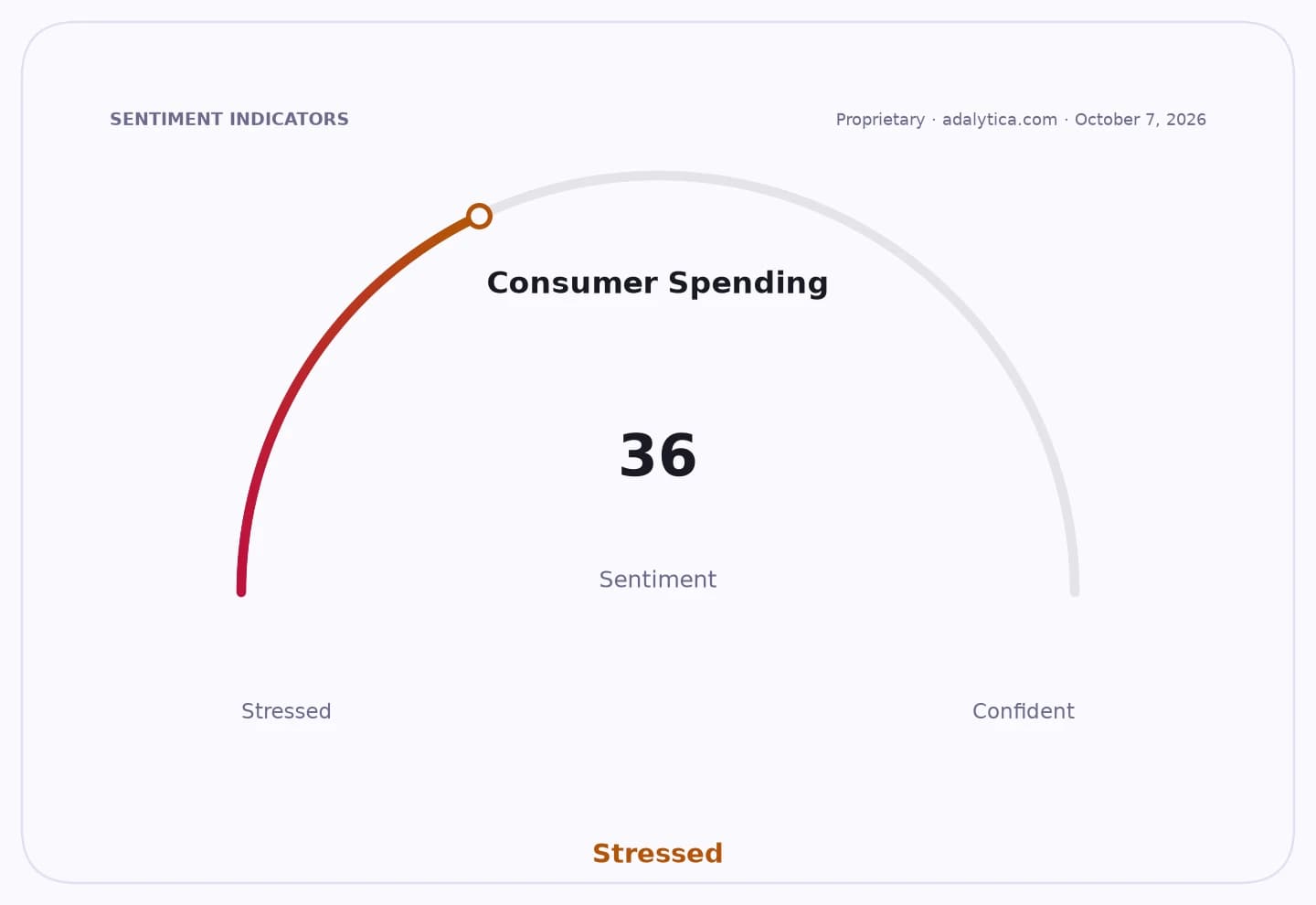
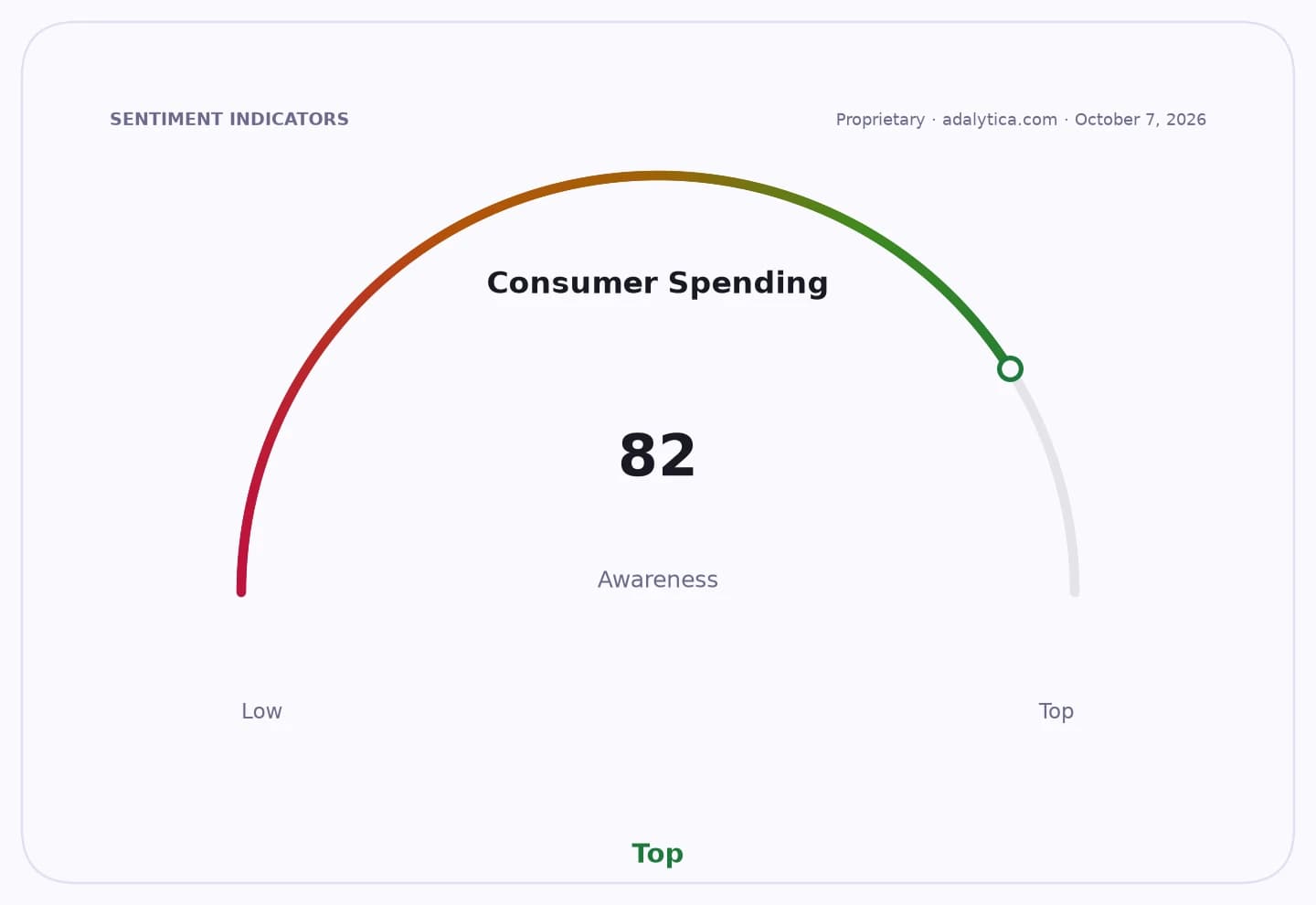
Sentiment IndicatorsⓘProprietary · adalytica.com · October 7, 2026
This is a snapshot — live sentiment, awareness and momentum for 130+ markets update continuously in the dashboard.Open AlphaPulse
That is a mixed message for retailers heading into their most important quarter. Shoppers are signaling tighter budgets overall, which argues for softer unit volumes and more discounting, but the willingness to pay more for Canadian goods may support margins for locally sourced products and give grocers, general merchandisers and apparel chains a way to lean into “buy local” merchandising.
The backdrop is a Canadian economy still contending with modest inflation and a labor market that is stable but not especially strong. The unemployment rate was 4.2% in September, according to the latest data in the context provided, while consumer prices were up 0.4% in August from the previous month. That combination usually leaves households price-sensitive, especially heading into the holiday season when spending rises and credit cards are often stretched.
For retailers, the read-through is uneven. Walmart, Target and Costco all face the risk of consumers trading down or trimming baskets, while Canadian suppliers and domestically focused brands could benefit if shoppers follow through on the stated preference. Costco, which generates a large share of sales during the winter holidays, is especially exposed to any slowdown in discretionary traffic, even as its bulk-value model can appeal to more cautious buyers.
Recent market action suggests investors are already treating the setup as a bifurcated retail story. Walmart shares were last around $107.20, below their 50-day moving average of $108.58 and well under the 200-day average of $117.80, while Target was trading at $154.33, near its 50-day average of $156.04 and above its 200-day average of $127.90. Costco, at $935.68, remained above its 50-day average of $932.58 but still below its 200-day average of $960.15.
The holiday-season call matters because the period often sets the tone for fourth-quarter results, inventory decisions and promotional intensity. If Canadians do spend less but skew more heavily toward local goods, investors may see a split outcome: weaker overall volume growth, but better pricing power for domestic winners and stronger evidence that consumers are trading preferences as much as they are trading down.
| Entity | Gains | Losses |
|---|---|---|
| Canadian-made brands | ▲Higher demand premium | ▼Imported rivals |
| Value retailers | ▲Traffic from cautious shoppers | ▼Premium discretionary sellers |
| Walmart/Target/Costco | ▲Stable bargain-seeking demand | ▼Holiday basket sizes |
| Canadian suppliers | ▲“Buy local” preference | ▼Foreign exporters |