A widening quality problem in the global wheat market is pushing buyers to compete for scarce food-grade supplies even as overall wheat prices have eased under harvest pressure.
Wheat Quality Squeeze Raises Food-Grade Premiums
That split matters because flour millers, food makers and grain traders do not buy “wheat” in the abstract: they buy protein levels, test weights and milling characteristics. When weather, late harvests or variable crop conditions damage those attributes, the market can appear well supplied on paper while still short of the grades needed for bread and other staples. The result is a premium for higher-quality wheat and a discount for grain that is suitable mainly for feed.
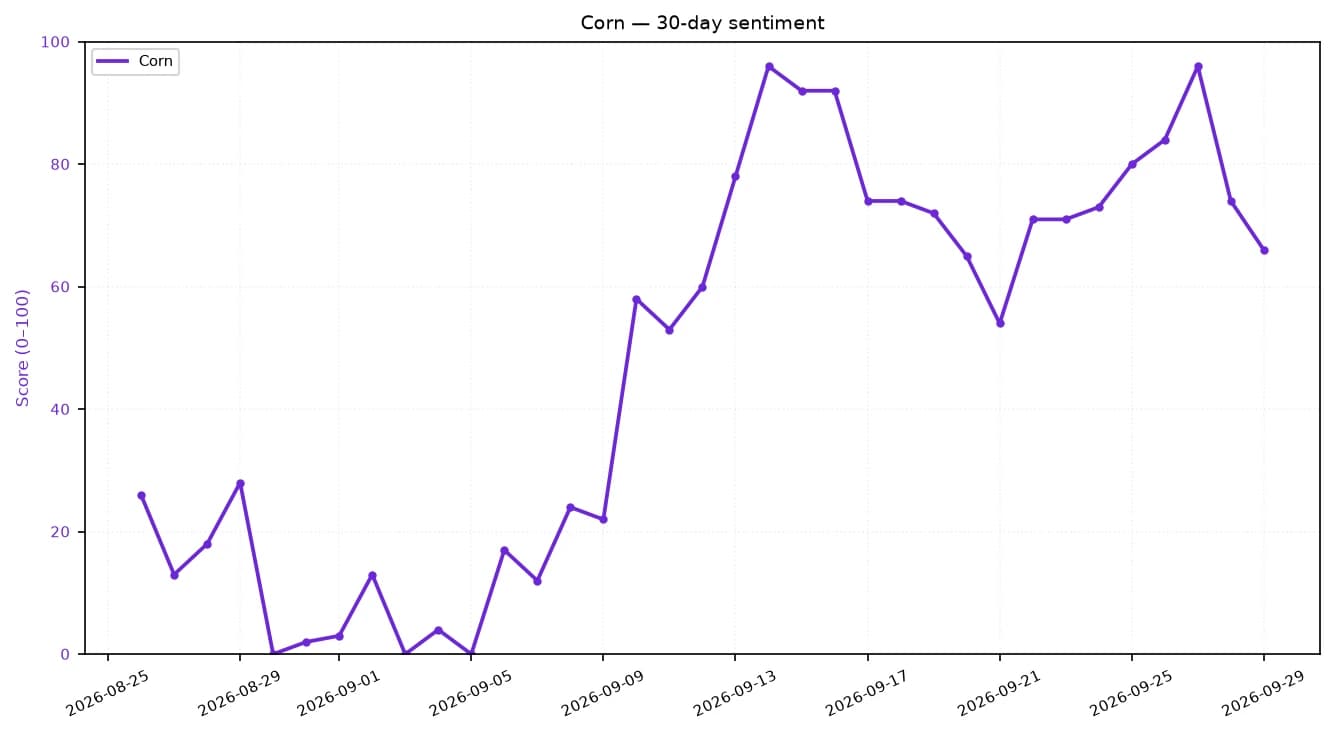
Sentiment IndicatorsⓘProprietary · adalytica.com · October 7, 2026
This is a snapshot — live sentiment, awareness and momentum for 130+ markets update continuously in the dashboard.Open AlphaPulse
The backdrop is a mixed grain tape. US corn prices have been supported by harvest delays, while soybean and wheat futures have softened as American harvest pressure builds. But the more consequential development for the wheat complex is not direction of the headline price alone; it is the deterioration in usable milling supply that can force importers to scramble, widen basis levels and lift procurement costs for food companies.
That risk is already visible in related markets. The wheat ETF WEAT has climbed to about $25.05 this week, up from below $21 in early November 2025, while still trading below its September peak near $26.96. Technical readings show the fund has backed off overbought conditions, with the RSI near 35.5 and the price just above the 50-day moving average. That suggests the market has cooled from an earlier spike, but has not fully priced away the quality issue.
For consumers, the more immediate inflation channel is through flour, bread, noodles and other staples rather than through the raw grain benchmark. The US consumer price index is still rising on a large base, and wheat quality premiums can feed through supply chains with a lag, especially if exporters need to source replacement cargoes farther afield or blend lower-grade lots to meet contract specs. For governments, tighter food-grade availability can also aggravate export restrictions and procurement rules already aimed at protecting domestic supplies.
Producer and processor equities reflect the uneven impact. Archer-Daniels-Midland has held up relatively well, with the stock near $81.45 after trading as high as $88.09 in September, aided by its merchandising and origination exposure. The Simply Good Foods Company has been far more fragile, at $10.02 after a steep drop from more than $20 last autumn, underscoring how margin-sensitive packaged-food companies remain when ingredient costs become harder to control. If wheat quality premiums rise further, traders and merchandisers can benefit from volatility, while food manufacturers with limited pricing power are exposed.
Adalytica’s USO trade signal sits in “Fear” territory, reflecting broader commodity caution, while the S&P 500 shows “Extreme Greed” — a reminder that staples-specific supply stress can build even when the wider equity market is complacent. The market is likely to watch the pace of the US harvest, any export curbs and the extent to which global mills are forced to bid for premium-grade grain. If the quality squeeze widens, the story will move from a weather-driven crop issue to a margin and inflation problem for the food industry.
| Entity | Gains | Losses |
|---|---|---|
| Grain traders/merchants | ▲Wider quality spreads | ▼Inventory risk |
| Food-grade wheat buyers | ▲Securing supply priority | ▼Higher procurement costs |
| Flour mills and bakers | ▲None | ▼Margin pressure |
| Feed users | ▲Cheaper downgraded wheat | ▼None |