Corn futures slipped Thursday after the much-anticipated meeting between President Trump and China’s Xi Jinping produced little fresh news, leaving grain markets without the kind of trade breakthrough that could justify a sustained rally.
Corn Futures Slip After Trump-Xi Meeting
That matters because corn has been trading on expectation as much as on supply and demand. When traders go into a summit hoping for clearer Chinese buying or a reset in trade relations and come out with nothing concrete, they tend to fade risk and wait for the next hard number. December corn fell 0.5% to $5.26 1/2 a bushel on the Chicago Board of Trade, while wheat lost 0.4% to $7.05 3/4 and soybeans eased 0.1% to $13.16 1/2.
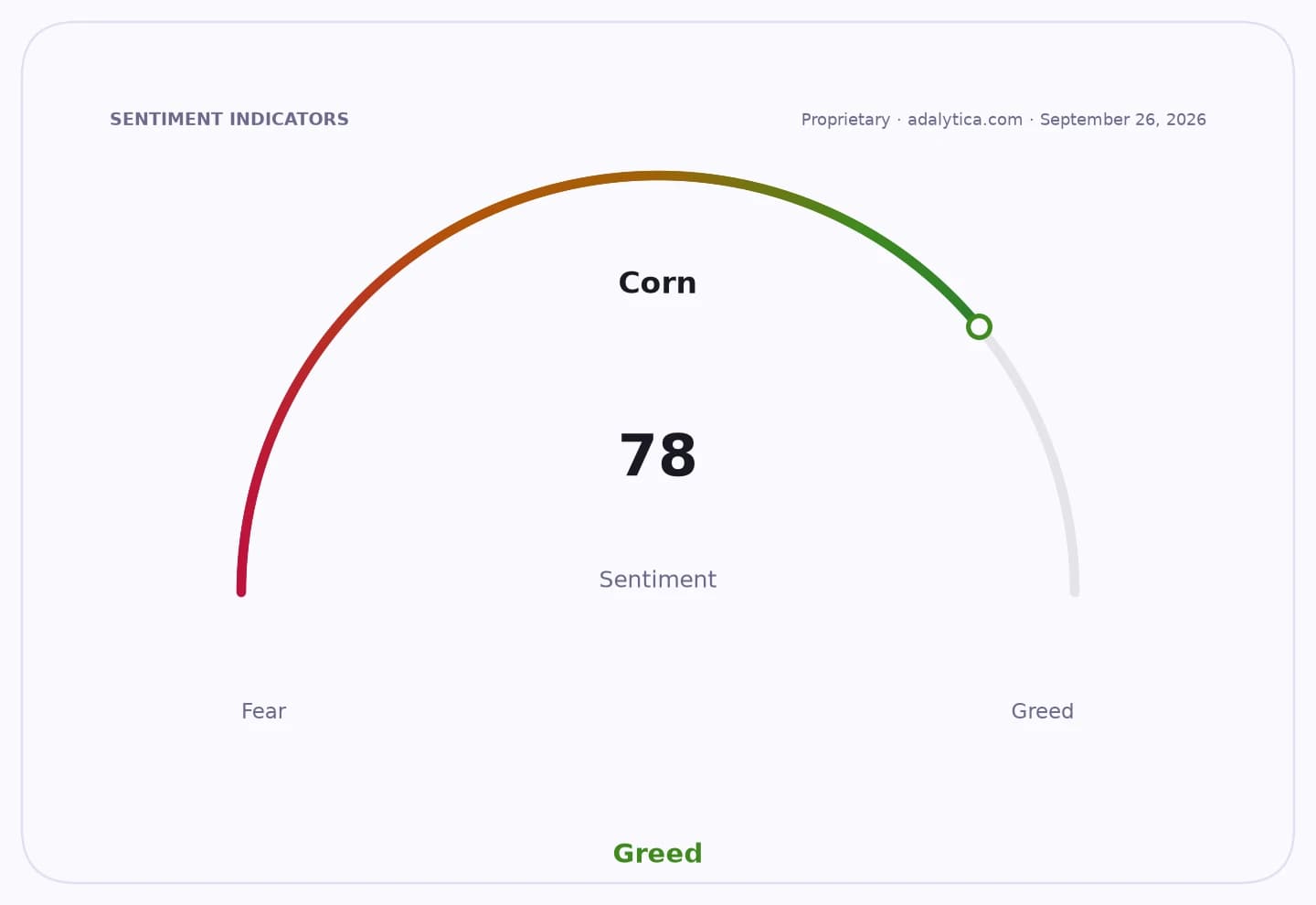
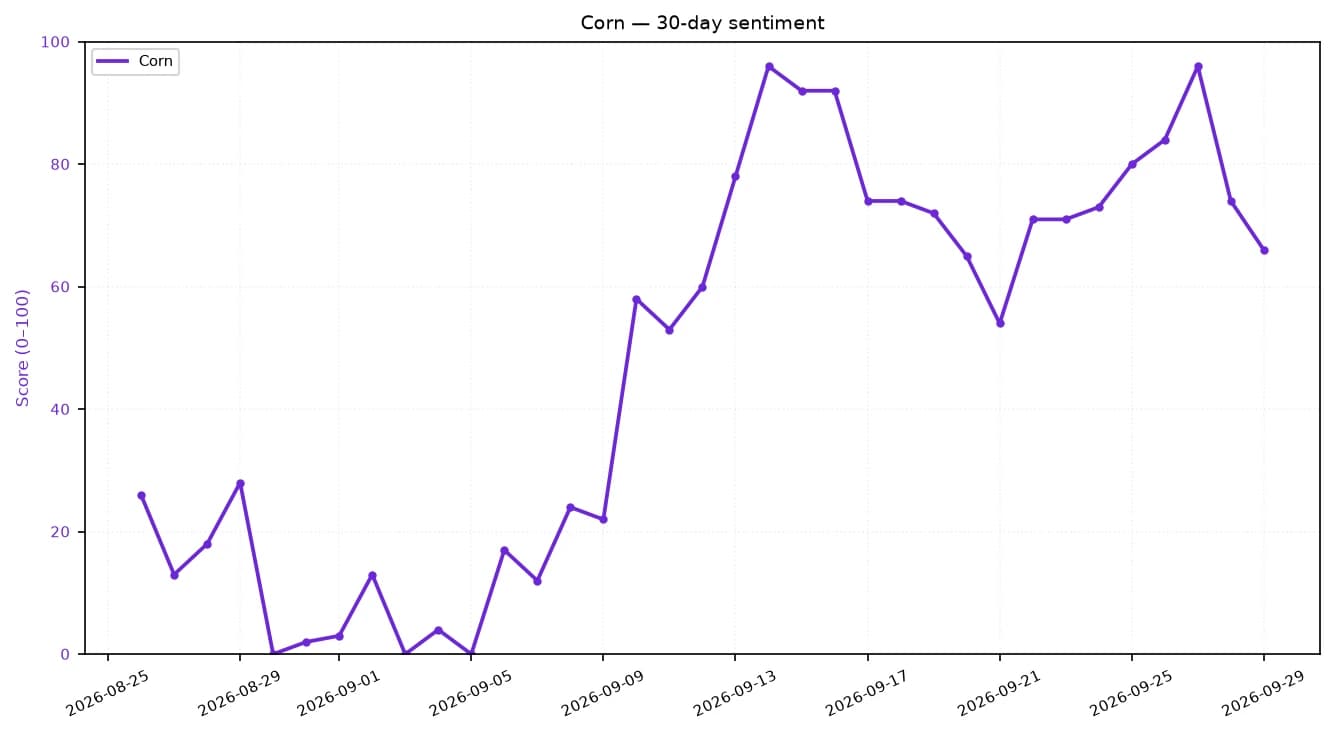
Sentiment IndicatorsⓘProprietary · adalytica.com · September 30, 2026
This is a snapshot — live sentiment, awareness and momentum for 130+ markets update continuously in the dashboard.Open AlphaPulse
For investors, the bigger message is that agriculture remains a patience trade. Grain prices can move sharply on headlines, but the lasting winners usually come from fundamentals that compound over time: export demand, weather, storage economics, and the balance between acreage and supply. Right now, the market is getting mixed signals. Traders are hearing noise about geopolitics, but not enough action to change the demand outlook in a meaningful way.
Weather is still doing some of the heavy lifting. The NOAA Climate Prediction Center said cooler-than-average temperatures and above-normal rainfall are moving through the U.S. Corn Belt over the next two weeks. That is supportive for winter wheat planting and establishment, but it could make harvest work more difficult for corn and soybeans. In other words, the weather is offering some help to one part of the grain complex while creating friction elsewhere.
At the same time, Treasury yields remain elevated and the dollar firm, both of which can weigh on commodity prices. A stronger dollar makes U.S. crops less competitive abroad, while higher rates reinforce the idea that investors can still earn attractive returns outside the grain market. For corn, that keeps the burden on physical demand and export flows to prove the bullish case.
There is also a more subtle story in the cash market. Farmers facing wet fields and harvest delays are seeing basis levels hold up, according to traders, which suggests local buyers still need grain even as futures soften. That can be healthy for producers over time, but it also shows how uneven the market is: nearby supplies can be tight enough to support cash bids even while futures are pressured by macro headlines.
Export demand, meanwhile, was not strong enough to add conviction. USDA reported soybean export sales for the 2026/27 marketing year at 582,400 metric tons for the week ended Sept. 17, below the broad analyst range, and corn and wheat sales also landed toward the lower end of expectations. That is not the sort of evidence bulls want when the market is looking for confirmation from China and other overseas buyers.
For long-term investors, the takeaway is straightforward: this is a market waiting for a driver, not one that has found a new trend. If trade negotiations eventually turn into real buying, grain prices could stabilize and basis could stay firm. If not, corn will have to lean more heavily on weather, ethanol demand, and tighter supply assumptions to keep its recent gains intact. For now, the prudent move is to watch, stay diversified, and remember that in agriculture, the best opportunities usually come from owning the sector through cycles rather than chasing every headline.
| Entity | Gains | Losses |
|---|---|---|
| Cash grain buyers | ▲Lower futures costs | ▼Less urgency to chase supplies |
| Farmers with delayed harvest | ▲Firmer basis | ▼Slower fieldwork |
| Exporters / importers | ▲More room to negotiate | ▼Less price support from trade news |
| Grain bulls | ▲Weather and basis support | ▼Lack of U.S.-China catalyst |