China’s return to the U.S. soybean market is reviving export expectations just as tariff friction threatens to keep the rebound from becoming a full-scale recovery.
China Resumes U.S. Soybean Buying
That matters because soybeans are one of the clearest barometers of U.S.-China agricultural trade, and the latest buying spree is already reshaping the outlook for U.S. farm shipments, Brazilian export flows and grain-market pricing heading into the fourth quarter. China has booked 8.98 million metric tons of U.S. soybeans for the 2026-27 marketing year so far, lifting total U.S. soybean export commitments to 18.9 million tons, more than double a year earlier, according to USDA data.
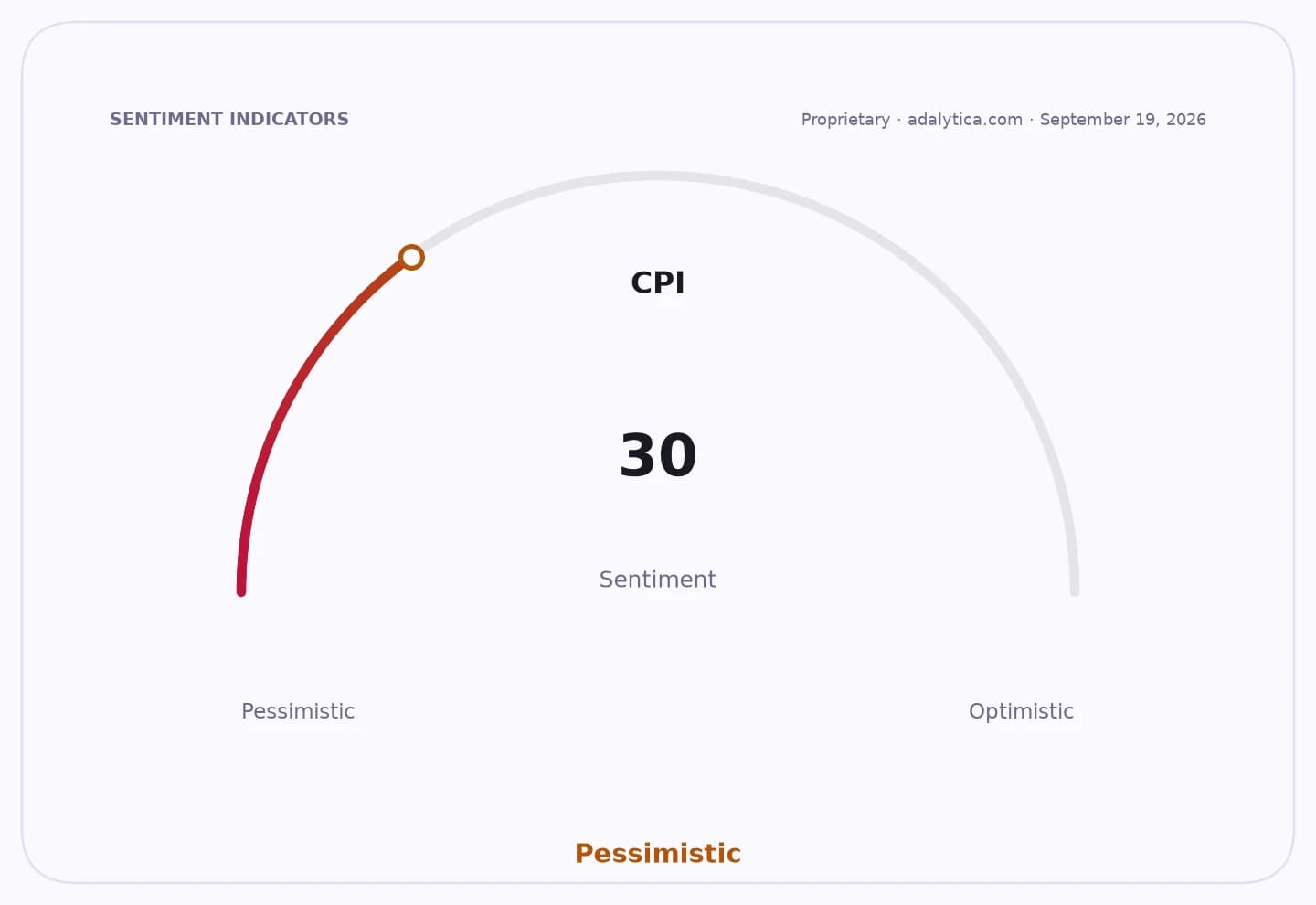
Sentiment IndicatorsⓘProprietary · adalytica.com · September 26, 2026
This is a snapshot — live sentiment, awareness and momentum for 130+ markets update continuously in the dashboard.Open AlphaPulse
The turnaround is a welcome relief for U.S. exporters after a bruising prior season. U.S. soybean exports fell 18.2% in 2025-26, while shipments to China dropped 45% to 12.4 million tons after Beijing suspended purchases for nearly five months in 2025 amid trade tensions and shifted heavily to Brazil. For farmers, grain merchants and agricultural logistics providers, the difference between a stagnant export program and a China-led rebound is the difference between compressed margins and stronger cash flow through the crop year.
The USDA is already leaning in. In its Sept. 11 WASDE report, the department projected U.S. soybean exports at 45.18 million tons for 2026-27, up 10.9% from the prior year, with production seen rising 6.4% to 123.42 million tons. Some exporters think China could buy as much as 25 million tons this season, near the annual pace Beijing pledged at the Busan summit last year. If that materializes, the U.S. would be back closer to normal export channels after a year of disruption.
But the market is not yet pricing in a clean rerating. China’s extra 10% tariff on top of the 3% most-favored-nation duty leaves U.S. soybeans at a disadvantage versus Brazilian supplies, and traders say private importers are still reluctant to absorb the added cost. So far, most U.S. sales have gone to state-linked buyers such as COFCO and Sinograin. That means the rebound is real, but still politically curated rather than fully market-driven.
For investors, that distinction matters. A state-led buying cycle can support near-term U.S. export volumes and underpin sentiment in soybean-linked ETFs such as SOYB, where shares have climbed sharply and are trading above both the 50-day and 200-day moving averages. But unless tariffs ease, the rally may remain selective: U.S. farmers and exporters gain volume, while the true pricing power still sits with China and the next policy headline.
Brazil is the other swing factor. Brazil remains the dominant supplier to China, taking 72.1% of China’s soybean imports through July 2026, and traders expect Beijing may front-load U.S. purchases in the fourth quarter before pivoting back to Brazil once the new South American crop reaches export channels in January. That suggests any U.S. export surge could be temporary rather than structural unless the summit between President Donald Trump and President Xi Jinping produces tariff relief or firmer purchase commitments.
Soybeans are therefore less a single-commodity story than a read-through on trade détente, farm income and global crop routing. If Washington and Beijing ease tariff pressure, U.S. exports could regain share faster than the market expects; if not, China’s buying revival may prove only a short-lived bridge to Brazil’s next harvest. For now, I believe the better trade is to stay exposed to U.S. agricultural exporters and grain logistics names, but with discipline: the upside is real, but the tariff overhang still caps the ceiling.
| Entity | Gains | Losses |
|---|---|---|
| U.S. soybean exporters | ▲Higher export volumes | ▼Tariff-driven demand cap |
| Chinese state buyers | ▲Supply security | ▼Higher import costs |
| Brazilian exporters | ▲Seasonal pricing power | ▼Potentially lower China share |
| U.S. farmers | ▲Better cash flow | ▼Policy uncertainty |