Costco’s push to expand gasoline sales is emerging as more than a side business: it could alter how investors value the warehouse club by lifting traffic and revenue while pressuring the company’s already thin gross margin percentage.
Costco Fuel Sales Lift Traffic, Pressure Gross Margin
That trade-off matters because Costco has long been judged on the durability of its membership model, not on merchandise markups. Fuel can drive more visits, support basket growth and help defend share against Walmart’s Sam’s Club and other mass retailers, but it also lowers the apparent margin rate because gasoline carries a much lower profit profile than core warehouse goods. Costco’s latest filing makes that tension explicit, saying a higher penetration of gasoline sales generally reduces gross margin percentage even as rising fuel prices can boost net sales and lower SG&A as a share of sales.
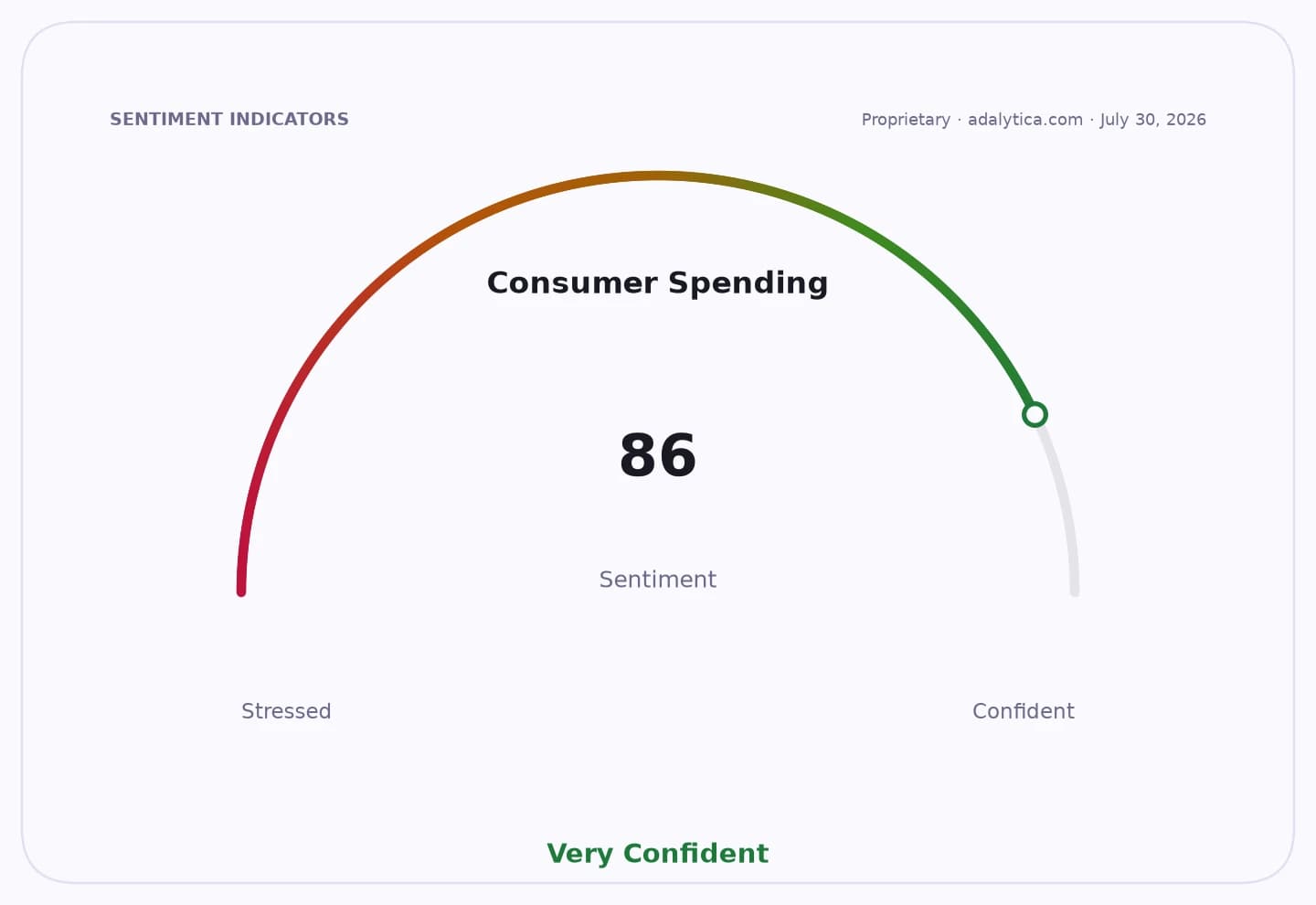
Sentiment IndicatorsⓘProprietary · adalytica.com · July 30, 2026
This is a snapshot — live sentiment, awareness and momentum for 130+ markets update continuously in the dashboard.Open AlphaPulse
The market is already pricing in a company at an important inflection point. Costco shares recently traded around $950, below a late-May peak above $1,090, but still above both the 50-day and 200-day moving averages, suggesting the long-term trend remains intact despite recent volatility. The stock’s decline from the peak reflects concern that investors may be paying up for growth while the earnings mix becomes harder to read as fuel becomes a larger contributor. A business built on volume and membership fees can absorb some margin dilution, but only if fuel helps keep the stores busy enough to offset the lower take rate.
That is why gasoline is strategically important. Fuel stations are not just a convenience add-on; they can become a traffic engine that reinforces the warehouse model. Costco already said comparable sales were helped by higher average ticket and shopping frequency in its latest quarter, while membership income remained a crucial driver of profitability. If gasoline expansion pulls in more frequent shoppers, it can deepen loyalty and support fee renewal rates, which matter more to long-term earnings than the slim margins on fuel itself.
The downside case is that fuel adds scale without adding much profit, especially if gasoline prices moderate or if competition forces pricing discipline. A retailer can grow reported sales and still disappoint on operating leverage if mix shifts too far toward low-margin categories. For Costco, that risk is heightened because investors often pay a premium multiple for the company’s consistency and quality of earnings. Any sign that gasoline is becoming a larger share of revenue without a commensurate boost in membership income or traffic would challenge that premium.
Competitors are watching closely. Walmart’s Sam’s Club already discloses fuel as a material factor in comparable sales, underscoring that fuel is becoming a more important battleground in warehouse retail. Exxon Mobil, meanwhile, benefits indirectly from stronger retail fuel demand, though the economics for Costco are very different: its goal is not upstream profit capture but ecosystem lock-in.
For investors, the key question is whether Costco can turn gasoline into a structural advantage rather than a margin headwind. If it can, fuel could strengthen the company’s moat by increasing visits, supporting membership retention and giving it more leverage against rivals. If not, the experiment may simply make a high-quality retailer look more like a lower-margin fuel operator.
| Entity | Gains | Losses |
|---|---|---|
| Costco | ▲More traffic, higher sales base | ▼Lower gross margin percentage |
| Members/shoppers | ▲Lower fuel prices, convenience | ▼Less clarity on earnings mix |
| Walmart Sam’s Club | ▲Benchmarking benefit from fuel demand | ▼Competitive pressure on fuel pricing |
| Long-term shareholders | ▲Stronger loyalty if fuel lifts visits | ▼Valuation risk if margins dilute |