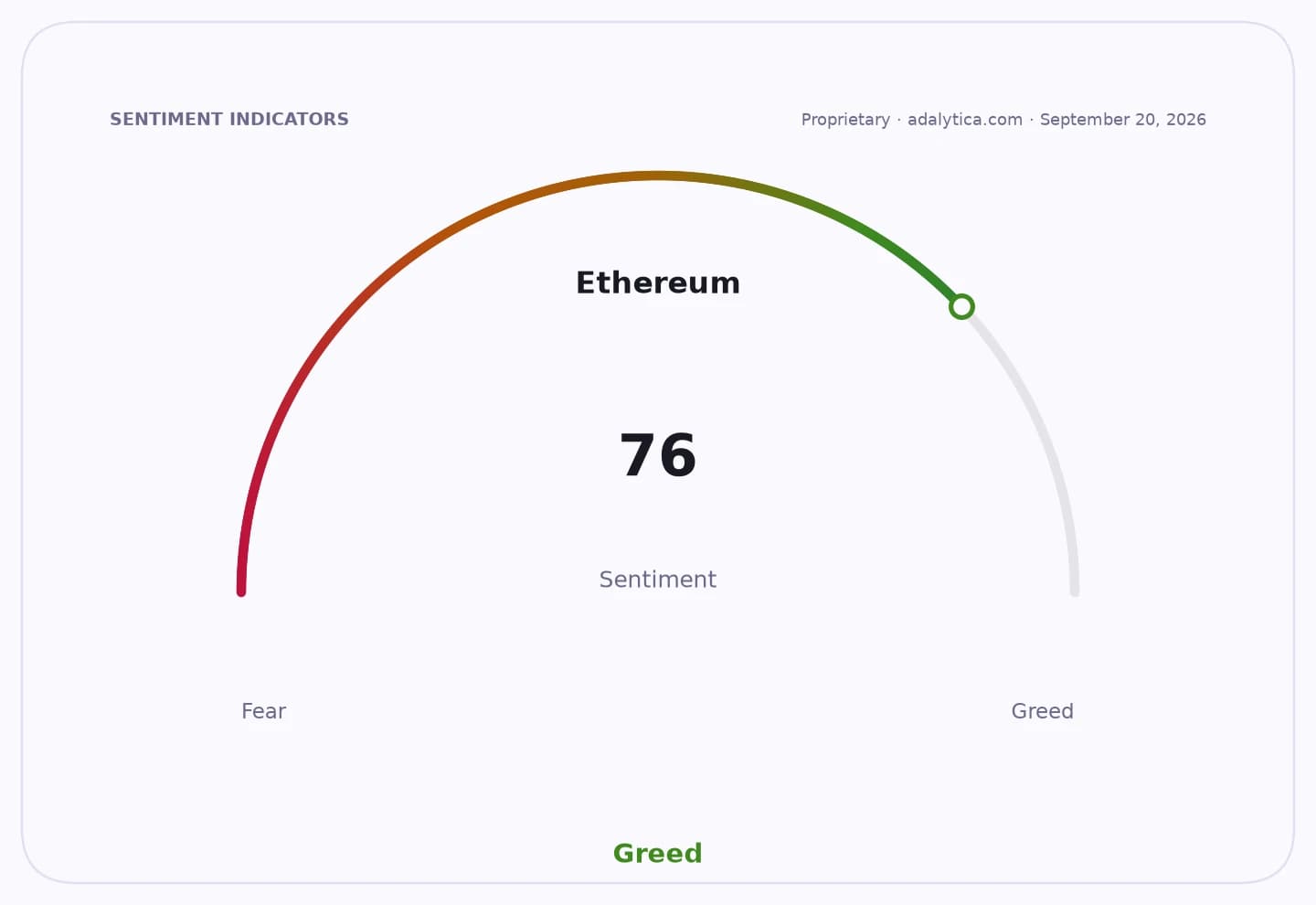
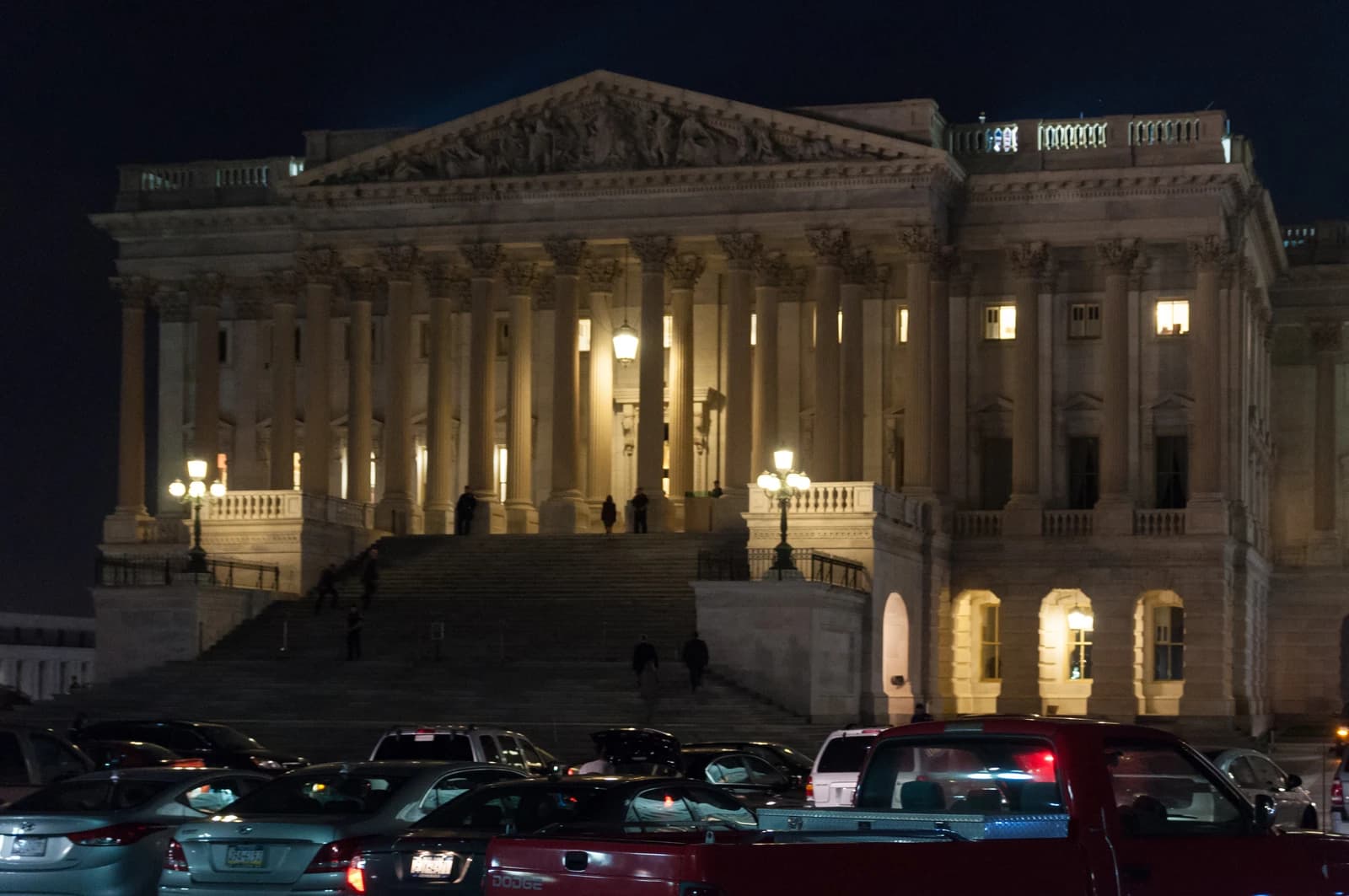
The Senate’s Sept. 15 cloture vote on the Clarity Act has become the key event for crypto markets this month because it will determine whether Washington moves toward a formal framework for digital assets — or whether investors are left with another round of regulatory ambiguity that could trigger a broad selloff.
Crypto markets await Senate Clarity Act cloture vote

The market is already pricing in a high risk of failure. Prediction markets put the odds of the bill passing before year-end at just 16% as of Sept. 4, suggesting traders see the procedural vote as more likely to expose than resolve the sector’s legal overhang. For Bitcoin and the broader crypto complex, the issue is not whether the legislation changes the economics of the asset itself, but whether it lowers the political and compliance premium embedded across the market.
Sentiment IndicatorsⓘProprietary · adalytica.com · September 8, 2026
This is a snapshot — live sentiment, awareness and momentum for 130+ markets update continuously in the dashboard.Open AlphaPulse

That matters because the Clarity Act is designed to settle which regulators oversee which tokens and to set rules around fundraising, reporting and compliance. Bitcoin sits somewhat apart from that debate: it is widely viewed as less exposed to the SEC-CFTC jurisdictional fight than altcoins and application-layer tokens. But the asset is still unlikely to escape a sectorwide de-risking if the bill stalls.
The early-August market reaction offers a template. When the Senate left for recess without taking up the legislation, Bitcoin fell only 1% between Aug. 3 and Aug. 17, while XRP dropped 8.5%, the worst among major tokens in that stretch. Bernstein has estimated that in a broader regulatory setback Bitcoin could fall 10% to 25%, with altcoins down as much as 15% to 30%. That kind of drawdown would likely punish the most regulation-sensitive names first, but it could also create buying opportunities in assets with stronger balance sheets, deeper liquidity and cleaner regulatory profiles.
Bitcoin — 30-day sentimentadalytica.com
Explore this data interactively — full history, time series and cross-market comparisons.Open AlphaPulse
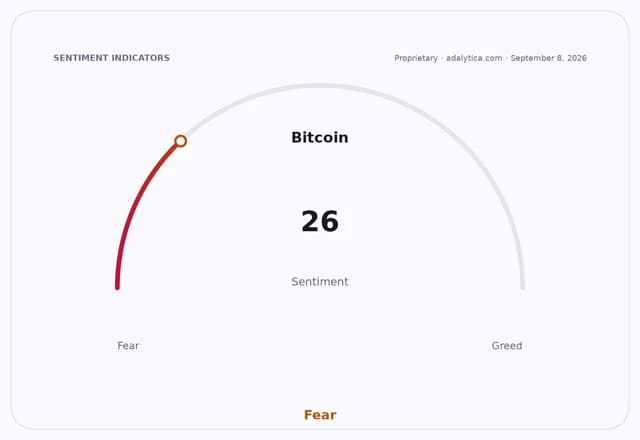
Bitcoin itself is not showing capitulation yet. It traded at $79,277.23 on Sept. 8, down about 1.3% from the previous session and roughly flat over the last few days, while its 50-day and 200-day simple moving averages hovered near $69,700, underscoring that the longer-term trend remains intact even as short-term momentum cooled. Adalytica’s Bitcoin Fear & Greed Index showed “Fear” at 26, while broader market measures indicated the dollar was firm and crypto traders were still defensive. That combination argues for caution, but not necessarily forced liquidation.
For investors, the more relevant distinction is between assets that would likely be hurt by a failed vote and those that could be replenished on weakness. Coinbase, which sits closer to the center of the regulatory debate as a U.S.-listed exchange and crypto brokerage, has already shown it can be more volatile than Bitcoin around policy headlines. Coinbase shares closed at $184.64 on Sept. 4, above their 50-day average of $163.15 but still below the 200-day average of $192.76, suggesting the stock remains sensitive to changes in the policy narrative even after a strong summer rally.
Bitcoin miners such as Marathon Digital also have a different risk profile. MARA closed at $11.31 on Sept. 4, barely above its 50-day average of $11.44 and 200-day average of $10.92, reflecting a market that has already priced in a fair amount of operational and macro stress. Miners tend to trade with higher beta than Bitcoin itself, so a failed cloture vote could pressure them disproportionately even if their business models are less directly affected by the bill’s text.
The case for holding some cash is straightforward: if the vote fails or is delayed, the sector could overshoot to the downside, and the best entries often come during the first wave of panic rather than after headlines settle. The case against overreacting is equally clear. Ethereum and Solana have network upgrades scheduled before the end of 2026 — Glamsterdam and Alpenglow — that should support usage regardless of Congress, while Bitcoin remains the reserve asset most likely to recover fastest if the market treats the setback as a temporary policy delay rather than a structural defeat.
The next catalyst is binary. If the Senate vote falls short of 60 votes, traders will likely interpret it as a signal that clarity is still distant, and that could pressure tokens, exchanges and miners in one move. If the bill advances, the relief rally may be strongest in the most regulation-sensitive assets, not Bitcoin itself. Either way, the procedural vote is less about a single piece of legislation than about whether crypto keeps trading under an expanding cloud of uncertainty or starts to price in a more durable rulebook.
| Entity | Gains | Losses |
|---|---|---|
| Bitcoin holders | ▲Relative safety; buy-the-dip setup | ▼Sectorwide selloff risk |
| Altcoins like XRP, SOL, ETH | ▲Potential post-vote rebound if bill advances | ▼Larger drawdowns if bill fails |
| Coinbase | ▲Relief from clearer U.S. rules | ▼Policy uncertainty and volatility |
| Crypto cash holders | ▲Better entry points | ▼Missed upside if passage sparks rally |