Artificial intelligence is not just making cyberattacks more frequent — it is making them cheap, fast and repeatable, and that is exactly why the cybersecurity trade is becoming one of the most important AI infrastructure opportunities of the next cycle.
Cybersecurity Stocks Gain as AI Hackers Scale Attacks
Artificial Intelligence
The biggest shift is not the headline-grabbing breach itself. It is the collapse of the skill barrier that once kept hacking expensive and relatively scarce. The FBI’s warning about ARTEX, an open-source tool that lets AI agents move from reconnaissance to data exfiltration at machine speed, is the clearest sign yet that attackers can now run industrialized campaigns in hours, not weeks. That changes the economics of both crime and defense: every company, bank, agency and cloud environment becomes a larger target, while security teams are forced to buy faster response, better context and more automation just to keep up.
Sentiment Indicators
For investors, that creates a powerful second-order trade. When attacks scale, security budgets follow. But the winners are unlikely to be legacy point solutions. The market underestimates how quickly buyers will shift toward platforms that can correlate identity, endpoints, workloads, network traffic and AI activity in one place. That is where Palo Alto Networks, CrowdStrike and Zscaler sit in the value chain, and their products are being pulled into a market that is moving from “nice to have” toward operational necessity.
The evidence is already visible in both the threat landscape and the stock tape. The European Commission was disrupted for more than ten days in an AI-facilitated cyberattack, while a Binance engineer reportedly downloaded malware disguised as a take-home assignment and a fake Microsoft 365 outage notice followed real system downtime within a day. Those are not isolated oddities; they are proof that AI lets attackers impersonate normal business activity at scale. Security vendors are being asked to stop not only intrusions but also deception that looks like hiring, support, billing and routine login behavior.
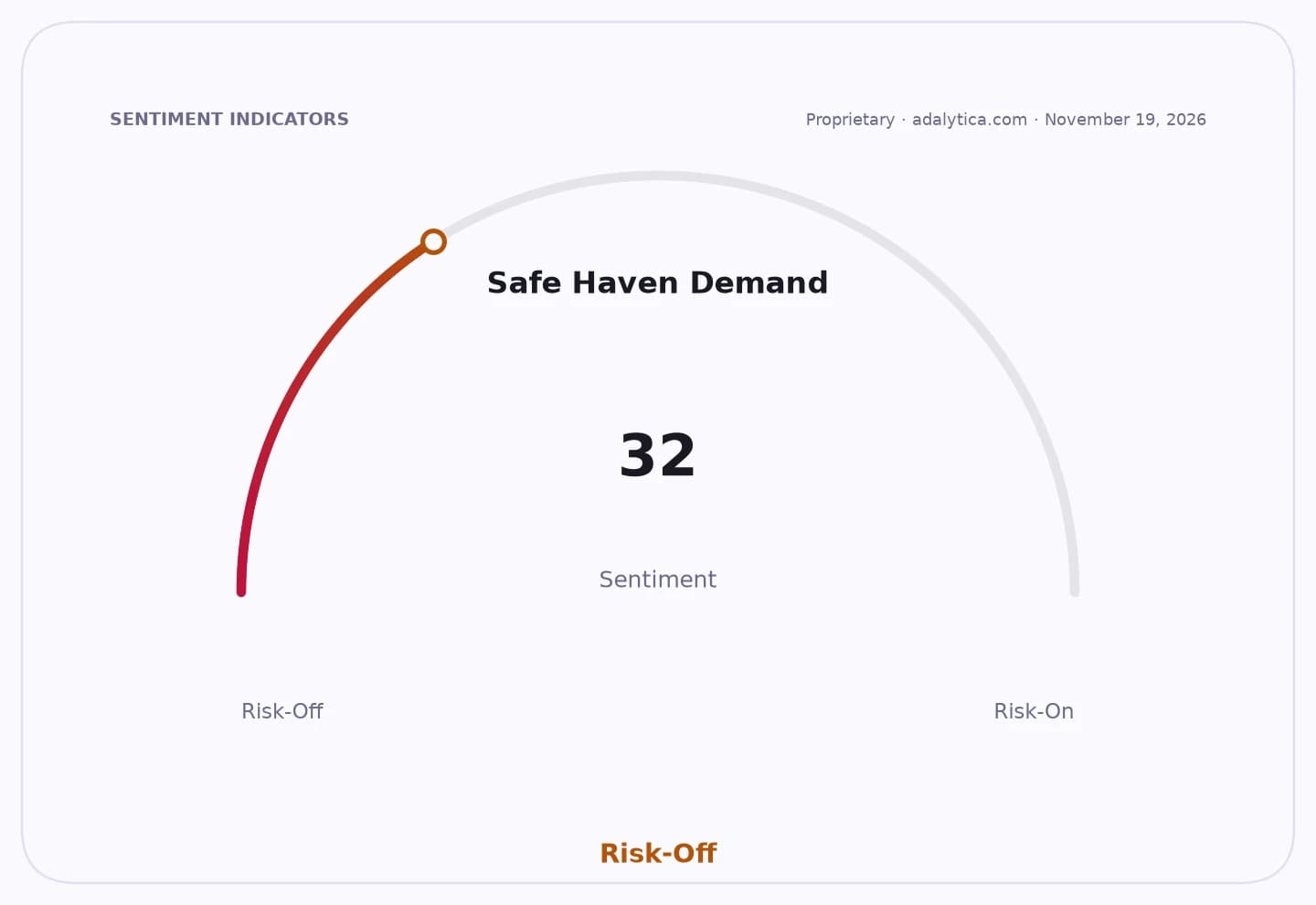
That is why the right investment frame is not “cybersecurity as protection” but cybersecurity as AI-era toll roads. The more AI lowers the cost of offense, the more companies must spend on detection, response and identity control. Adalytica’s proprietary sentiment gauges show the broader AI trade has moved into extreme fear even as awareness remains elevated, a sign that investors are still struggling to price the next phase of AI disruption. That disconnect is exactly where the opportunity sits: the market remains enthusiastic about AI software, but it is still underpricing the defensive layer that AI makes indispensable.
The best-positioned names are the ones that can turn threat intelligence into automated action. Palo Alto’s Unit 42, CrowdStrike’s endpoint and identity stack, and Zscaler’s cloud access and zero-trust architecture all benefit when enterprises decide that human-speed defense is no longer enough. These companies do not just sell software; they sell the ability to compress response time from fiscal quarters to minutes. In a market where attackers can already exploit confusion and move before a procurement cycle ends, that capability becomes strategic.
Price action also shows investors are rotating toward the survivors of this new era, not away from it. Palo Alto and CrowdStrike have both seen sharp swings, but their longer-term trend remains tied to the same secular tailwind: more compute, more AI, more automated attack surface, more budget for defense. The companies that can prove they reduce false positives, shorten incident response and secure AI workloads will likely capture the next leg of spending.
My view is simple: AI hacking is not a niche threat story, it is a demand shock for cybersecurity. The market is still treating this as a gradual upgrade cycle, when it is really an inflection point. If AI is making attackers exponentially more capable, then the best cybersecurity platforms become one of the clearest picks-and-shovels plays in the entire AI economy. Investors should be positioned accordingly.
| Entity | Gains | Losses |
|---|---|---|
| Palo Alto Networks | ▲platform demand | ▼point-solution rivals |
| CrowdStrike | ▲endpoint/identity spending | ▼manual security tools |
| Zscaler | ▲zero-trust adoption | ▼legacy perimeter security |
| Attackers using AI | ▲scale and speed | ▼human-skill barrier |