Inflation in the Czech Republic is poised to move back above the central bank’s 2% target by year-end, with economists warning it could approach 3% early next year as fuel, services and utility repricing replace the disinflationary effects of cheaper food and state support.
Czech inflation seen rising above 2% by year-end

That shift matters because it suggests the current pause in headline price pressure is temporary, not a durable return to stability. The latest reading of 1.9% looks benign at first glance, but analysts say it masks opposing forces that are now likely to turn less favorable for consumers and policymakers. Brent crude’s climb back above $90 a barrel in August has already lifted diesel prices by roughly 14% in the Czech Republic, while gasoline has also become more expensive.
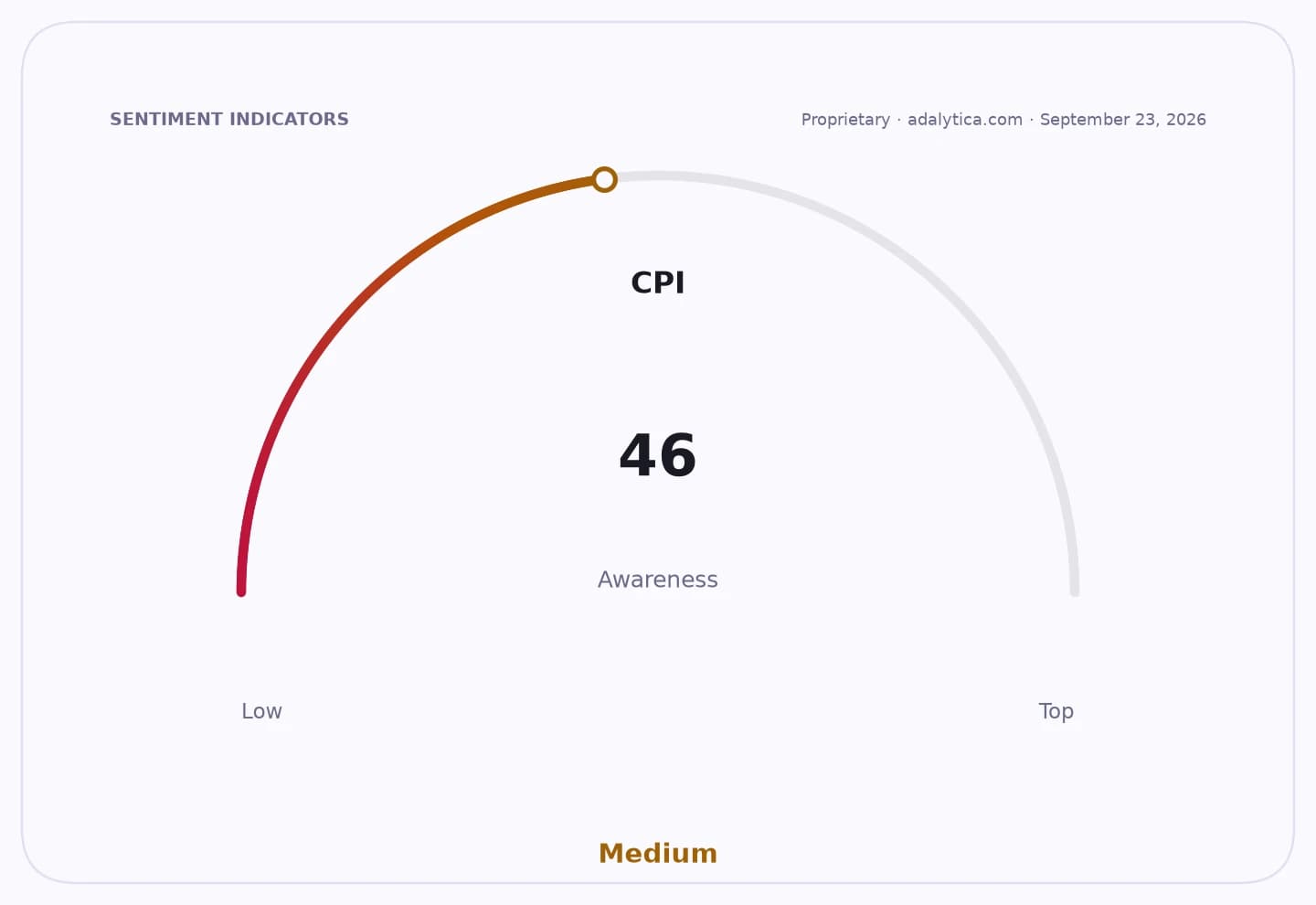
Sentiment IndicatorsⓘProprietary · adalytica.com · September 4, 2026
This is a snapshot — live sentiment, awareness and momentum for 130+ markets update continuously in the dashboard.Open AlphaPulse
The bigger problem for the inflation outlook is that services remain sticky. Prices in services are still rising 4.5% year on year, well above the Czech National Bank’s target, and that category has been a persistent source of inflation since the pandemic. Leisure, dining and accommodation costs have been increasing for years, and rent-related items, including imputed rent, have added to the pressure as the housing market feeds through into consumer prices.
Economists also see a fresh inflation impulse coming from energy. So far, widespread fixed-price contracts have softened the pass-through from gas and electricity, leaving the Czech Republic less exposed than many Western European economies. That protection is expected to fade around the turn of the year as suppliers and distributors revise tariffs. At the same time, the state measure that took over the renewable energy levy is holding inflation down by about 0.4 percentage point; once that effect drops out, the annual comparison will become less flattering.
Food prices are still providing some offset, with agricultural supply helping to push food inflation lower. But that disinflation looks fragile. Analysts say this year’s harvest points to the food contribution fading, leaving the economy more exposed to energy and services. In other words, the current inflation mix is shifting from one-off relief toward more structural pressure.
For investors, the message is that rates are unlikely to fall quickly if inflation re-accelerates as expected. Higher-for-longer policy would keep pressure on domestic bond valuations and support the koruna if the central bank has to remain cautious. It also raises the risk that households face a second round of real-income erosion just as borrowing costs remain restrictive, which would weigh on consumption and corporate pricing power.
Markets are already sensitive to any sign that inflation expectations are becoming less anchored. Adalytica’s confidence gauge on the Fed’s 2% inflation target is extreme, but in the Czech case the relevant issue is whether local price dynamics keep broadening beyond fuel and food into the stickier parts of the basket. If they do, the path back to target may prove slower than the latest headline figure suggests, and policy easing could be pushed further out.
| Entity | Gains | Losses |
|---|---|---|
| Czech fuel suppliers | ▲Higher pump prices | ▼Consumers |
| Service providers | ▲Stronger pricing power | ▼Households |
| Czech National Bank | ▲Clearer case for caution | ▼Rate-cut hopes |
| Consumers | ▲Temporary food relief | ▼Real incomes |