The Czech koruna has lost ground against the dollar this year as a stronger greenback, shifting interest-rate differentials and renewed geopolitical tension pushed investors toward safer currencies.
Czech Koruna Falls Against Dollar in 2025

Through the first nine months, the koruna fell 5% against the dollar and 1.4% against the euro, while it weakened 2.8% versus sterling, according to Purple Trading analyst Petr Lajsek. The move matters because foreign-exchange swings feed directly into imported inflation, corporate hedging costs and the competitiveness of Czech exporters, while also shaping the return profile for international investors holding local assets.
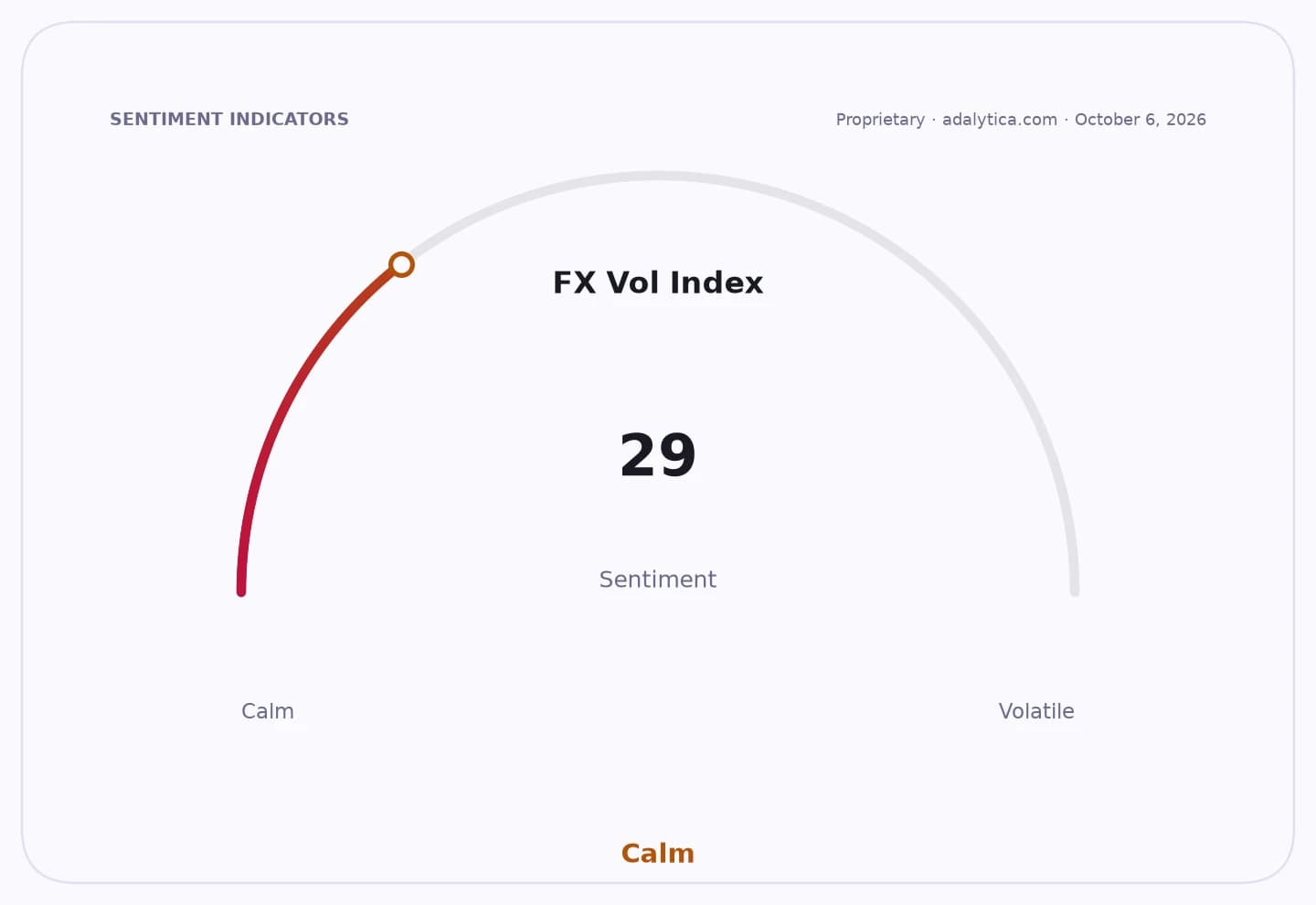
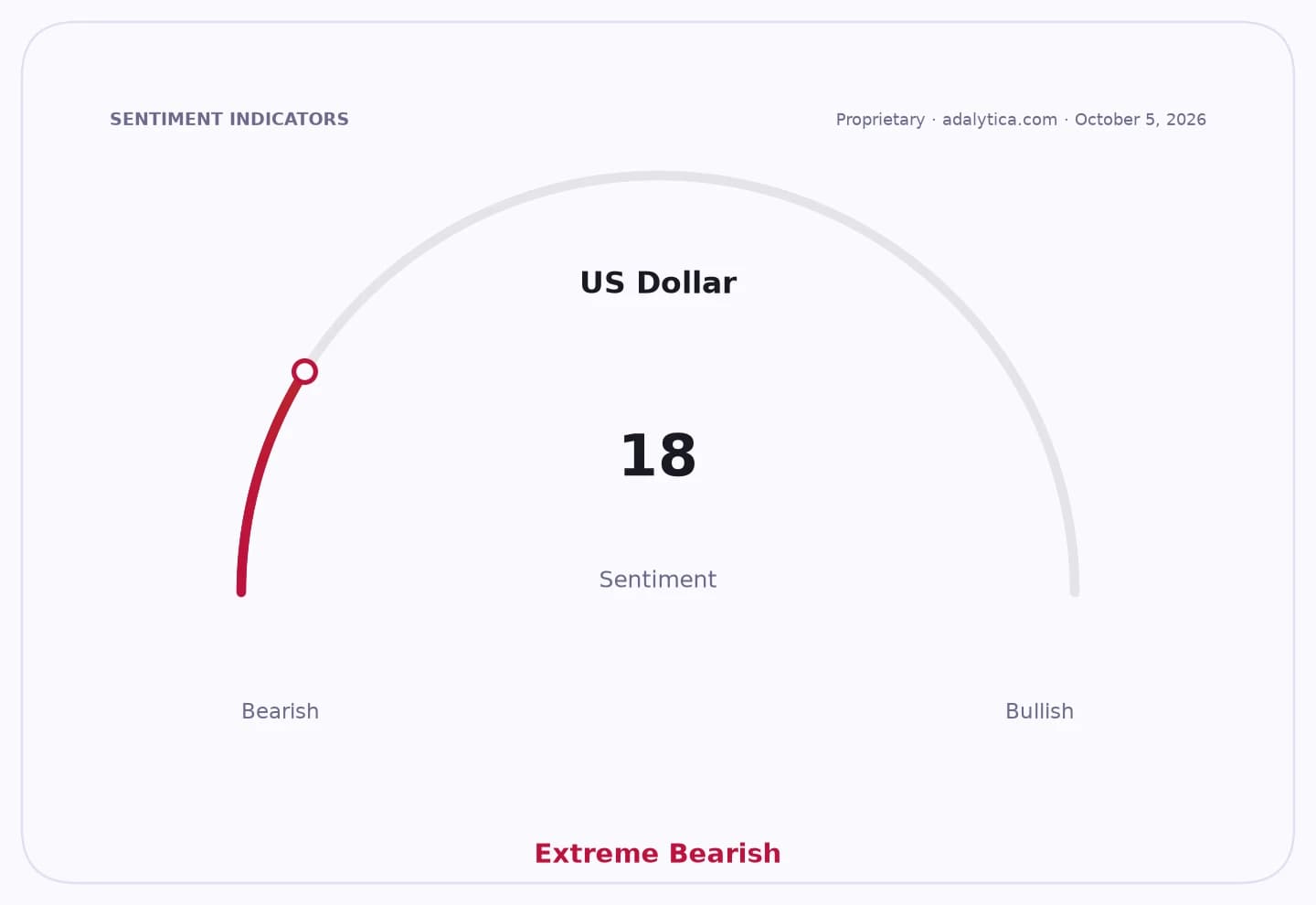
Sentiment IndicatorsⓘProprietary · adalytica.com · October 4, 2026
This is a snapshot — live sentiment, awareness and momentum for 130+ markets update continuously in the dashboard.Open AlphaPulse
The depreciation against the dollar has been the most economically important. The dollar has continued to benefit from higher U.S. yields and its role as a haven during periods of uncertainty, while the Czech currency has not offered enough carry to offset that appeal. EURCZK traded around 24.39 on Oct. 4, with the pair still above its 200-day moving average of 24.27, and the latest readings show the market has been leaning toward a firmer euro relative to the koruna. USD/CZK was at 21.71, up from 21.05 in late November 2025, underscoring the dollar’s broader advance against the Czech unit.
Lajsek said conflict in the Middle East was a key driver of the year’s foreign-exchange volatility, reinforcing demand for the dollar and, to a lesser extent, the euro. That backdrop has left the koruna mixed rather than uniformly weak: it has also gained 2.7% against the Polish zloty and 9.2% against the Turkish lira, reflecting the uneven performance of regional and emerging-market currencies.
For investors, the main issue is not just direction but policy divergence. The U.S. Federal Reserve’s first rate increase since 2023 in September and expectations for at least one more hike by year-end keep the dollar supported, while Poland’s rate-cutting cycle has removed one of the koruna’s regional rivals’ key advantages. In Europe, the European Central Bank’s policy backdrop is more stable, which has helped keep EUR/CZK comparatively contained despite the koruna’s softer tone.
The koruna’s recent price action also suggests markets see limited near-term follow-through. Technical indicators on EUR/CZK show the pair hovering close to the upper end of its recent band, with RSI above 60 on the latest reading, but not yet in a trend that implies disorderly weakness. Lajsek sees EUR/CZK staying around 24.30 to 24.50 if Middle East tensions do not worsen, while USD/CZK could test 22.00 by year-end if the dollar keeps its yield advantage.
That leaves the koruna’s outlook tied to two variables investors will watch closely: the next move in U.S. rates and whether geopolitical stress fades enough to reduce safe-haven demand. A steadier risk backdrop would ease pressure on the currency and lower hedging costs for Czech companies, but any escalation could deepen the dollar’s lead and keep the koruna on the defensive into year-end.
| Entity | Gains | Losses |
|---|---|---|
| U.S. dollar | ▲Safe-haven demand | ▼Czech importers |
| Czech exporters | ▲More price competitiveness | ▼FX-hedged foreign investors |
| Czech consumers | ▲Stable euro pricing | ▼Higher import costs |
| Polish zloty | ▲Relative carry support | ▼Koruna vs zloty bulls |