The National Bank of Serbia’s latest fixing shows the dinar is still moving within a narrow band against the euro, underscoring the central bank’s continued success in preserving exchange-rate stability at a time of political uncertainty and broader foreign-exchange volatility.
Serbia dinar stays near 117.46 per euro
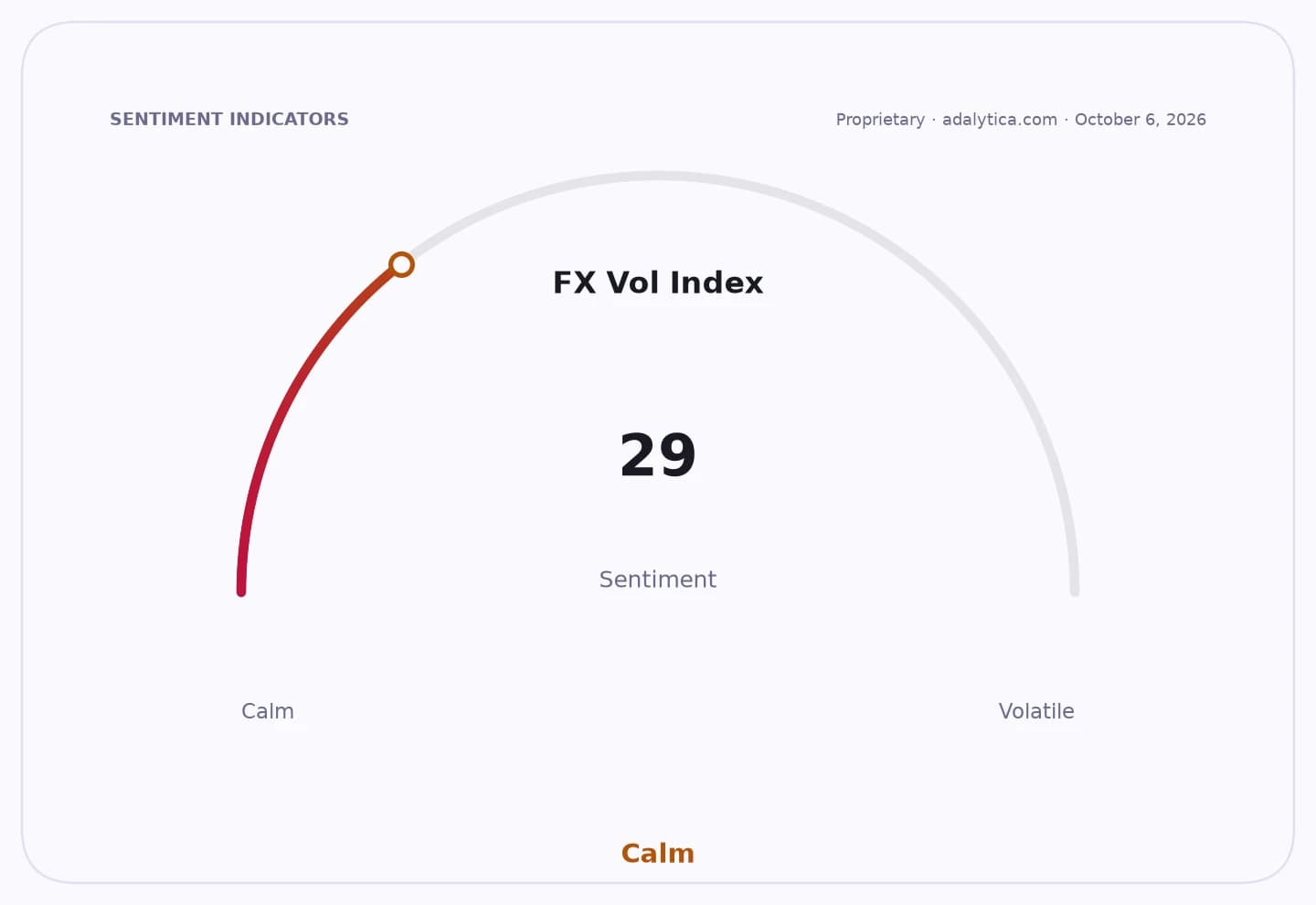
The official midpoint rate for October 6 was 117.4601 dinars per euro, essentially unchanged from Monday, while exchange offices sold foreign currency at rates based on that benchmark. For households, importers and borrowers with euro-linked liabilities, the key takeaway is not the day-to-day move itself but the absence of any disorderly adjustment. The dinar is down just 0.1% versus a month earlier, flat year on year and 0.2% weaker from end-2025, a profile that points to managed stability rather than a freely swinging currency.
Sentiment IndicatorsⓘProprietary · adalytica.com · October 6, 2026
This is a snapshot — live sentiment, awareness and momentum for 130+ markets update continuously in the dashboard.Open AlphaPulse
That matters economically because Serbia’s euro peg is one of the anchors of domestic inflation, balance-sheet planning and consumer confidence. A stable dinar helps limit imported price pressures, especially for fuel, food and capital goods, and reduces the risk of abrupt debt-servicing jumps for companies and households with euro-denominated exposure. The flip side is that the central bank must continue to defend that stability with reserves and policy flexibility, leaving less room for abrupt monetary easing if external conditions worsen.
The dollar side of the picture is more mixed. The dinar’s indicative rate against the US currency was 104.8938 per dollar, down 0.5% on the day and 3.4% weaker than a year ago, though still 0.4% firmer since the start of the year. That suggests Serbia’s currency remains broadly sheltered versus the euro but still vulnerable to swings in the broader dollar cycle, which can affect trade costs, energy bills and the local price of dollar-priced imports.
For investors, the main implication is continuity. The exchange rate data do not point to immediate stress in Serbia’s currency regime, which supports the case for local fixed income and euro-linked assets by keeping currency risk contained. But the margin for error is thin: any deterioration in external financing conditions, energy markets or domestic politics could test the central bank’s ability to maintain the current corridor without more visible intervention.
That backdrop is more important now because Serbia is already navigating a political transition, and currency stability often becomes a barometer of confidence when leadership changes. For now, the fix suggests the central bank is still in control. The next question for markets is whether that control remains intact if volatility in global FX rises or if local uncertainty begins to feed into capital flows.
| Entity | Gains | Losses |
|---|---|---|
| National Bank of Serbia | ▲Credibility on stability | ▼Room for policy flexibility |
| Dinar savers and borrowers | ▲Predictable FX rates | ▼Upside from a weaker currency |
| Importers and euro debtors | ▲Lower currency risk | ▼Less room for competitive depreciation |
| FX speculators | ▲Limited trend volatility | ▼Opportunity for sharp moves |