The leu’s latest slide against the euro matters less as a one-day market move than as evidence that investors and policymakers are being forced to reprice Romania’s currency to a weaker new normal.
Romania leu slips as euro outlook weakens

The National Bank of Romania set the official euro rate at 5.3306 lei on Monday, down from Friday’s record 5.3447, but economists say the bigger story is that the currency’s long-running stability is ending. CFA Romania now sees the euro at 5.4-5.5 lei by the end of next year, with risks tilted higher, and argues that a move toward 5.5 is increasingly plausible if fiscal credibility weakens further.
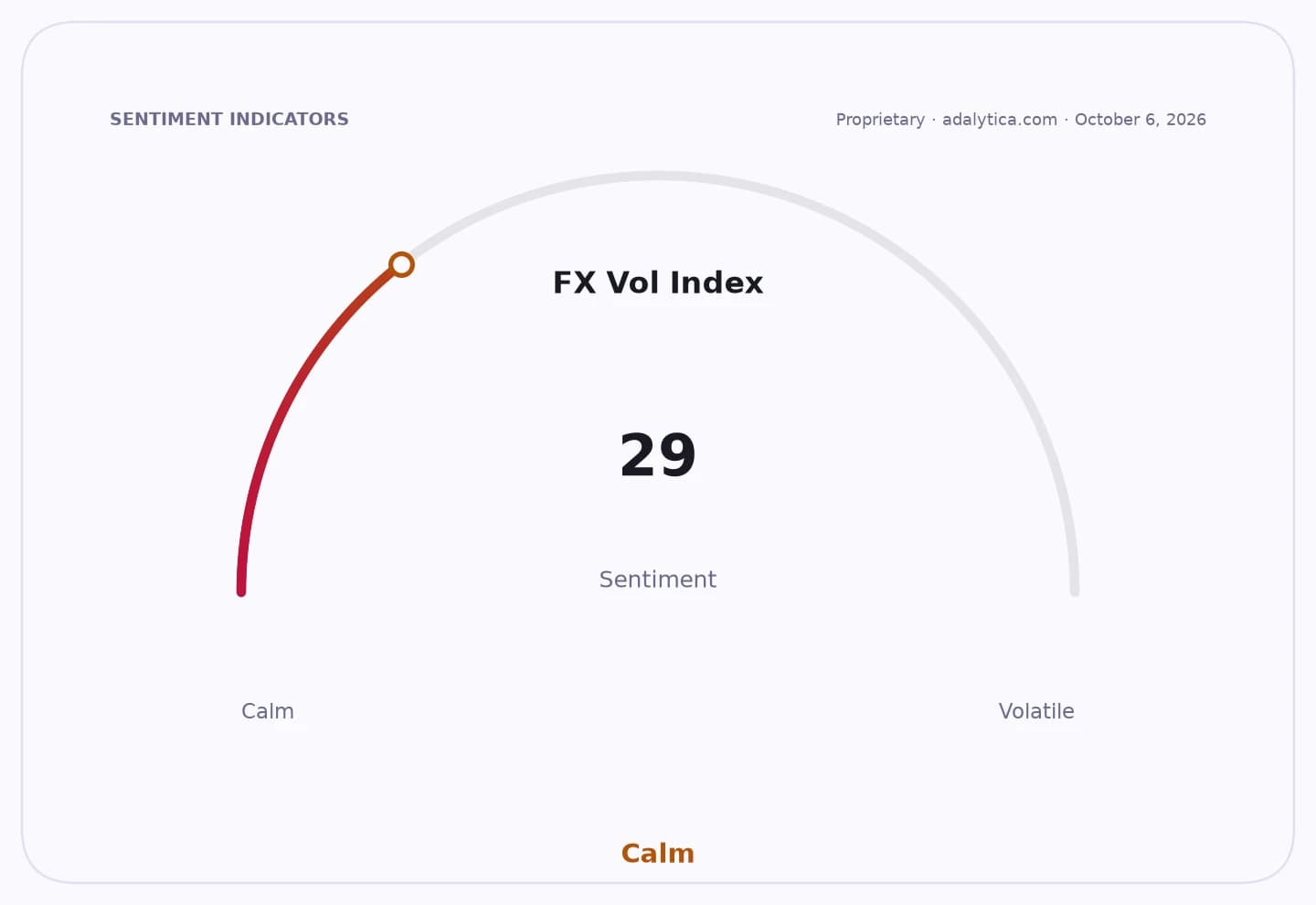
Sentiment IndicatorsⓘProprietary · adalytica.com · October 6, 2026
This is a snapshot — live sentiment, awareness and momentum for 130+ markets update continuously in the dashboard.Open AlphaPulse
That outlook matters because the leu is still viewed as overvalued in real terms, according to CFA Romania president Adrian Codîrlașu, who said the currency has appreciated 17% in real terms since Russia’s invasion of Ukraine. In practice, that has left Romania with a currency that is less competitive than underlying macro fundamentals justify, while also making the adjustment ahead more sensitive for inflation, wages and domestic demand.
For policymakers, the exchange-rate path has become part of a broader credibility test. Romania is trying to reduce a large fiscal deficit, and rating agencies are watching closely to see whether this year’s consolidation effort can be sustained. If spending cuts or tax measures are reversed, pressure on the leu could intensify, because currency weakness would be read as part of the same policy slippage rather than as an isolated foreign-exchange event.
For investors, the implications run beyond the spot rate. A controlled depreciation would support exporters and companies with foreign-currency revenues, but it would also raise import costs and complicate the inflation outlook, potentially limiting room for monetary easing. Households and firms with euro-denominated liabilities would face higher repayment burdens, while local assets could come under additional pressure if markets begin to price in a more persistent weakening trend.
The move also fits a broader post-Ukraine pattern in emerging Europe, where currencies that were once held close to artificial stability are gradually adjusting to higher risk premia, wider fiscal strains and slower growth. FX market signals from Adalytica point to elevated interest in the euro, while dollar sentiment remains cautious, reinforcing the view that the main pressure in Romania is domestic rather than purely external.
The central question now is whether the leu’s decline remains orderly or becomes a more abrupt repricing if fiscal discipline falters. For the market, 5.4-5.5 lei per euro is no longer an extreme scenario; it is becoming the baseline case.
| Entity | Gains | Losses |
|---|---|---|
| Exporters | ▲More competitive pricing | ▼Imported input costs |
| Importers | ▲— | ▼Higher euro-denominated costs |
| Romanian state budget | ▲Easier external adjustment | ▼Weaker credibility if discipline slips |
| Households with euro exposure | ▲— | ▼Higher debt servicing burden |