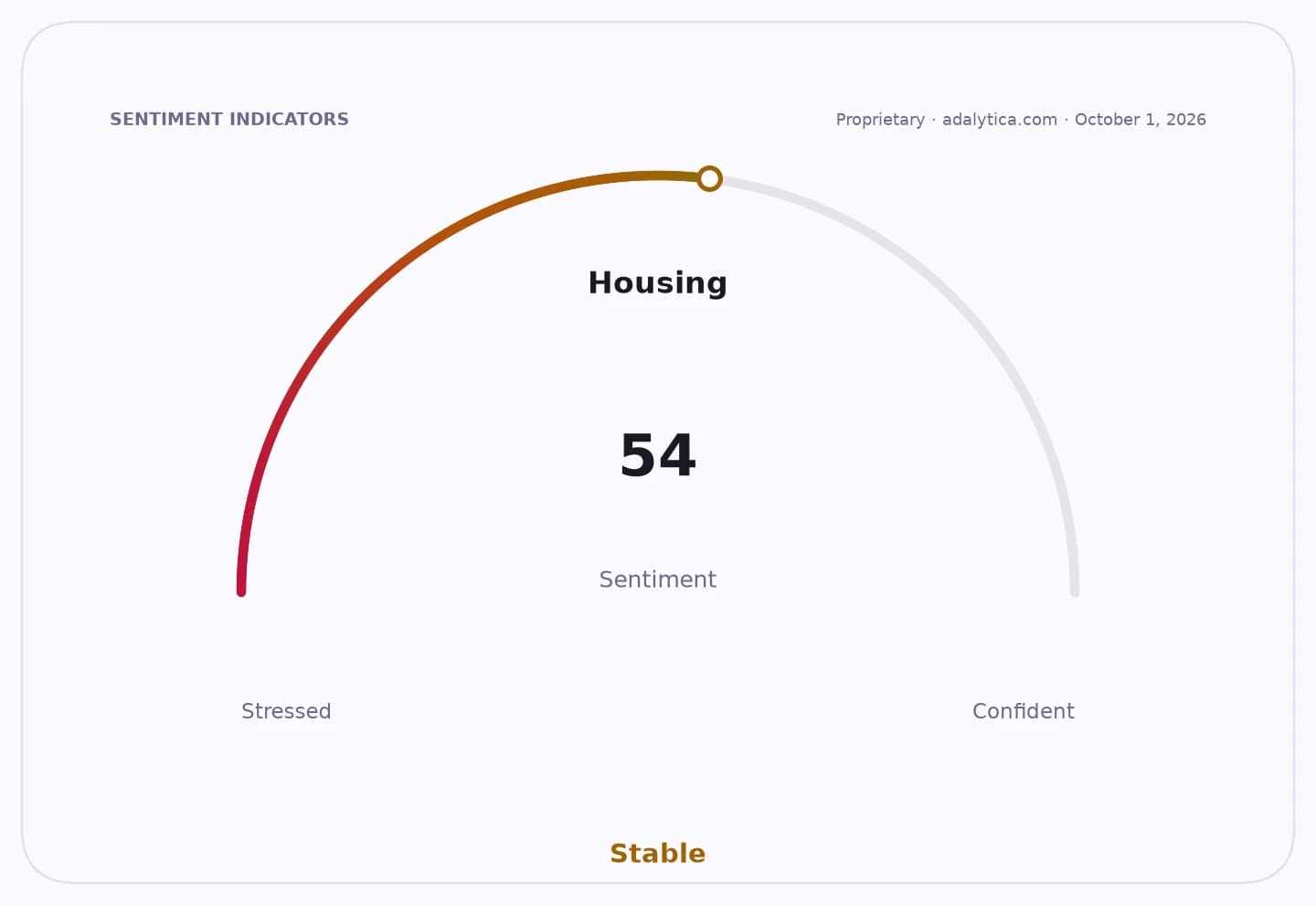
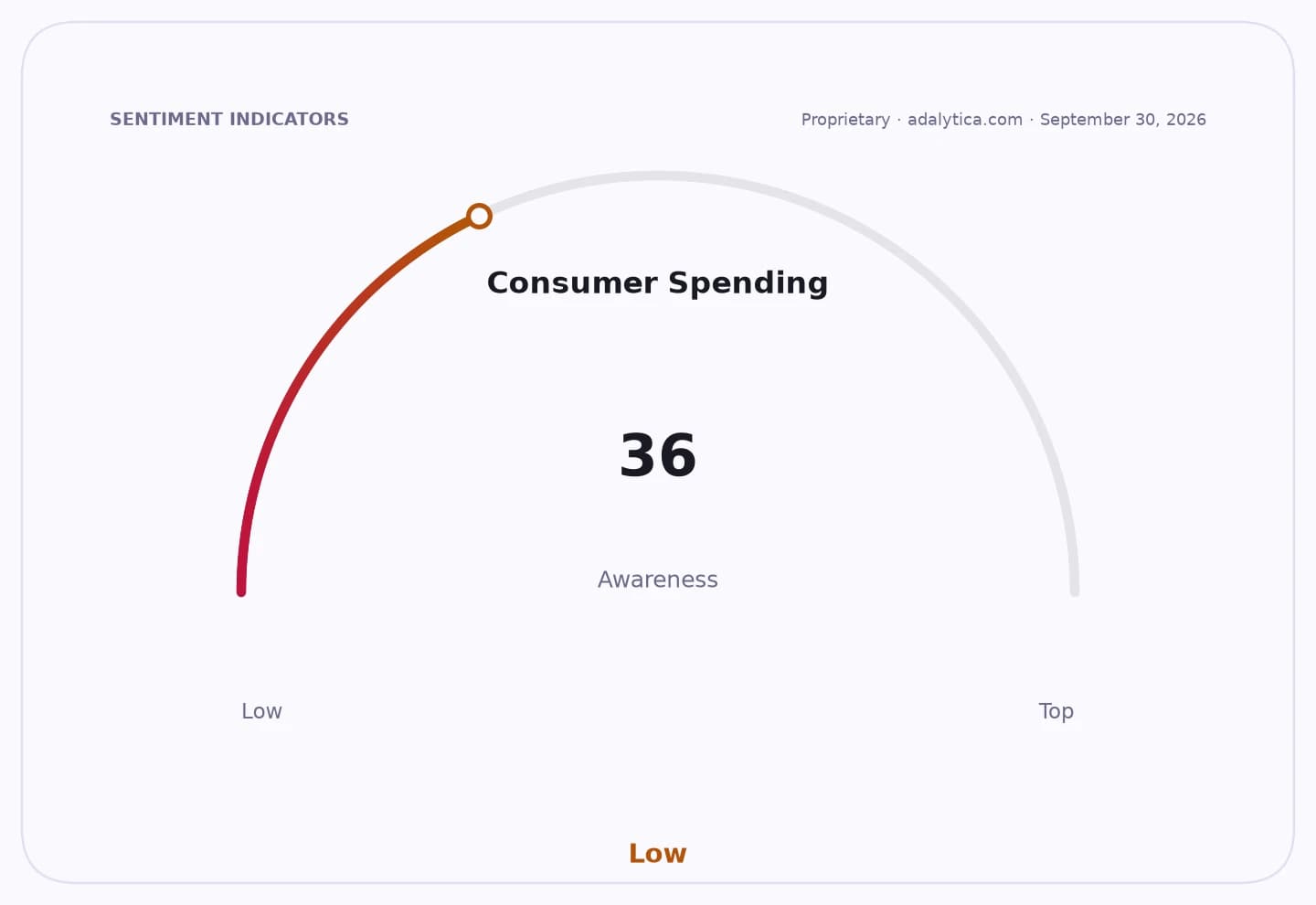
Romania’s benchmark ROBOR rate rose again on Friday to its highest level in recent months, underscoring how currency pressure and tighter banking liquidity are keeping borrowing costs stubbornly high for households and businesses.
Romania ROBOR rises to recent highs

The 3-month ROBOR climbed to 6.11% from 6.06%, according to the National Bank of Romania, while the 6-month rate used for many mortgages increased to 6.16% from 6.12%. For millions of borrowers in lei, that means higher monthly payments at a time when the economy is already absorbing the cost of tighter financial conditions.
Sentiment IndicatorsⓘProprietary · adalytica.com · October 2, 2026
This is a snapshot — live sentiment, awareness and momentum for 130+ markets update continuously in the dashboard.Open AlphaPulse

The move matters because ROBOR remains a key transmission channel for Romania’s monetary squeeze. The index is tied to the interest paid on many older lei loans, including retail credit issued before 2019, so even small increases can ripple quickly through consumer budgets and corporate cash flows. It also signals that funding conditions in the banking system are not loosening meaningfully, despite expectations earlier in the year that policy rates could eventually ease.
What is driving the move is just as important as the rate itself. The central bank’s foreign-exchange sales have drained liquidity from the market while supporting the leu after it weakened to record lows in interbank trading. That combination tends to lift money-market rates, and it has done so again. At the same time, bankers have sharply scaled back bets on an imminent cut in the policy rate, which is leaving the short end of Romania’s rate curve anchored at elevated levels.

The broader backdrop is not benign for borrowers or for local assets. Romania’s consumer reference rate, IRCC, also ticked higher to 5.57% for the October-December period from 5.56% in the previous quarter, adding to the cost burden for newer floating-rate loans. On the market side, higher rates may offer some support to local bond yields and bank margins, but they also reinforce stress for rate-sensitive sectors such as housing, consumer credit and small-business lending.
Investors should read this as a warning that Romania’s financial conditions are still tightening even without a formal policy hike. If the central bank keeps defending the currency and liquidity remains constrained, borrowing costs could stay elevated into the next quarter, supporting the case for banks over leveraged domestic borrowers and keeping pressure on consumer demand. For now, the market is still pricing a Romania story defined less by easing and more by persistent funding stress.
| Entity | Gains | Losses |
|---|---|---|
| Romanian banks | ▲Wider loan yields | ▼Slower credit growth |
| Depositors | ▲Better rate environment | ▼— |
| Mortgage borrowers | ▲— | ▼Higher monthly payments |
| Small businesses & consumers | ▲— | ▼Tighter financing conditions |