Romanians’ average household income fell slightly in the first quarter of 2026 even as spending climbed, leaving families with less room to absorb higher living costs and keeping household demand dependent on wages and state transfers.
Romania household income falls as spending rises
The National Institute of Statistics said average monthly income per household slipped 0.9% from the previous quarter to 9,444 lei, while spending rose 4.5% from a year earlier to 8,015 lei. That means households were spending 84.9% of what they brought in, a sign that consumption is still running close to the limit of income growth.
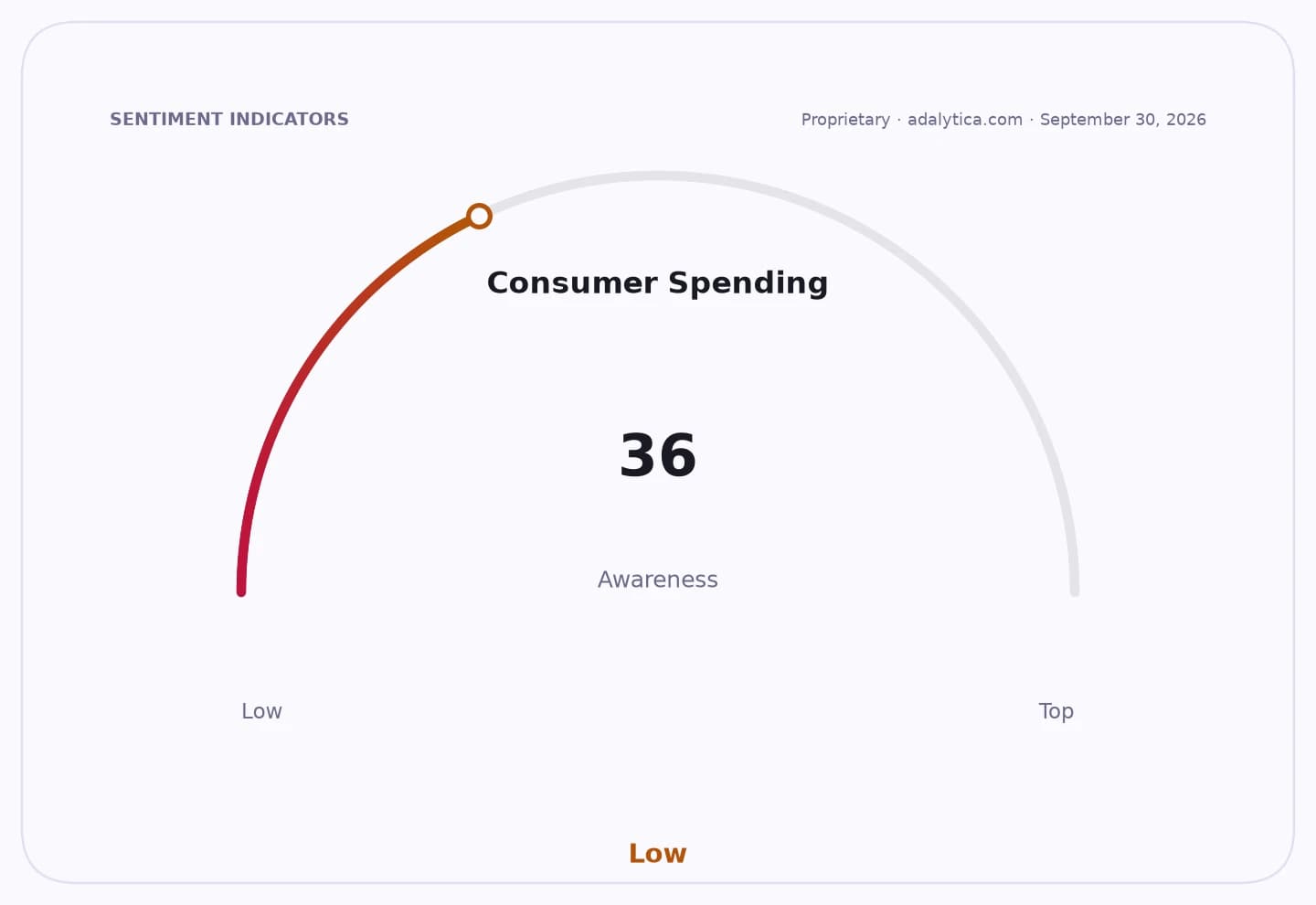
Sentiment IndicatorsⓘProprietary · adalytica.com · September 30, 2026
This is a snapshot — live sentiment, awareness and momentum for 130+ markets update continuously in the dashboard.Open AlphaPulse
The data point to a consumer sector that is holding up, but not comfortably. On a per-person basis, income rose 2% quarter on quarter to 3,908 lei and 6.1% from a year earlier, while spending increased 7.5% from the same period in 2025. The gap matters for Romania’s economy because household consumption is a major driver of growth, but persistent pressure on budgets can quickly curb discretionary purchases and slow demand for retail, housing-related goods and transport.
Wages remained the main source of income, accounting for 70.8% of household receipts in the quarter, up from 68.1% in the previous three months. Social transfers also played a large role, contributing 21.2%, underscoring how much household finances still rely on public support alongside labor income.
Urban households continued to fare better than rural ones. Average monthly income in cities was 10,496 lei per household, about 1.3 times rural levels, while urban spending was 8,839 lei, also 1.3 times higher than in the countryside. Rural households depended more on benefits and in-kind income, highlighting a structural divide that leaves the countryside more exposed to shocks in food and energy costs.
For investors, the figures are a mixed read on Romanian demand. Retailers and consumer-facing companies benefit from continued spending growth, but the rise in outlays faster than incomes raises the risk of weaker real consumption later in the year if inflation or financing costs bite harder. That would matter for banks, consumer lenders and listed retailers with exposure to domestic spending.
The composition of spending also suggests households are feeling necessities more acutely. Food and non-alcoholic drinks took the biggest share at 31.4% of consumption spending, while housing, water, electricity, gas and other fuels rose to 20.3%, a sharp sign that basic bills are taking a bigger slice of the household budget. Education remained the smallest category at just 23 lei per household.
The next test is whether wage growth, inflation and employment remain aligned enough to keep household consumption expanding without further compressing savings. If income growth stays below spending growth, Romanian consumers will remain an important engine of the economy — but one with little cushion.
| Entity | Gains | Losses |
|---|---|---|
| Romanian retailers | ▲Higher consumer spending | ▼Weaker discretionary budgets |
| Wage earners | ▲Income still the main source | ▼Falling household slack |
| Rural households | ▲Social transfers support income | ▼Lower income than urban peers |
| Banks/consumer lenders | ▲Spending supports credit use | ▼Rising household strain |