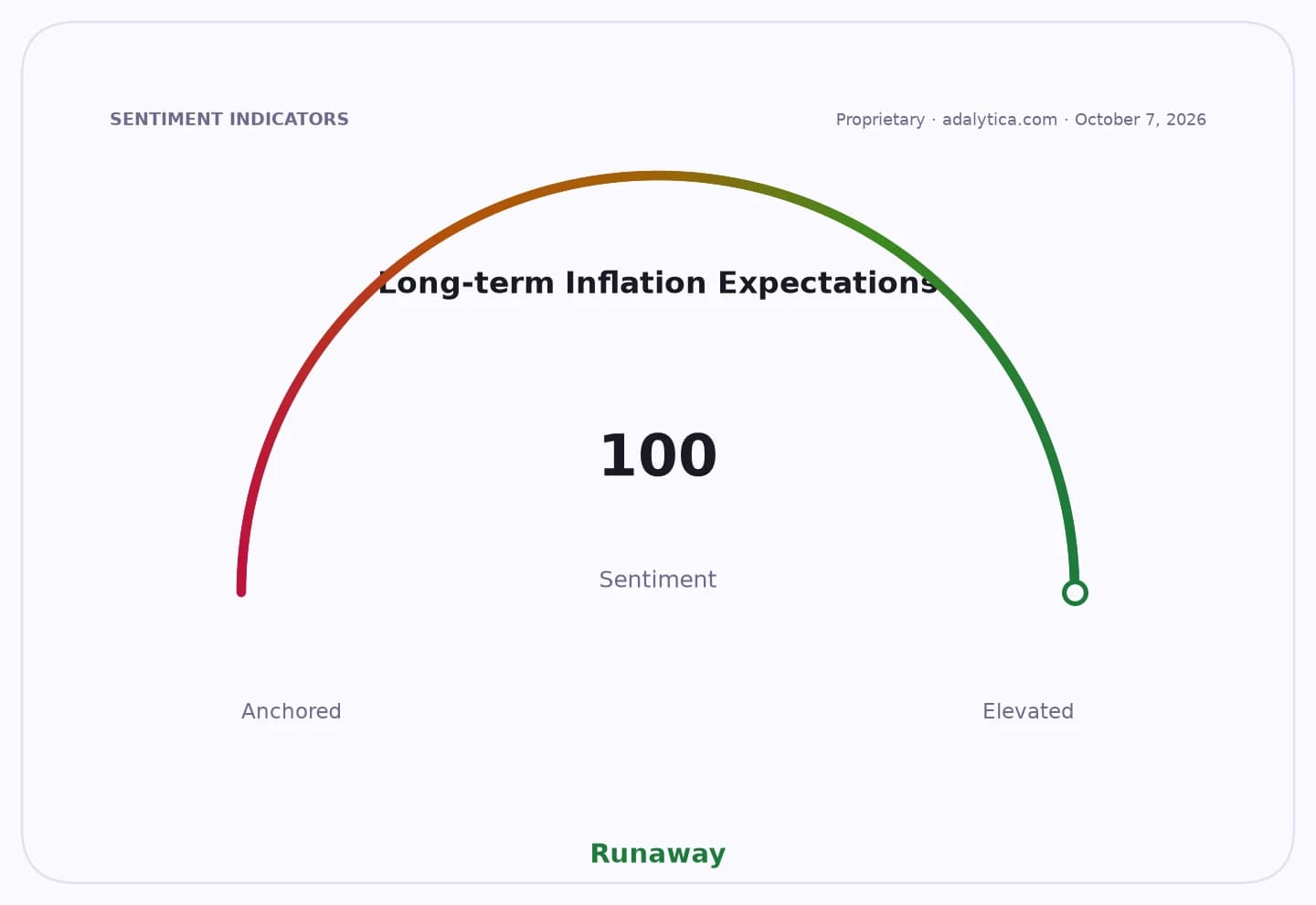
Skilled-trades jobs are looking like one of the strongest long-term themes in the industrial economy, and that is showing up in the market for Caterpillar, Deere and Parker-Hannifin.
Deere, Caterpillar, Parker-Hannifin on skilled labor demand

For investors, the bigger story is not just that these companies’ shares have risen sharply. It is that the machinery, hydraulics and equipment that power construction, farming and industrial maintenance are tied to a labor market where hands-on work is becoming more valuable, not less. If more young workers choose welders’ torches and heavy equipment over four-year degrees, the businesses that sell the tools of those trades can keep compounding for years.
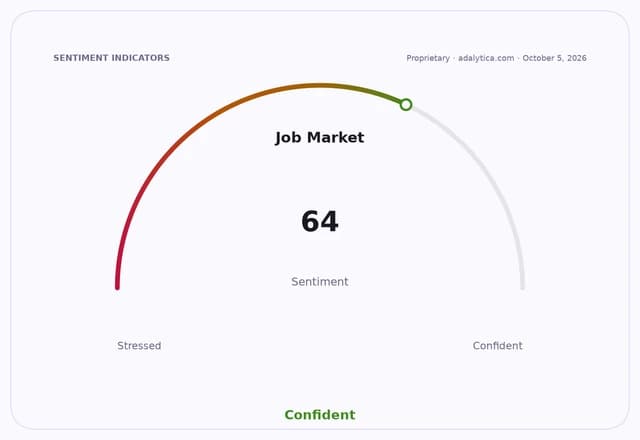
Sentiment IndicatorsⓘProprietary · adalytica.com · October 5, 2026
This is a snapshot — live sentiment, awareness and momentum for 130+ markets update continuously in the dashboard.Open AlphaPulse
Deere, Caterpillar and Parker-Hannifin all have spent the past year trading near or above their key long-term trend lines, a sign the market still expects durable earnings power. Deere closed at $687.00 on Oct. 2, above its 50-day and 200-day moving averages, while Caterpillar finished at $845.42 and Parker-Hannifin at $972.55, both also holding above those conventional trend gauges. That kind of price action does not guarantee more gains, but it does tell you institutional investors are still willing to pay up for companies tied to real-economy investment.
The underlying narrative is straightforward: the supply of skilled labor remains tight, the demand for infrastructure and maintenance remains high, and companies that make heavy equipment and motion-control systems keep benefiting from that combination. In practical terms, a shortage of electricians, mechanics, machinists and equipment operators tends to support wages, capital spending and replacement cycles. That is good for employers that need productivity, and it is good for manufacturers that sell the tools, parts and systems that make skilled work more efficient.
Job Market vs DEadalytica.com
Explore this data interactively — full history, time series and cross-market comparisons.Open AlphaPulse
Deere, for example, has been one of the clearest beneficiaries of the “labor is scarce, automate what you can” mindset. Farmers and contractors facing higher labor costs are more likely to upgrade equipment, adopt precision tools and extend the life of fleets with better service contracts and parts. Caterpillar, meanwhile, sits in the middle of a similar trend in construction, mining and infrastructure, where skilled labor shortages can push customers toward larger, more productive machines and more maintenance spending. Parker-Hannifin gets a quieter but equally important lift through components used across industrial systems, aerospace and mobile equipment.
The stock charts also suggest investors have already started to treat these as quality industrial compounders rather than cyclical trades. Caterpillar’s share price has moved from $544.25 last November to $845.42, while Parker-Hannifin climbed from $857.65 to $972.55 over the same stretch. Deere has also marched higher, despite some volatility, after recently breaking back above its 200-day average. Those moves matter because they show the market is willing to keep rewarding companies with pricing power, strong free cash flow and exposure to durable capital-spending themes.
Of course, investors should not mistake a hot labor-market narrative for a straight line higher. These are still cyclical businesses, and their results will move with crop prices, construction demand, interest rates and global growth. Technical readings such as Deere’s and Caterpillar’s RSI levels near the upper end of the range also suggest the shares can get stretched after a strong run. But for long-term investors, that is usually a reason to think in years, not weeks.
If the broader economy continues to favor skilled labor over credential inflation, the winners are likely to be the companies that help workers do more with their hands, machines and time. That is a powerful setup for industrials with real moats, recurring service revenue and exposure to automation, infrastructure and productivity gains. For investors building a diversified portfolio, Deere, Caterpillar and Parker-Hannifin remain worth watching as beneficiaries of a secular shift that may prove bigger than one cycle.
| Entity | Gains | Losses |
|---|---|---|
| Deere | ▲precision ag demand | ▼labor-light operators |
| Caterpillar | ▲infrastructure and fleet upgrades | ▼equipment holdouts |
| Parker-Hannifin | ▲industrial productivity spending | ▼low-margin rivals |