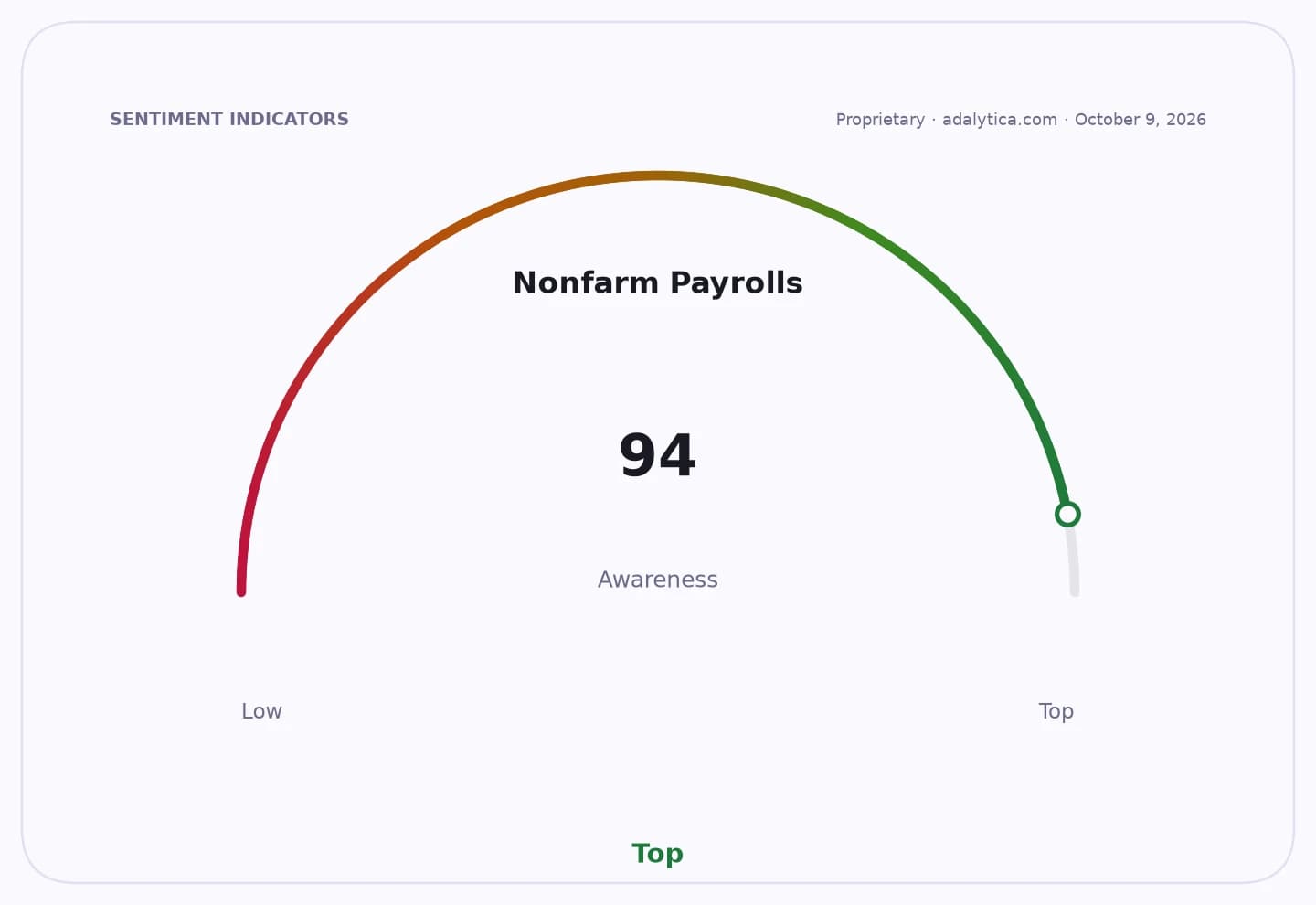
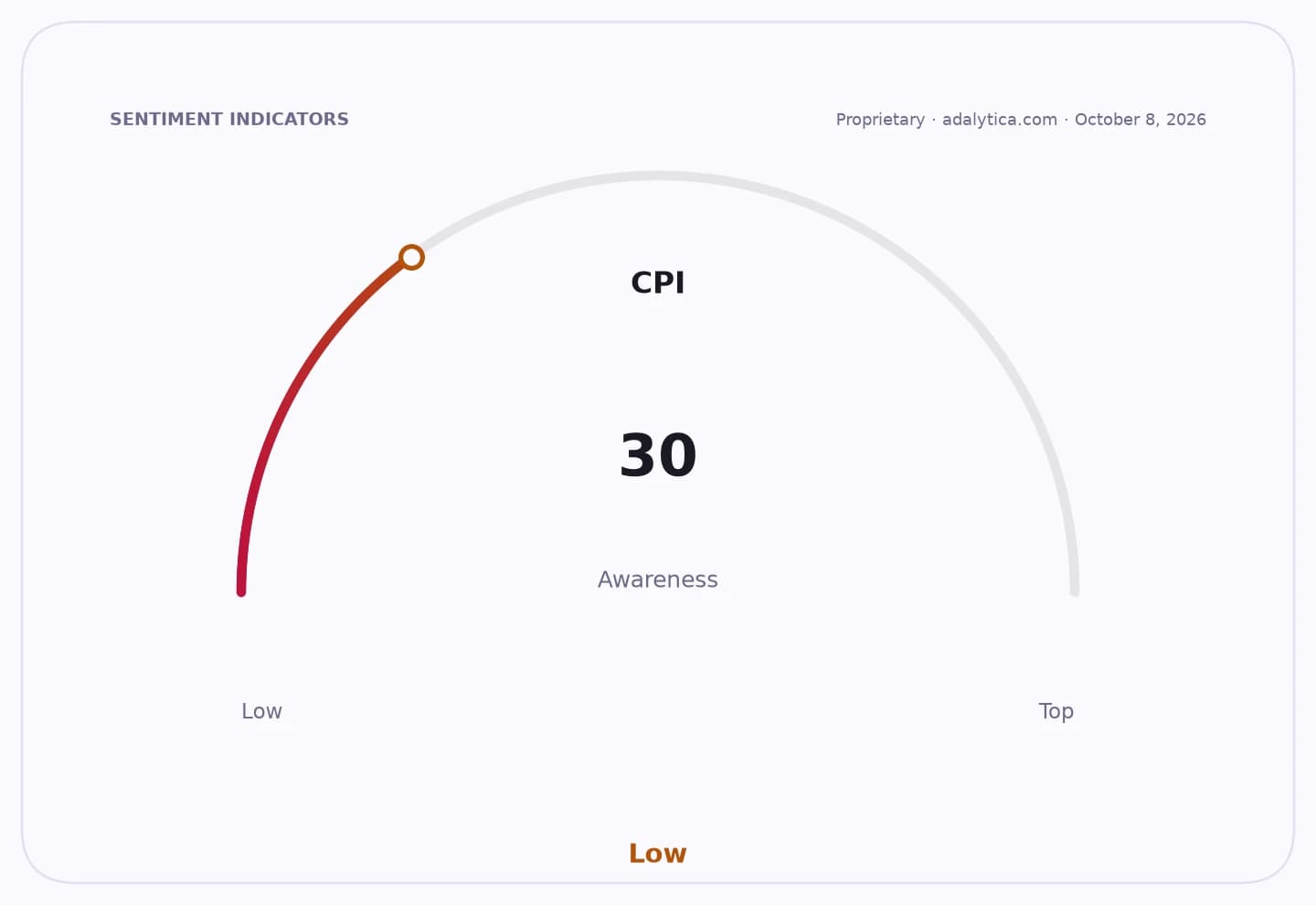
Soft second-quarter order inflows and sticky commodity inflation are squeezing capital goods makers from both sides: demand is losing momentum even as input costs remain elevated.
Caterpillar Deere Honeywell face sticky cost pressure
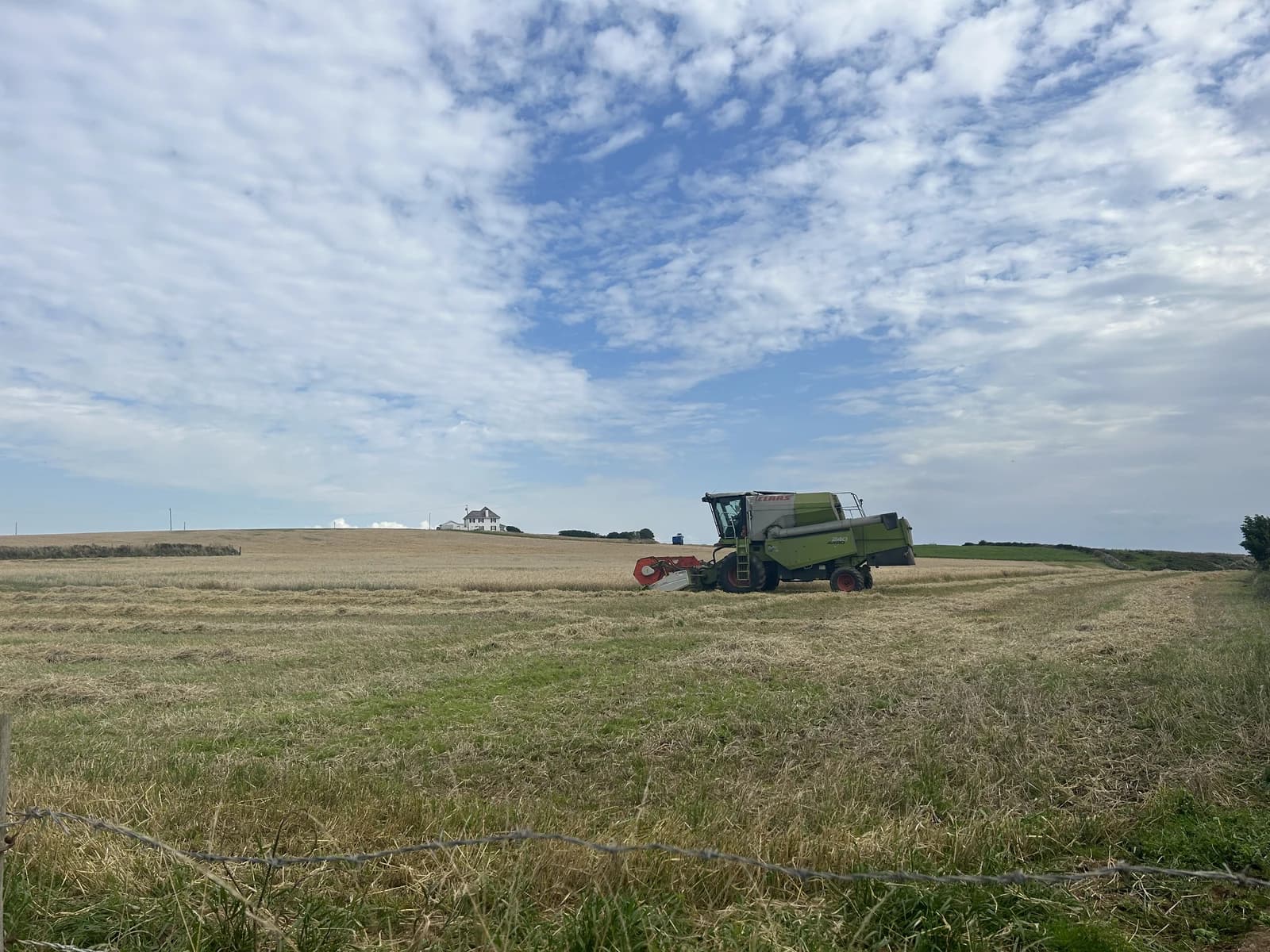
The result matters because the sector sits at the junction of industrial production, farm and construction spending, and broader global investment appetite. When order growth slows at the same time raw-material inflation stays firm, margins get less room to absorb shocks and equipment makers have fewer levers to protect earnings. That makes the latest signals from Caterpillar, Deere and Honeywell important not just for their own profit outlooks, but for a wider read on industrial capex.
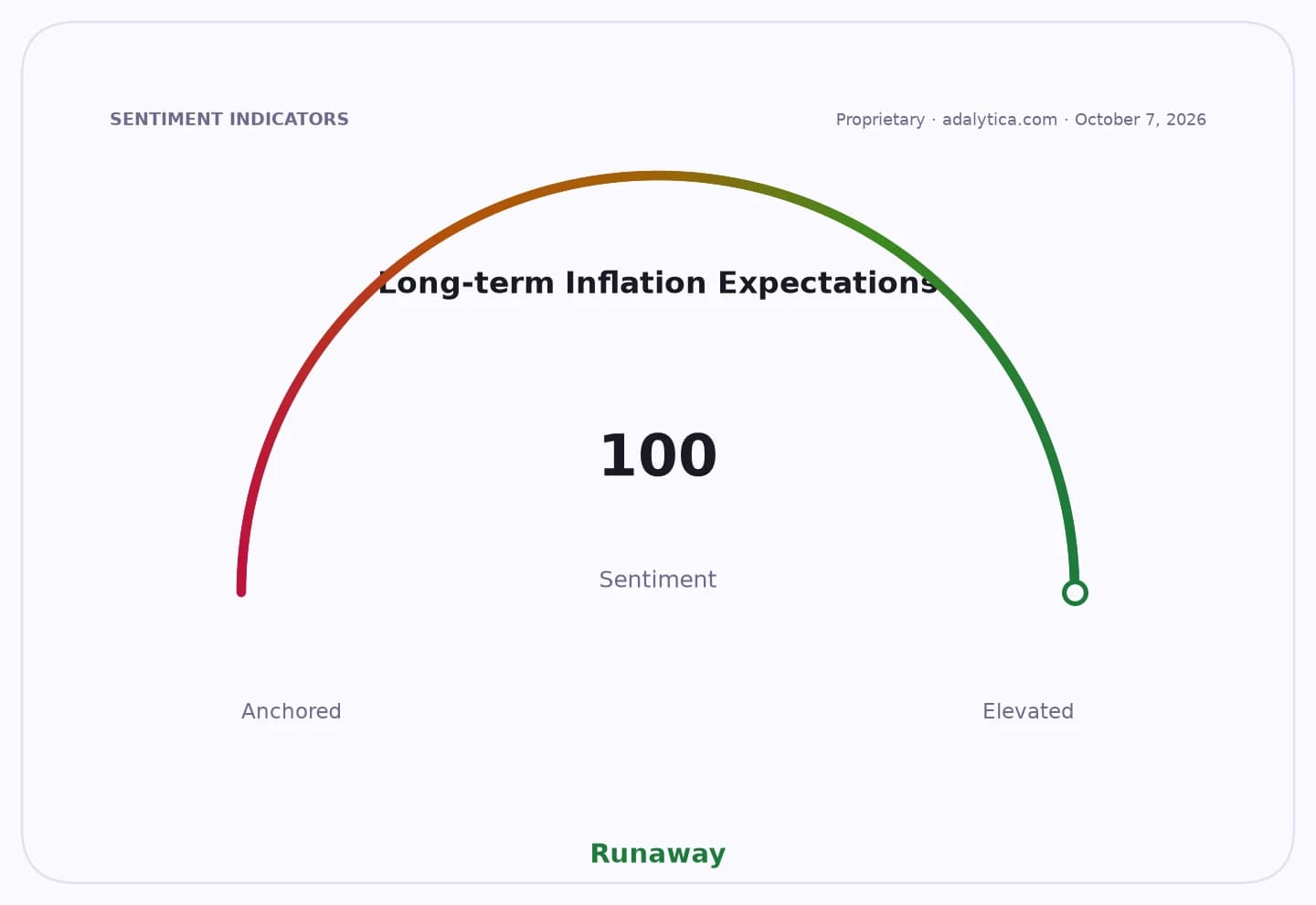
Sentiment IndicatorsⓘProprietary · adalytica.com · October 7, 2026
This is a snapshot — live sentiment, awareness and momentum for 130+ markets update continuously in the dashboard.Open AlphaPulse
U.S. producer prices for commodities have climbed to 287.928 in August from 256.978 in April, a reminder that materials costs are still running hot even as industrial activity stabilizes rather than accelerates. Federal Reserve data also show U.S. industrial production little changed at 103.0682 in August, suggesting manufacturers are not entering a broad-based upswing that would normally help capital goods firms reprice inventories and absorb overhead.
That combination helps explain why investors have been reluctant to chase the sector despite pockets of strength. Caterpillar, Deere and Honeywell all remain above their 200-day moving averages, but recent price action has been choppy, with the stocks consolidating after sharp rallies earlier this year. Caterpillar closed at $863.44 on Oct. 6, well above its 200-day average of $796.17, while Deere ended at $682.79 versus a 200-day average of $586.94. Honeywell closed at $212.87, below its 200-day average of $229.01, showing the market is already discounting a more mixed earnings backdrop.
PPIACO vs INDPRO — macro contextadalytica.com
Explore this data interactively — full history, time series and cross-market comparisons.Open AlphaPulse
The operating picture is uneven. Caterpillar’s latest filing pointed to continued positive momentum in resource industries, but also acknowledged dealer inventory effects that can distort near-term sales. Deere flagged a business-cycle backdrop that remains unfavorable in parts of agriculture, while warning that its equipment cash flow is expected to be flat in 2026. Honeywell has separately said it still has to offset supply-chain friction and material inflation through pricing and mitigation efforts, underlining how cost pressure is not confined to one end market.
The macro backdrop is not helping. Long-term inflation expectations in Adalytica’s LTINF gauge jumped to Extreme Greed, while its WAGES measure also surged to Extreme Greed, reinforcing the view that wage and price pressures remain embedded. That matters for capital goods makers because it raises the probability that labor and materials inflation stay sticky just as customers become more cautious about new equipment orders.
There is still a bull case. A firm industrial base, infrastructure spending, electrification and data-center demand can support equipment orders, and Caterpillar’s resource-industry exposure still benefits from mining capex. Deere also has a cash-rich customer base and can lean on pricing and its finance arm. Honeywell’s aerospace and automation franchises are more resilient than a pure industrial cyclical.
But the bear case is that order inflows keep lagging cost growth. If customers delay purchases because financing costs stay high and input inflation persists, margin expansion becomes harder and inventory normalization can turn from tailwind to drag. For investors, that leaves the sector trading less on top-line growth and more on who can defend pricing, manage working capital and avoid a second-half slowdown in backlog conversion.
| Entity | Gains | Losses |
|---|---|---|
| Input suppliers | ▲Higher pricing power | ▼Equipment buyers |
| Caterpillar | ▲Resource-industry exposure | ▼Dealer inventory swings |
| Deere | ▲Pricing and finance arm | ▼Farm-cycle sensitivity |
| Honeywell | ▲Diversified end markets | ▼Material and labor inflation |