Plant-wearable biosensors, IoT networks and AI are pushing precision agriculture from periodic monitoring toward continuous crop management, a shift with clear implications for water use, input costs and farm productivity.
Deere, FMC, Corteva in Precision Agriculture
The economic case is strongest in irrigation, where agriculture consumes nearly 70% of global freshwater withdrawals and inefficient systems can waste 40% to 60% of the water they deliver. Against that backdrop, the ability to read plant stress before visible symptoms appear gives growers a way to target irrigation, fertigation and pesticide use more precisely, rather than relying on fixed schedules or human inspection. That matters not only for yield, but for the economics of land and labor in a sector under pressure from climate volatility and rising input costs.
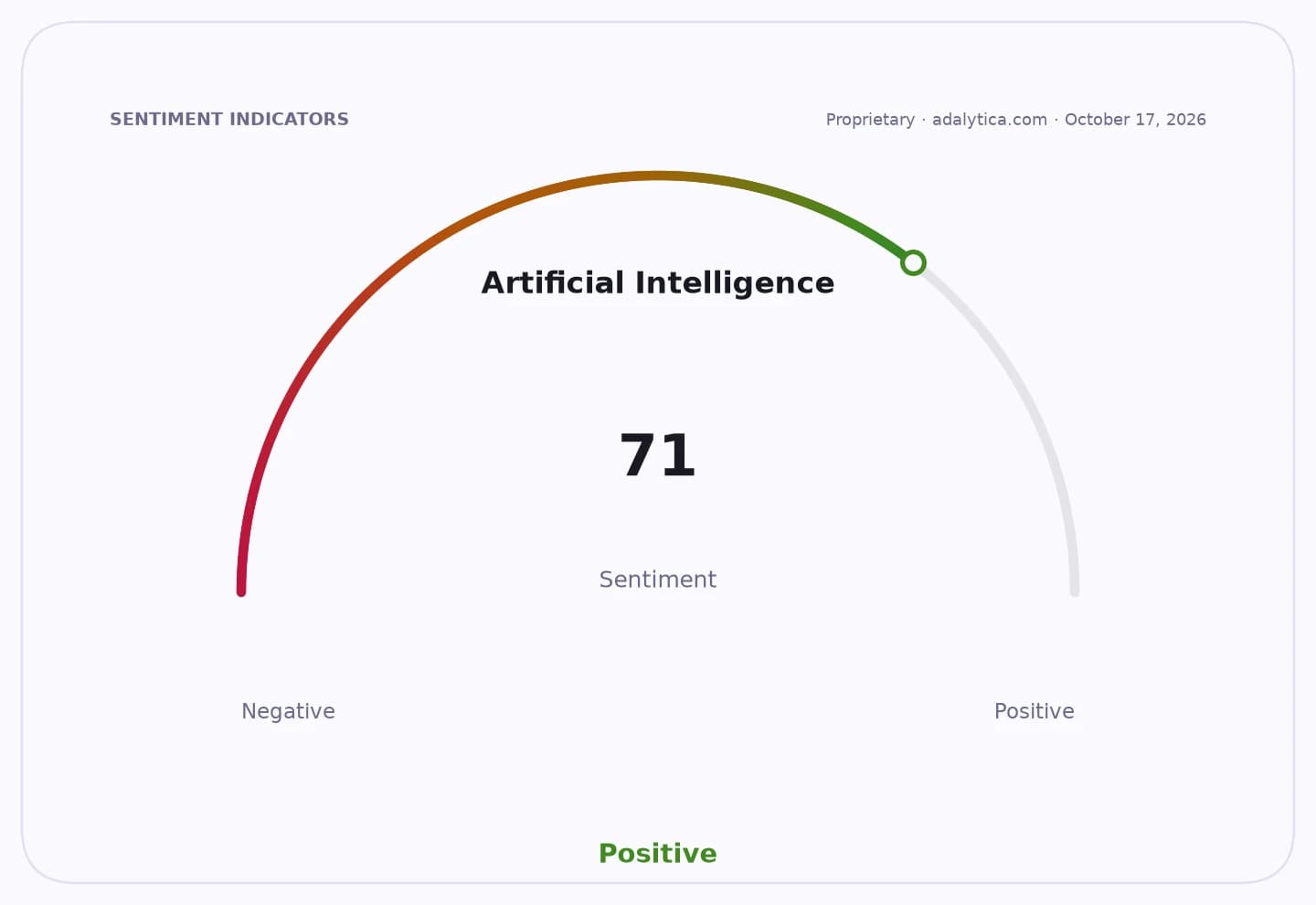
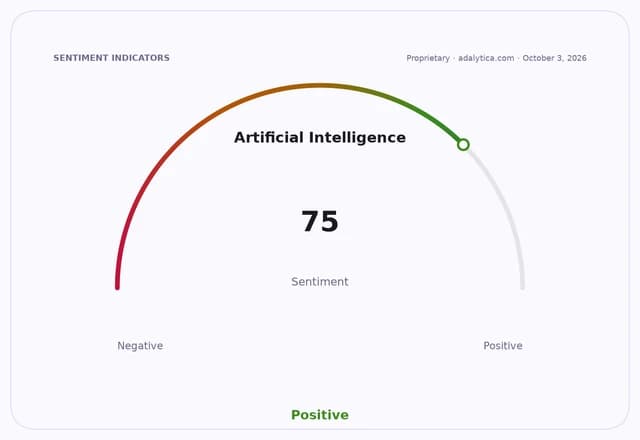
Sentiment IndicatorsⓘProprietary · adalytica.com · October 3, 2026
This is a snapshot — live sentiment, awareness and momentum for 130+ markets update continuously in the dashboard.Open AlphaPulse
The technology stack behind that change is becoming more integrated. Plant biosensors can track biochemical and physiological signals, from salicylic acid linked to defense responses to water potential and transpiration. IoT networks, often built on LPWAN systems such as LoRaWAN or NB-IoT, carry those readings from the field to edge devices and cloud platforms. AI models then turn the data into irrigation commands, disease-risk maps and nutrient recommendations. In practical terms, the goal is to move farming from reacting to visible damage to acting before losses are locked in.
That promise is not just theoretical. Reviews cited in the source material point to AI-integrated irrigation systems potentially cutting water use by 20% to 40% and energy consumption by 15% to 30%. Pilot field work has shown even sharper results in specific settings, including a 35% yield increase, a 36% reduction in water use and a 109% improvement in water-use efficiency. Low-cost capacitive plant biosensors have also been associated with water savings of 20% to 45% in vegetable farms. For investors and agribusiness executives, those are the kinds of efficiencies that can support adoption even in a low-margin industry, provided the systems can work reliably outside the lab.
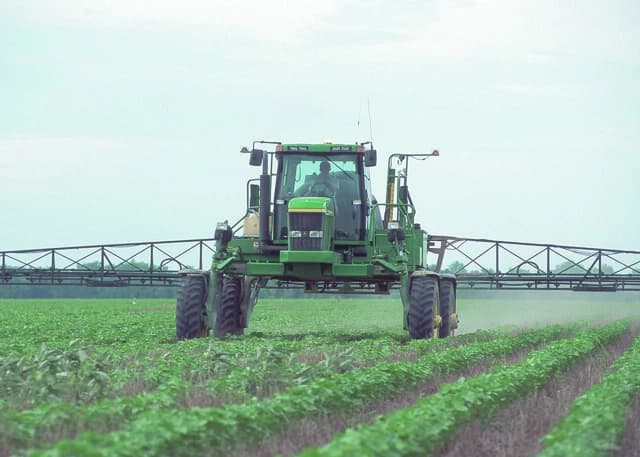
The other major economic lever is crop protection. Pathogen-related losses are estimated at more than $220 billion a year globally, and wearable sensors that detect plant defense signals before symptoms emerge could reduce blanket spraying and chemical runoff. AI models trained on spectral imagery, weather and telemetry can produce risk maps for pests and disease, improving the timing and targeting of treatments. That is valuable for input suppliers and growers alike, though it also points to a more disciplined, data-driven use of crop chemicals rather than higher overall volumes.
For Deere, FMC and CTVA, the market message is mixed. Deere is the clearest proxy for precision-ag adoption because connected machinery and farm software fit naturally into this workflow. Its shares have been resilient, with the stock near $687 on Oct. 2, well above both its 50-day and 200-day moving averages, though the recent RSI reading around 53 suggests momentum is no longer stretched. FMC and Corteva are more exposed to the input side of the equation: better disease prediction and smarter application could support product effectiveness, but over time they may also pressure volume if growers use fewer sprays. FMC’s stock, by contrast, remains weak, at about $8.44 on Oct. 2 and below its 50-day and 200-day moving averages, reflecting a market still skeptical about the earnings backdrop.
The main obstacle is not technical promise but deployment economics. The source material flags sensor drift, biofouling, power management, connectivity gaps in rural areas and lack of interoperability as barriers to scale. That matters because precision agriculture only becomes investable when the systems are durable, cheap enough and easy enough to integrate across farms of different sizes. Smallholders in particular may struggle to justify the upfront cost without financing, subsidies or service-based business models from equipment and software vendors.
Still, the direction of travel is clear. As climate stress intensifies and water becomes more expensive to waste, precision agriculture is moving from a niche optimization tool to a practical response to resource scarcity. The near-term winners are likely to be farmers with access to connected irrigation and the equipment makers and software providers that can bundle sensing, analytics and control into one system. The losers are legacy, timer-based irrigation systems, broad-brush pesticide strategies and any supplier model built on selling volume rather than efficiency.
| Entity | Gains | Losses |
|---|---|---|
| Farmers using precision systems | ▲Lower water and input costs | ▼Wasteful blanket irrigation |
| Deere | ▲More demand for connected farm tech | ▼Legacy machinery-only model |
| Corteva and FMC | ▲Better-targeted crop protection | ▼Volume-heavy spray strategies |
| Water-stressed regions | ▲Higher water-use efficiency | ▼Inefficient irrigation systems |