Danish companies that adopt artificial intelligence are hiring fewer workers than peers that do not use the technology, according to Denmark’s central bank, in one of the clearest signs yet that AI is already changing labor demand in the Nordic economy.
Denmark Central Bank Says AI Firms Are Hiring Less
The impact is showing up most sharply in smaller firms and in jobs exposed to AI, with the slowdown concentrated among younger and highly educated workers. Danmarks Nationalbank said the effect appears to come mainly through reduced recruitment rather than mass layoffs, suggesting companies are filling fewer openings as they automate more tasks.
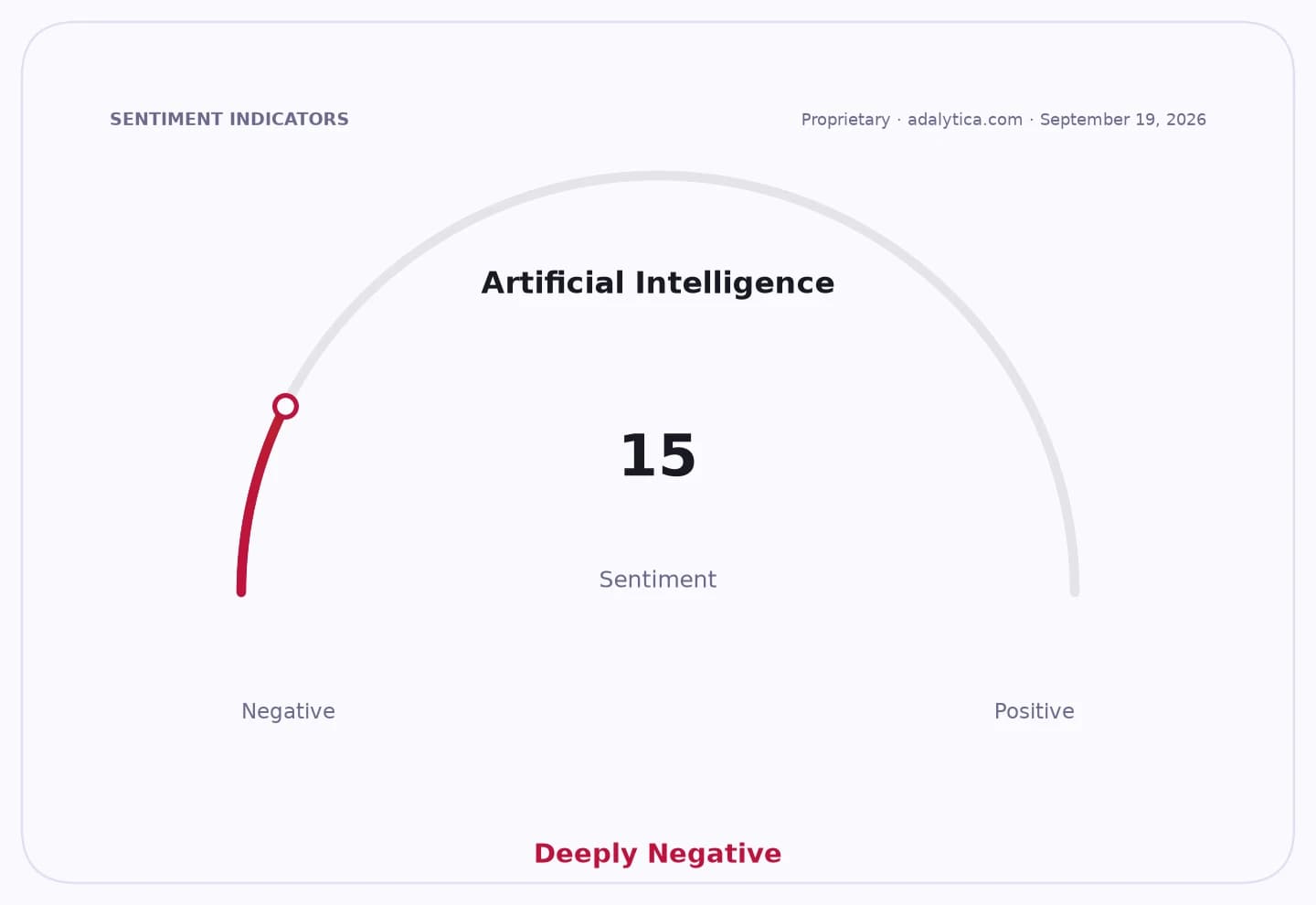
Sentiment IndicatorsⓘProprietary · adalytica.com · September 19, 2026
This is a snapshot — live sentiment, awareness and momentum for 130+ markets update continuously in the dashboard.Open AlphaPulse
That matters for the economy because it points to AI beginning to restrain labor growth without yet feeding through to pay. The central bank said it found no clear evidence that wages have been affected, implying firms are cutting hiring before they are forced to cut compensation.
For investors, the report reinforces a key market debate: AI can lift productivity and margins, but in the near term it may also reshape headcount faster than earnings. That is especially relevant for software, cloud and chip companies that are pitching AI as a growth engine while customers use it to do more with fewer staff.
The bank’s analysis combined Statistics Denmark data on corporate AI use with administrative records on employment and wages. Signe Krogstrup, one of the central bank’s governors, said the “transformation” expected from AI has begun in Denmark, but added the long-term job effect remains uncertain.
The broader implication is that AI may already be redistributing labor rather than destroying it outright, with workers who would have joined AI-adopting firms finding jobs elsewhere. That could keep unemployment stable in the short run even as hiring patterns change, but it also raises the risk that the gains from AI adoption accrue faster to capital than to labor.
For investors in Microsoft, Nvidia and Apple, the report adds to the narrative that AI is moving from pilot projects into real operating decisions across companies. Microsoft shares fell 0.7% to $493.78 on Sept. 18, while Nvidia rose 1.3% to $222.27 and Apple slipped 0.3% to $336.13, underscoring a market still split between AI beneficiaries and firms facing a slower labor response to the technology.
The central bank warned the long-term picture is still highly uncertain. AI could still reduce employment over time, but it may also create new businesses and job categories, making the next labor-market reading a key test of whether Denmark is seeing the start of a wider European pattern.
| Entity | Gains | Losses |
|---|---|---|
| AI-adopting Danish firms | ▲Lower hiring costs | ▼Less labor flexibility |
| Non-AI peers | ▲Preserve traditional staffing | ▼Lose efficiency edge |
| Workers in exposed jobs | ▲Potential redeployment | ▼Slower entry into jobs |
| Microsoft/Nvidia AI ecosystem | ▲Proof of adoption | ▼Labor backlash risk |