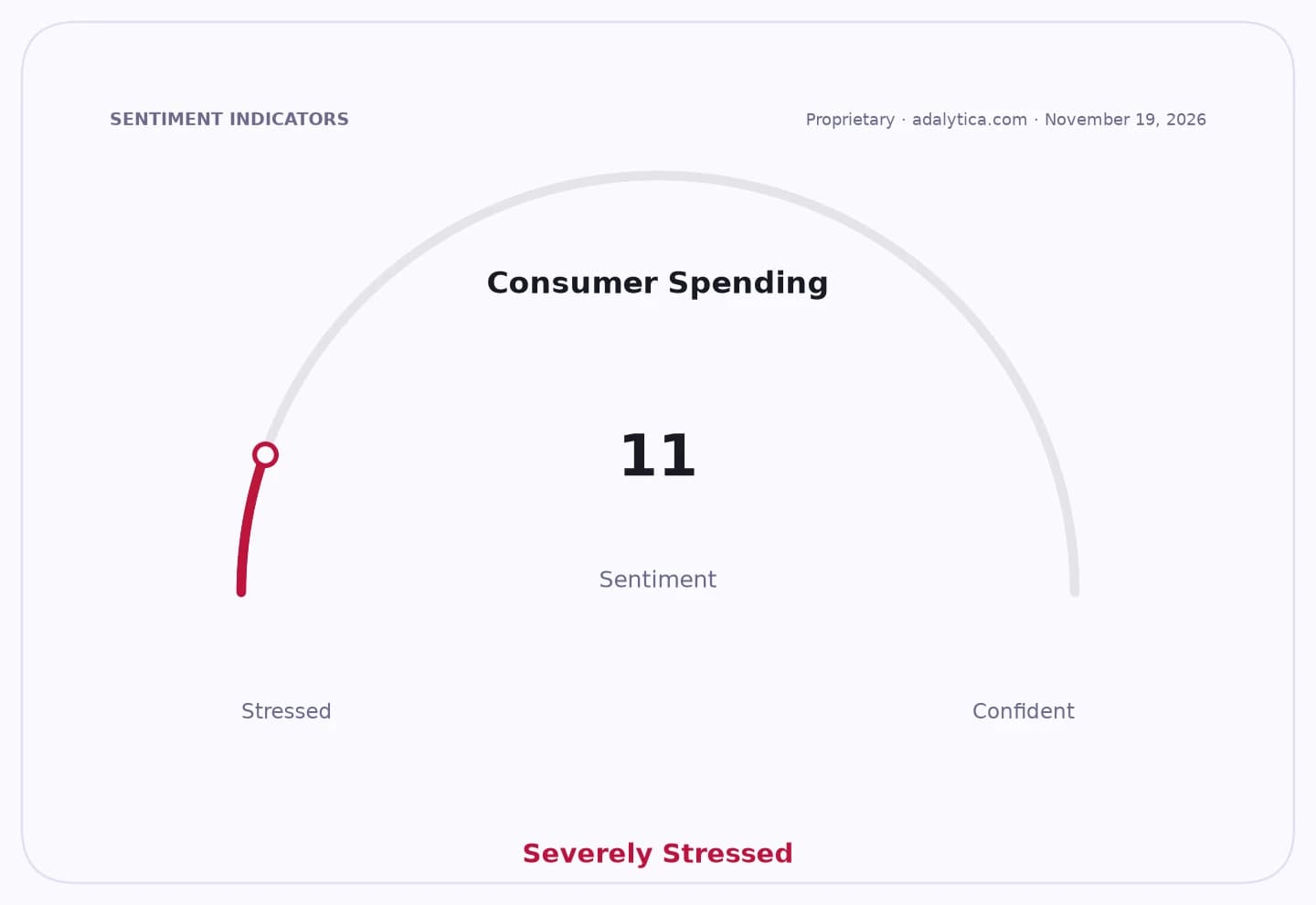
Consumer confidence fell for a third straight month in November, dropping to its lowest level since spring as higher interest rates and expensive heat and power bills weighed on household budgets.
Denmark consumer confidence falls to lowest since spring
Consumer Spending
That matters because consumer spending is the backbone of most developed economies, and when households turn more cautious, retailers, utilities, travel companies and even broader equity markets tend to feel it. The latest reading from Danmarks Statistik put consumer confidence at minus 19.3, down from minus 17.2 in October and well below the six-month average of minus 15.3.
Sentiment Indicators
The slide fits a broader story investors should care about: sticky living costs are still squeezing real disposable income even as the economy shows signs of resilience elsewhere. Danish GDP has recently been growing, but that does not automatically translate into more upbeat households. When electricity and heating bills stay elevated, people tend to postpone discretionary purchases, trade down on spending and protect cash rather than chase consumption.
There is at least one modest silver lining. Consumers were not quite as pessimistic about their own finances a year from now as they were about the current situation, suggesting this is more a near-term strain than a full-blown collapse in household confidence. That distinction matters, because it implies spending may soften before it breaks.
UMCSENT vs RSXFS — macro contextadalytica.com
Explore this data interactively — full history, time series and cross-market comparisons.
For investors, the message is simple: consumer-facing businesses could face a tougher winter if caution deepens. Retailers selling nonessential goods, leisure operators and domestic service companies may see demand become more uneven, while discount and value-oriented businesses could hold up better. If higher rates and utility costs persist, the pressure on sentiment can linger longer than many markets expect.
The bigger lesson is that confidence is often the first place economic stress shows up before it appears in earnings. Long-term investors do not need to panic over one monthly reading, but they should respect the signal it sends about household behavior heading into winter. That makes the consumer sector worth watching closely, especially for companies with pricing power, strong balance sheets and the ability to keep generating free cash flow even when shoppers get cautious.
| Entity | Gains | Losses |
|---|---|---|
| Discount retailers | ▲Trade-down spending | ▼Premium brands |
| Utilities and energy providers | ▲Higher bill revenue | ▼Households’ budgets |
| Defensive consumer stocks | ▲Relative demand stability | ▼Cyclical retailers |
| Danish households | ▲Later easing in inflation | ▼Near-term purchasing power |