The dollar slipped after the U.S. election outcome encouraged investors to move into riskier assets, while Treasury yields eased and currency volatility stayed elevated.
Dollar Falls After U.S. Election Outcome
FX Vol Index
That combination matters because the greenback has been one of the cleanest expressions of higher-for-longer U.S. rates, geopolitical stress and relative American growth. When the election result reduces uncertainty, the market starts to reprice the next leg of the trade: not just who wins Washington, but whether the Federal Reserve can finally lean toward easier policy without a fresh inflation shock. The dollar’s modest retreat is the first sign that capital is rotating out of defensive positioning and back toward global growth assets.
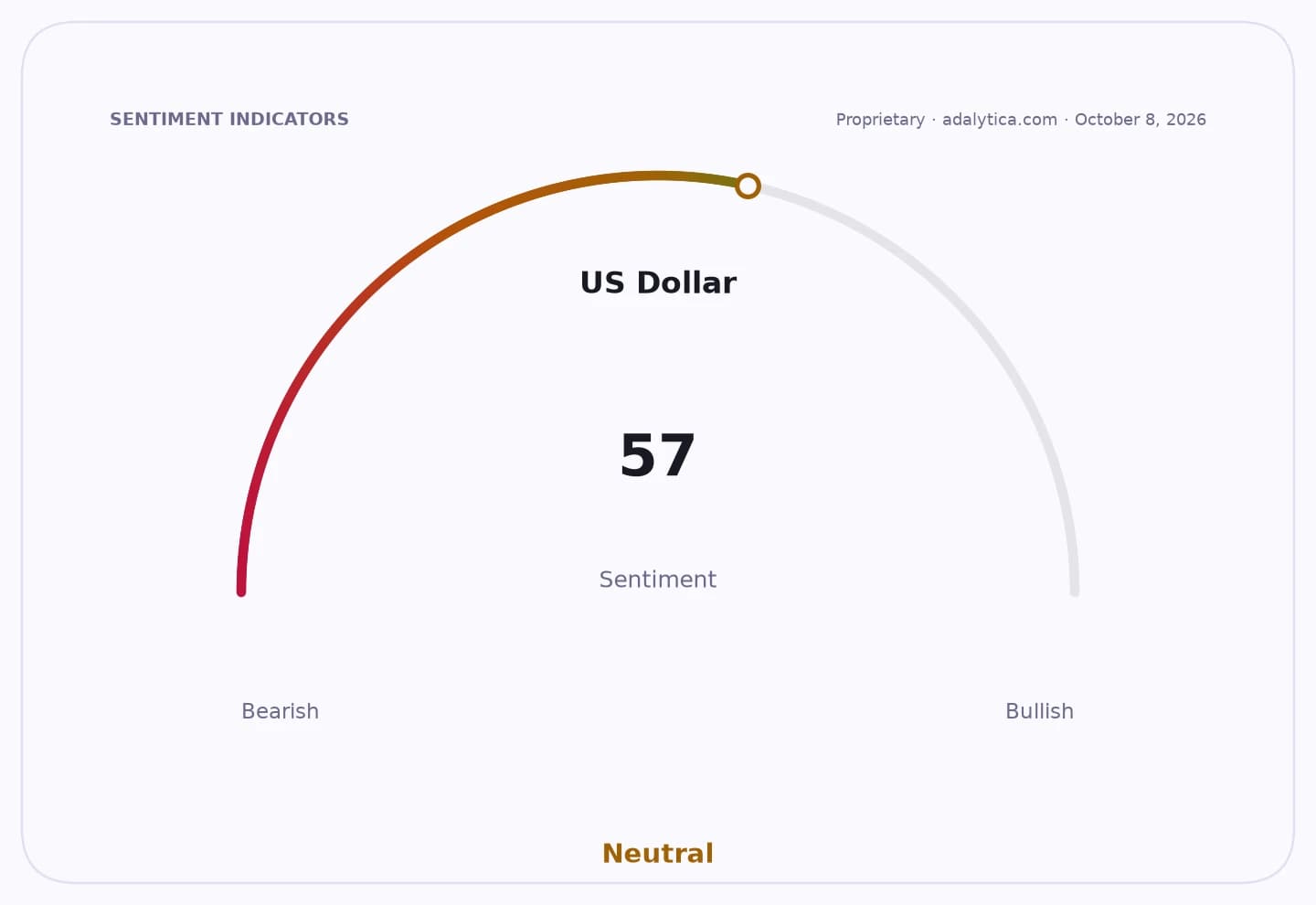
Sentiment Indicators
The move was measured, not disorderly. The U.S. 10-year yield hovered around 4.84% to 4.90% this week, while the two-year spread stayed positive at about 35 basis points, suggesting the market still sees a modestly restrictive policy path rather than an aggressive easing cycle. Fed funds expectations around 3.89% also point to a central bank that is not being forced into emergency cuts. But the direction is what matters: a slightly softer dollar, a flatter urgency around safe havens and a more constructive tone across equities and cyclicals.
That is an important shift for investors because dollar weakness tends to ease financial conditions globally. It supports commodities, emerging markets and multinational earnings, while reducing the pressure on borrowers with dollar liabilities. It can also lift non-U.S. assets that have been starved of flows during the strongest dollar phases. If the election result proves stabilizing rather than inflationary, the market could be entering a sweeter spot for risk assets: lower volatility, firmer growth sentiment and less demand for dollar insurance.
The foreign-exchange market is already telegraphing that possibility. Adalytica’s U.S. dollar trade signals show sentiment at 41, neutral, even as awareness remains elevated at 75, while FX volatility sits at an extreme-greed reading of 89. In plain terms, traders are still alert, but the market is no longer pricing the same level of fear premium that dominated earlier in the year. The dollar ETF UUP has held above its 50-day and 200-day moving averages, but the recent drift lower suggests momentum is cooling rather than accelerating.
The bigger investment implication is that this is not just a currency story. It is a capital-allocation story. A less ferocious dollar environment often unlocks upside in international equities, commodities and sectors tied to global trade and industrial demand. Canada’s dollar has also been under pressure from trade tensions and growth worries, underscoring how much currency moves are now being driven by politics as much as rates. For investors, the best setup is often early in the unwind of a crowded dollar trade, before the consensus fully accepts that the macro regime is changing.
If the election outcome continues to calm markets, the next trade is likely a broader shift out of defensive dollar exposure and into the beneficiaries of easier financial conditions. That argues for positioning in non-U.S. equities, commodity-linked plays and select FX-sensitive ETFs before the move becomes obvious.
| Entity | Gains | Losses |
|---|---|---|
| Non-U.S. equities | ▲Easier financial conditions | ▼Dollar hedge costs |
| Commodities | ▲Weaker dollar support | ▼Safe-haven bid |
| U.S. exporters | ▲Better translation of foreign sales | ▼Import-cost pressures |
| Dollar bulls | ▲— | ▼Softer momentum, lower demand |