The Dominican Republic’s fiscal room is tightening around debt service, education and health, with projected 2027 collections by the tax agency already nearly fully earmarked before housing or other priorities are funded.
Dominican Republic Budget Tightens Around Debt Service
Debt Stress Indicators
That is the central message from Rafael Jovine of the budget directorate, who said that out of every RD$100 the state expects to collect through the DGII in 2027, RD$84.3 would go to just three items: RD$31.5 in interest on public debt, RD$35 for education and RD$17.8 for health. Only RD$15.7 would remain for everything else, including investment, other institutions and social programs such as housing.
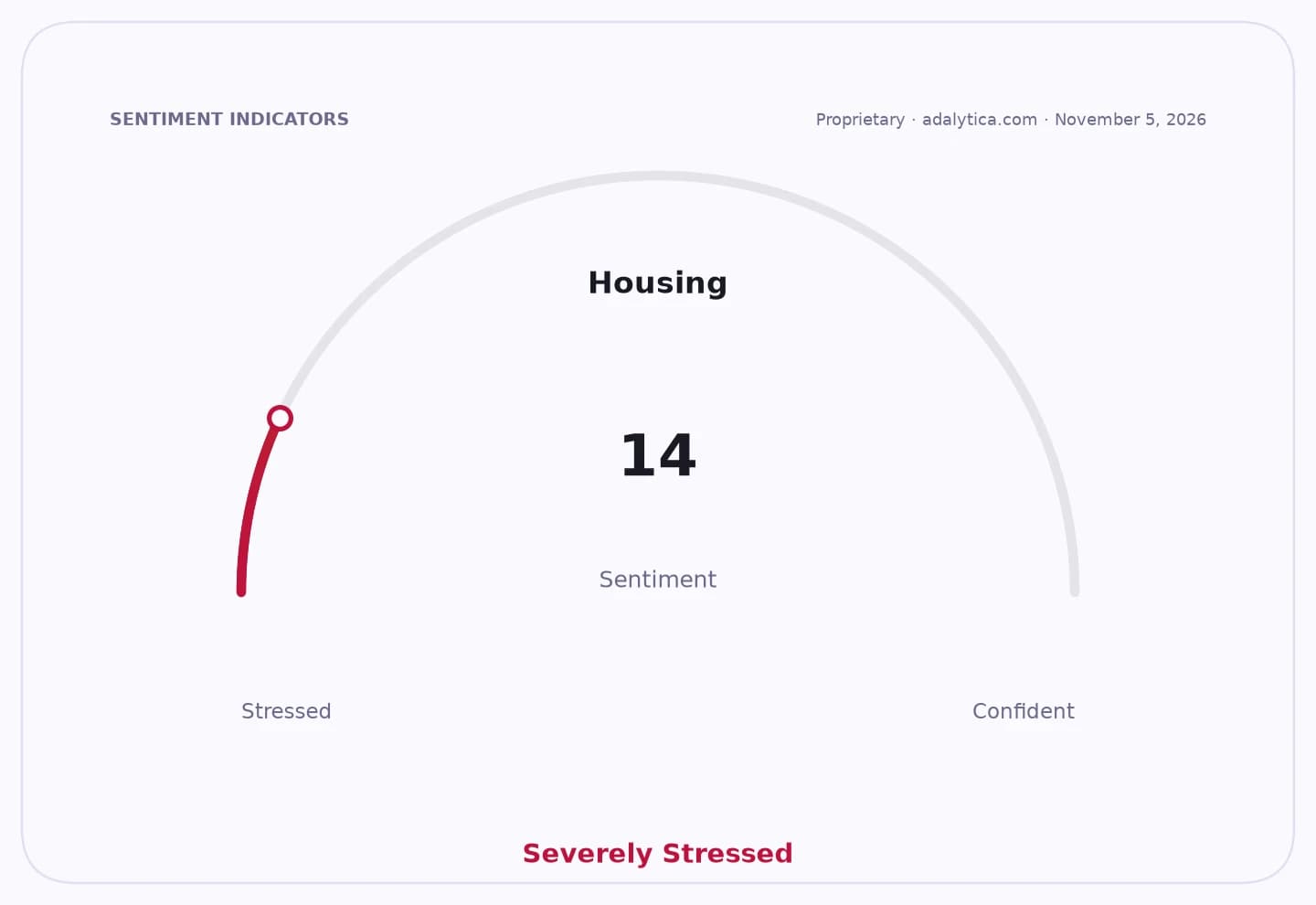
Sentiment Indicators
The implication is not just accounting pressure but a shrinking policy margin. When debt service rises to consume nearly a third of tax receipts, the government has less capacity to expand capital spending or fund new social initiatives without either raising taxes, cutting elsewhere or borrowing more. That makes housing particularly vulnerable, even as demand for affordable units and urban services remains high.
Jovine’s warning came at a housing seminar focused on the country’s deficit in shelter and community services. He noted that public spending in the “housing and community services” function rose 4.7 times from RD$9.7 billion in 2014 to about RD$45.3 billion in 2025, but stressed that the category also includes water supply, urbanization and community development, not just homes. Even so, the broader trend still points to a state that has increased spending, but not enough to escape fiscal trade-offs.
Debt Stress Indicators — 30-day sentimentadalytica.com
Explore this data interactively — full history, time series and cross-market comparisons.
For investors, the key takeaway is that the sovereign’s financing needs are increasingly shaping the budget mix. A larger share of revenue locked into interest payments usually means heavier reliance on borrowing to fund development spending, a dynamic that can keep debt ratios elevated and preserve pressure on future budgets. That matters for holders of Dominican sovereign paper, local banks exposed to public-sector funding needs and developers dependent on public housing and infrastructure support.
The external backdrop makes the message more uncomfortable. Jovine said global conditions and geopolitical tensions are feeding into import costs, especially for a net hydrocarbon importer such as the Dominican Republic, adding strain to deficits and financing. That leaves policymakers with a narrower set of choices just as the government is trying to push forward its 2022-2032 housing plan.
The broader narrative is a state that has made social spending a priority, but one whose fiscal architecture is increasingly dominated by debt service. Unless revenue growth outpaces interest costs, housing and other discretionary programs are likely to remain the residual claimant in the budget.
| Entity | Gains | Losses |
|---|---|---|
| Bondholders | ▲Higher debt-service priority | ▼Less fiscal flexibility |
| Education and health | ▲Protected budget share | ▼Crowding out of other programs |
| Housing sector | ▲Higher policy attention | ▼Limited funding room |
| Dominican government | ▲Maintains core obligations | ▼Reduced room for new spending |