Ecuador’s 2027 budget plan puts public universities among the clearest winners in a spending package that favors social programs and public works over fiscal consolidation, even as lawmakers scrutinize a projected $4.412 billion deficit.
Ecuador 2027 budget boosts universities and public works

The increase of $129 million for public universities is the most market-relevant new detail in the pro forma because it signals continued state support for higher education at a time when the government is trying to defend spending on salaries, transfers and infrastructure without losing control of the fiscal gap. In a budget totaling $50.213 billion, the allocation underscores a political choice to protect education and social protection, while still funding roads, bridges and transport projects that can feed domestic activity and employment.
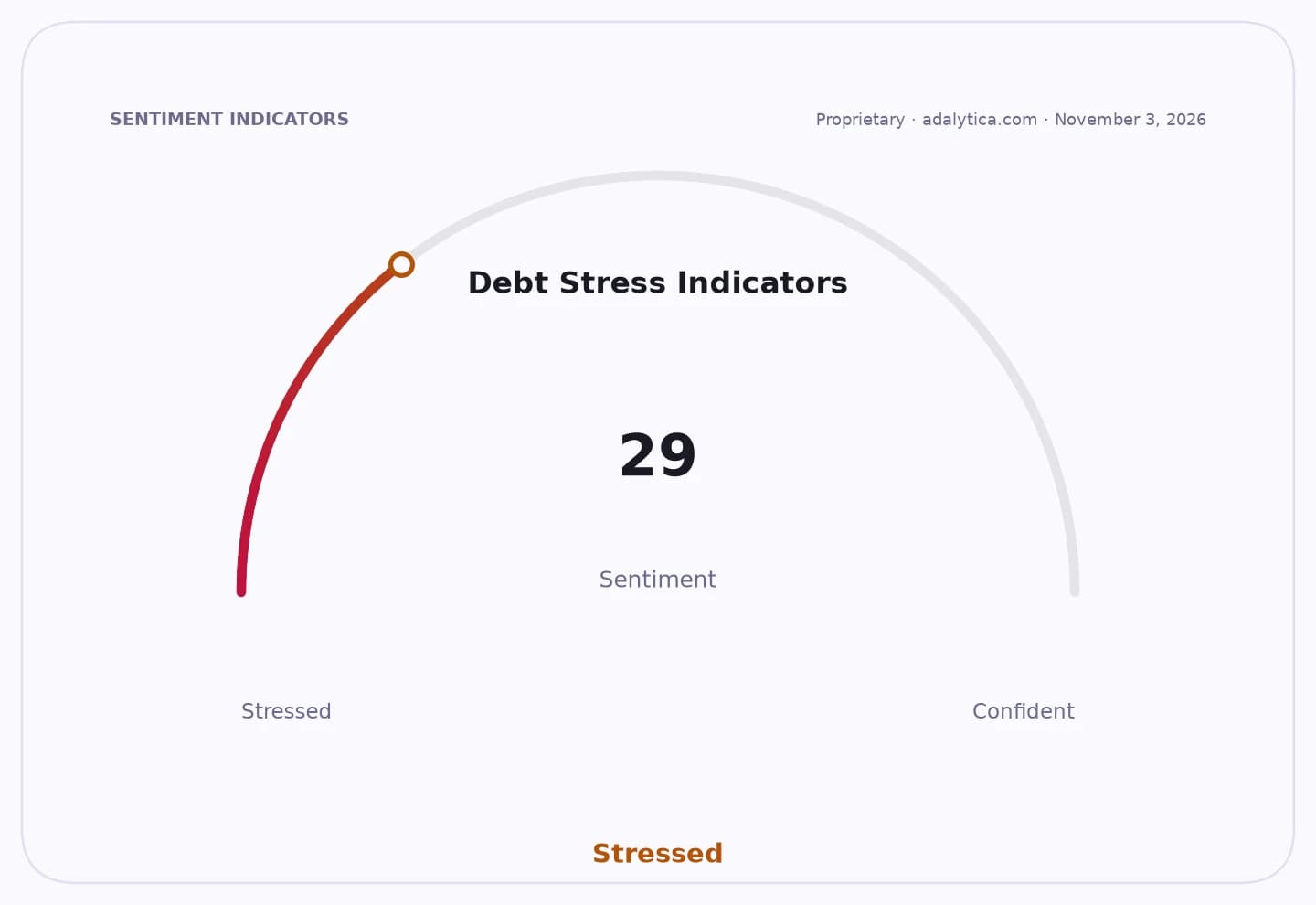
Sentiment Indicators
Finance officials told lawmakers that universities and polytechnics will receive $1.652 billion, up 6.37% from the amount codified as of September 2026. The University of Cuenca alone would get an extra $4.8 million, or 6% more than its initial prior-year allocation. Officials also stressed that the distribution formula is set by the Council of Higher Education and that final budgets can shift depending on execution capacity, a reminder that the headline increase is not fully locked in until the institutions prove they can spend the money efficiently.
That matters economically because public universities are part of a broader fiscal architecture that leans heavily on current spending. Education’s sector budget rises to $6.888 billion, while labor and human development get $2.372 billion and infrastructure and transport $765.5 million. Much of the education envelope goes to payroll, but the investment side still includes scholarships, digital equipment for teachers, school infrastructure and high-performance sports. For a government trying to support growth, those are not just social outlays; they are demand-side support and a bet on human capital.
The budget also points to a state that is still using public works as a growth lever. Infrastructure and transport will channel 93.7% of its $765.5 million budget into investment, with 33 projects backing 52 works in 2027 and more than two dozen already under way. Large multiyear items, including segments of the Fifth Bridge, reinforce the idea that the administration is prioritizing visible capital spending even as fiscal strain persists.
The fiscal backdrop is less comfortable. Finance officials said the pro forma expects $34.427 billion in revenue against $38.838 billion in spending, leaving a 3.1% of GDP deficit. Tax receipts are expected to do most of the heavy lifting, with $20.703 billion in projected collection. That leaves little room for slippage in execution, especially if revenue underperforms or capital projects stall.
For investors, the immediate takeaway is that this is not a budget built around austerity. It should support local construction activity, service-sector demand and institutions tied to public education spending, while also keeping pressure on sovereign finances if the state has to borrow to bridge the gap. The upside case is that better execution on infrastructure and higher-education spending lifts productivity and consumption without derailing the deficit target. The downside is that a larger wage bill and uneven project delivery deepen fiscal rigidities and leave the government with fewer options later.
The read-through is clearest for domestic growth, public contractors and universities, less so for creditors seeking a cleaner fiscal path. Unless execution improves, the 2027 pro forma looks more like a spending shield than a fiscal reset.
| Entity | Gains | Losses |
|---|---|---|
| Public universities | ▲Higher funding | ▼Fiscal restraint |
| Students and universities | ▲Better services and aid | ▼Budget uncertainty |
| Infrastructure contractors | ▲More project spending | ▼Delayed execution |
| Sovereign finances | ▲Potential growth support | ▼Wider deficit pressure |