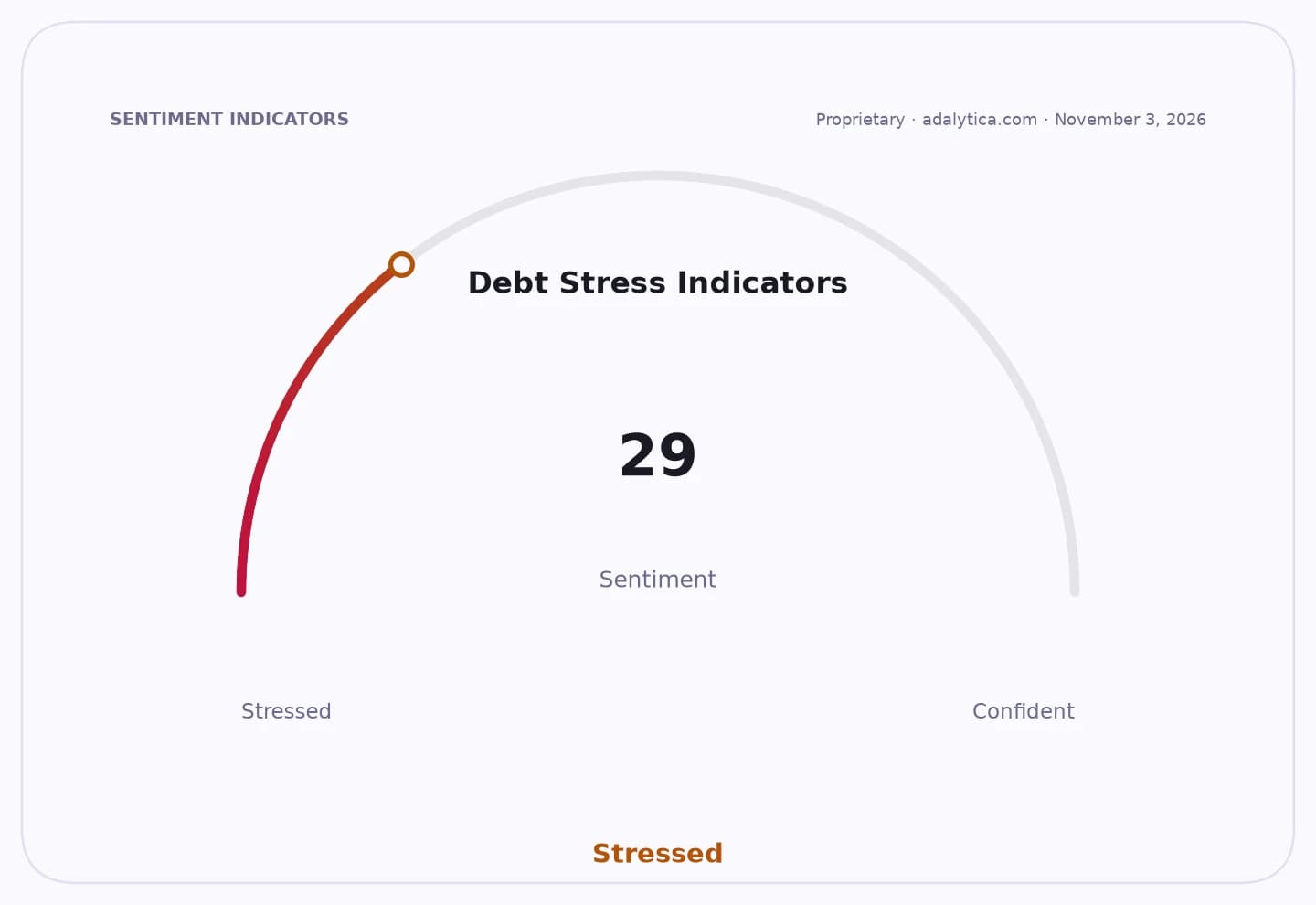
The Dominican Republic is approaching a fiscal squeeze in which rising debt-servicing costs, a projected RD$327.3 billion budget deficit for 2027 and renewed tax-raising efforts are colliding with public resistance to higher levies.
Dominican Republic Faces Fiscal Squeeze as Debt Costs Rise
That combination matters because it leaves the government with less room to fund infrastructure, education and electricity subsidies without either borrowing more or asking households and companies to pay up again. The political risk is rising alongside the fiscal one: if the state keeps leaning on taxes to bridge gaps created by debt and inefficient spending, it may run into a limit on what voters will tolerate.
Sentiment Indicators
The warning comes from a local commentary that argues the country is crossing a “high-risk line” as debt, deficits and taxes reinforce one another. Public-sector non-financial debt rose to about US$67.65 billion by August 2026 from US$61.55 billion at end-2025, a jump of roughly US$6.1 billion in just eight months.
At the same time, the government is already earmarking a large share of revenue for debt service. The article says that for every RD$100 the tax agency expects to collect in 2027, more than RD$23 would go just to interest payments, while one cited budget breakdown shows interest would absorb RD$31.50 for every RD$100 collected by the Internal Revenue Directorate, versus RD$35 for education and RD$17.80 for health.
That budget math is the core of the story for investors. It suggests Dominican fiscal policy is being constrained less by a lack of tax capacity than by the rising cost of past borrowing, weak spending efficiency and persistent subsidies, especially in the power sector. The government had already proposed measures in June to raise between RD$40 billion and RD$50 billion more, signaling that the financing need is not a one-off gap but a recurring pressure point.
Electricity remains a major drain. Through July 2026, the government had transferred about RD$68.7 billion to distribution companies, even as consumers continue to face outages and the cost of backup power. That weakens the case for a new tax push because it makes the public question whether higher collections will translate into better services or simply cover recurring losses.
The country still benefits from remittances and tourism, two buffers that have helped support external stability and foreign-currency inflows. But if those flows slow while refinancing costs rise, the fiscal strain would become harder to manage and the pressure to extract more revenue would intensify.
For bondholders and other fixed-income investors, the message is straightforward: Dominican fiscal flexibility is narrowing, and the longer the state relies on debt to finance deficits while resisting deeper spending reform, the more expensive future borrowing is likely to become.
| Entity | Gains | Losses |
|---|---|---|
| Government of the Dominican Republic | ▲Short-term financing cover | ▼Fiscal flexibility |
| Taxpayers and businesses | ▲None | ▼Higher tax burden |
| Bondholders | ▲Interest payments | ▼Credit risk rises |
| Electricity distributors | ▲Subsidy transfers | ▼Reform pressure |