Police in Kent are facing awkward questions after a tip-off about a planned far-right gathering in a Kent village the night before protesters blocked roads into Dover and disrupted access to the port.
Dover Disruption Raises Risks for Ports and Logistics
Why it matters is simple: Dover is not just any town. It is one of the UK’s most important gateways for trade and travel, and even a few hours of disruption can ripple through freight schedules, ferry operations and local businesses. For investors, the bigger lesson is that public-order risks around migration and extremism can quickly turn into operational risks for transport, tourism and logistics firms exposed to the Channel crossing.
Sentiment IndicatorsⓘProprietary · adalytica.com · September 9, 2026
This is a snapshot — live sentiment, awareness and momentum for 130+ markets update continuously in the dashboard.Open AlphaPulse
According to people in Preston-next-Wingham, about 18 miles from Dover, hundreds of men converged on the village on Friday afternoon and effectively took it over, parking in car parks, on the recreation ground and even near a primary school. Some residents said they heard activists boasting in a pub that they planned to head to Dover and “attack Muslims,” and at least one person is understood to have relayed the information to counter-terrorism police.
Kent Police said an initial review found it had received non-emergency information late on Friday evening about a possible protest the next day, but that the information was “not fully assessed.” The force said the tip-off may have helped with resourcing, but would not have prevented the “lawful protest” or the disruption that followed.
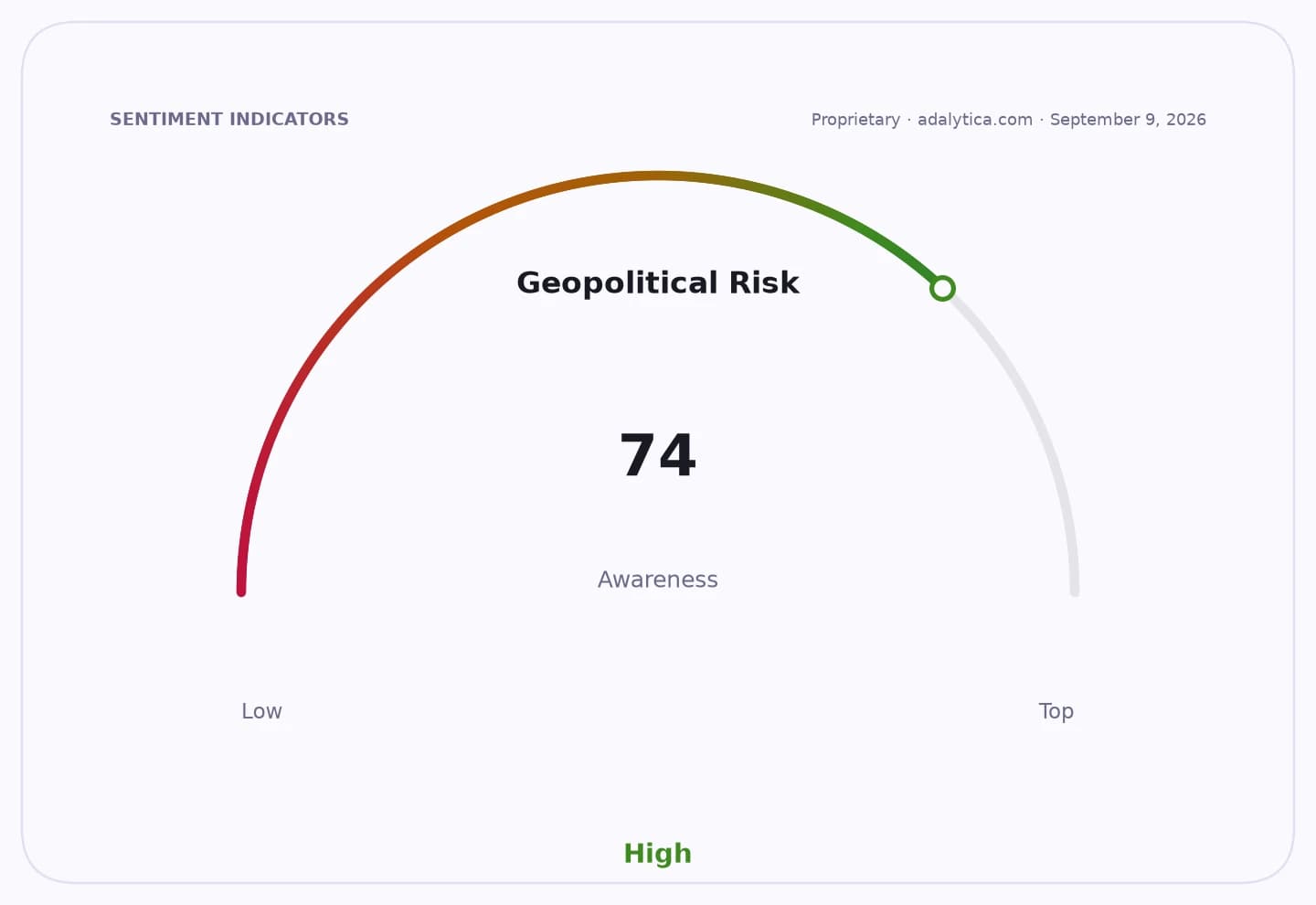
Geopolitical Risk vs DOVadalytica.com
Explore this data interactively — full history, time series and cross-market comparisons.Open AlphaPulse
That distinction matters. The blockade was described as spontaneous at the time, yet local accounts now point to something far more coordinated: a staging post in a village of just over 920 residents, a fleet of vehicles arriving before dawn, and participants later disembarking in Dover. For authorities, the issue is not just hindsight. It is whether warning signs were missed before a fast-moving, politically charged protest reached one of Britain’s most sensitive transport chokepoints.
For investors, the immediate market impact is limited, but the broader implications are not. The UK’s ports, ferry operators and road links depend on predictable access and security. Repeated disruption at Dover can add costs, unsettle customers and reinforce the case for tighter policing around critical infrastructure. It also highlights the political pressure on ministers as immigration remains a combustible issue that can spill into the real economy.
The episode is likely to keep scrutiny on Kent Police and on how quickly intelligence is escalated when protests are forming. It also suggests Dover may remain a flashpoint as anti-immigration groups test the limits of public order. For long-term investors, this is a reminder to focus on businesses with resilient logistics, diversified routes and strong contingency planning. Those are the firms best placed to absorb shocks when politics turns disruptive.
| Entity | Gains | Losses |
|---|---|---|
| Kent Police accountability drive | ▲Oversight and reform pressure | ▼Reputation and public trust |
| Dover port operators | ▲Potential security upgrades | ▼Disruption, delays, extra costs |
| Anti-immigration agitators | ▲Visibility for their cause | ▼Legal scrutiny, public backlash |
| Ferries, logistics and local businesses | ▲Longer-term resilience planning | ▼Lost traffic and operational friction |