The Dow Jones Industrial Average fell more than 300 points on Tuesday, with Home Depot’s drop after a surprise leadership change doing most of the damage.
Dow Falls as Home Depot Drops on CEO Change

That matters because the Dow is a price-weighted index, which means a single high-priced stock can have an outsized effect on the average even when the broader market is not collapsing. For long-term investors, that makes moves in megacap blue chips worth watching: they can distort the headline index, but they also reveal where sentiment is shifting inside the real economy.
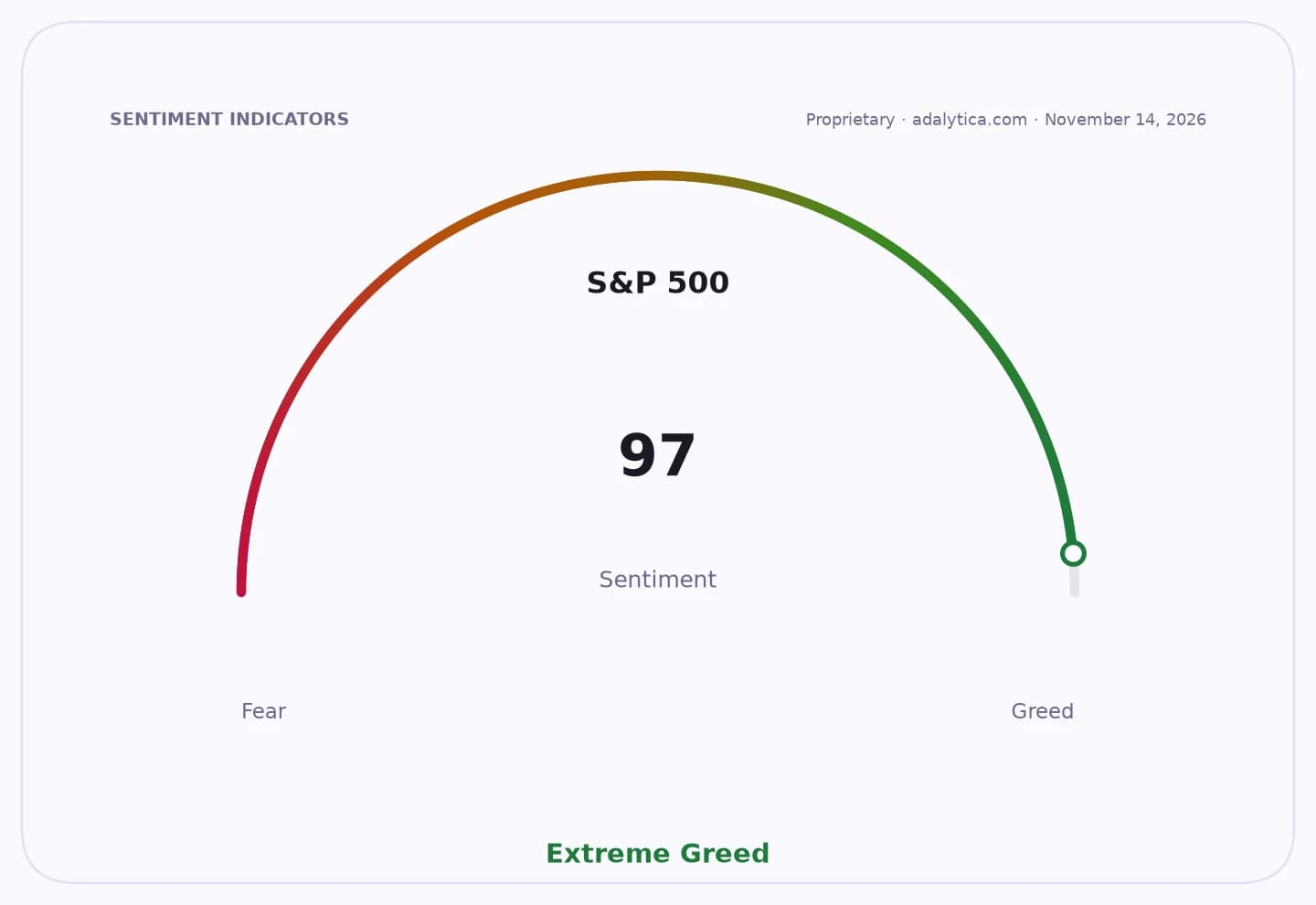
Sentiment Indicators
By 9:40 p.m. Thailand time, the Dow was down 336.54 points, or 0.65%, at 51,271.63. Home Depot shares fell more than 2% after the home-improvement giant said its new chief executive would take over next week. The concern around the transition overshadowed results that came in better than Wall Street had expected.
That reaction tells you more about investor psychology than about one quarter’s earnings. Home Depot is not a speculative name; it is one of the clearest reads on U.S. consumer spending, housing turnover and renovation activity. When investors punish a stock after a solid report because of governance uncertainty, they are signaling that stability and execution matter as much as growth in a late-cycle market.
The weakness in the Dow came as investors also braced for Nvidia’s earnings after the close, a reminder that artificial intelligence remains the market’s dominant secular theme. This week’s calendar is especially important because it also includes retail sales data and the release of minutes from the Federal Reserve’s Oct. 27-28 policy meeting. Those reports could help shape expectations for whether consumer demand is cooling enough to give the central bank room to ease, or whether sticky spending keeps rates elevated for longer.
There is also a bigger investing lesson here. When blue chips like Home Depot wobble on management changes, markets are reminding investors that even household-name winners need clean succession plans and disciplined capital allocation to keep compounding. The same applies to the broader index: one day’s drop should not scare long-term holders out of a diversified portfolio, but it should reinforce the case for owning quality businesses with durable cash flow and leadership continuity.
For investors, the message is straightforward: the Dow’s slide looks more like a stock-specific hit than a full-blown macro break, but it arrives at a sensitive moment for markets already balancing Fed policy, consumer data and heavyweight earnings. Worth watching, not panicking over.
| Entity | Gains | Losses |
|---|---|---|
| Dow Jones bulls | ▲bargain setup | ▼headline index value |
| Home Depot management | ▲leadership transition | ▼short-term investor confidence |
| Long-term diversified investors | ▲potential entry points | ▼little from one-day noise |
| Broad market | ▲focus on fundamentals | ▼near-term volatility |