Ecuador’s government is weighing wheat and corn import licenses after growers challenged whether mills and feed makers are buying enough local grain first, a dispute that matters because it could reshape demand for domestic crops, protect rural incomes and change the economics of animal feed.
Ecuador reviews wheat and corn import licenses
The meeting between corn growers and Javier Chon, the deputy minister for agricultural production and rural development, pushed a long-running argument over import rules into the policy arena. For investors and agribusiness operators, the key issue is not just who is right on the numbers, but whether the government tightens the link between import permits and domestic procurement.
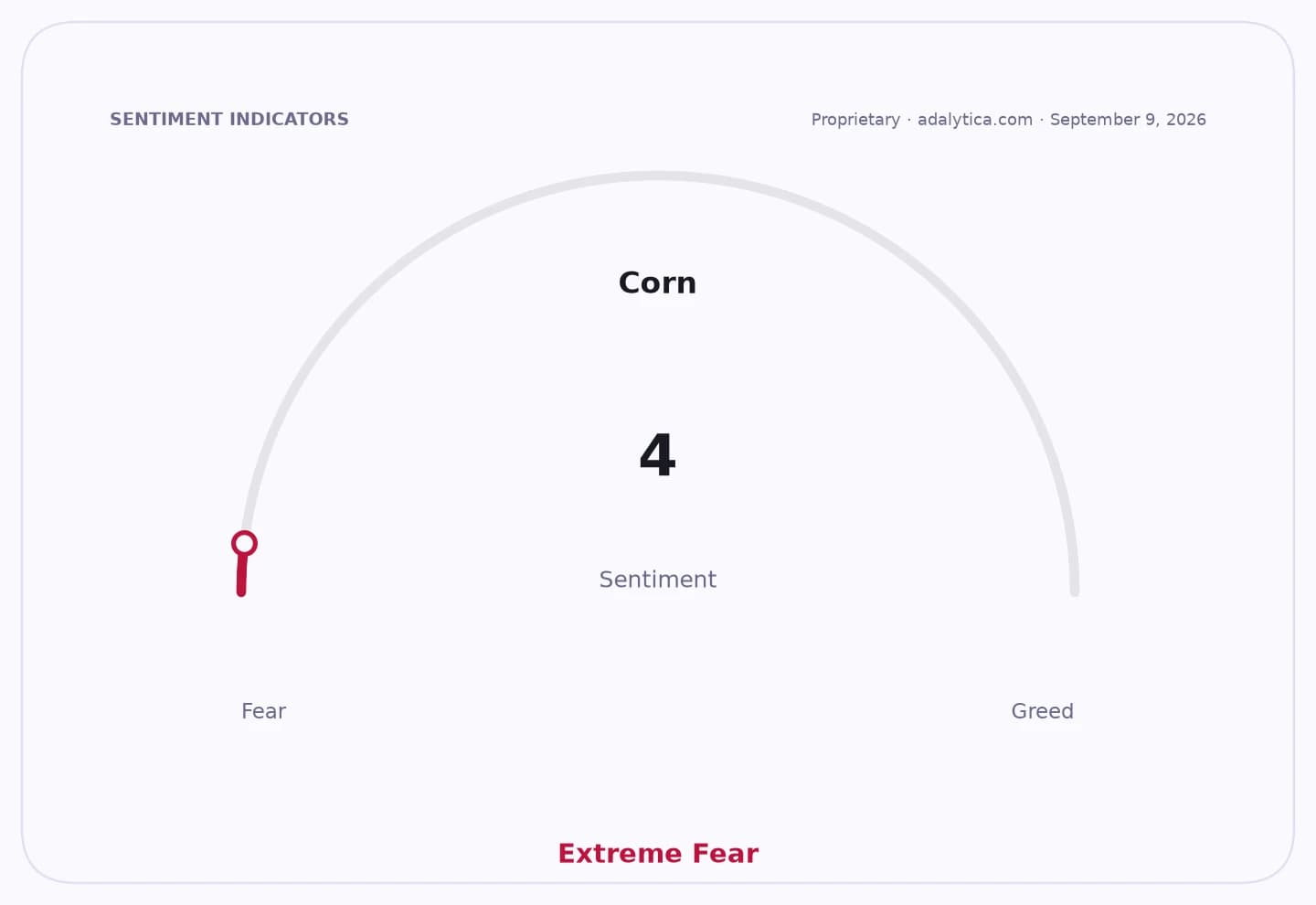
Sentiment IndicatorsⓘProprietary · adalytica.com · September 9, 2026
This is a snapshot — live sentiment, awareness and momentum for 130+ markets update continuously in the dashboard.Open AlphaPulse
Farmers say some companies are getting permission to bring in large volumes of wheat and corn even as they buy far less Ecuadorian maize than expected. They want the state to make those records public again through the URTF transaction system and to verify purchase data before approving new licenses. In their view, that would reduce distortions in the market and force a fairer handoff between local harvests and foreign supply.
The industry is pushing back with a very different account. Aprobal, the association for animal feed producers, said formal records showed 611,242.08 metric tons of yellow corn had been absorbed by August 27 and that the total likely reached about 670,000 tons by the end of August once delayed transactions were counted. That is a big number in a market where growers say the winter crop was supported by about 600,000 tons of new supply and where the summer harvest is also expected to add roughly 600,000 tons.
That gap in interpretation is the heart of the story. If the government accepts the farmers’ argument, import licenses could become harder to obtain unless buyers can prove they have done enough business with local growers. If it sides with the industry, grain and feed users will keep the flexibility to import when domestic supply looks tight or expensive. Either way, the policy outcome will matter for margins in Ecuador’s poultry and livestock chain, where feed costs ripple through to chicken and egg prices.
There is also a wider economic angle. Farmers are asking for a broader national plan to raise maize and soybean production and cut reliance on imports. They say low-cost wheat and corn shipments have not translated into meaningfully cheaper protein for consumers, even as they point to chicken and egg prices that remain elevated. That makes this more than a farm dispute: it is a test of how Ecuador balances food security, rural employment and price stability.
The government’s next move will be watched closely. Chon’s ministry reportedly agreed to review the historical data, restore transparency around the URTF records, examine past import licenses and convene technical talks. For long-term investors in regional agribusiness, feed, poultry and grain trading, that suggests the rules of the game may not be settled yet — and in commodity markets, policy uncertainty can matter just as much as weather or yields.
| Entity | Gains | Losses |
|---|---|---|
| Ecuadorian corn growers | ▲Stronger local demand | ▼Easier import competition |
| Feed makers and millers | ▲Flexible sourcing | ▼Tighter license rules |
| Poultry and egg consumers | ▲Possible lower feed costs | ▼Higher risk of price pass-through |
| Government regulators | ▲More control over market data | ▼Pressure to resolve a contentious review |